 WriterMorph

On planning, writing and finishing a book
Practical long-form pieces on outlining, scenes, structure, characters, point of view and editing, with the steps in WriterMorph.
· 9 min read
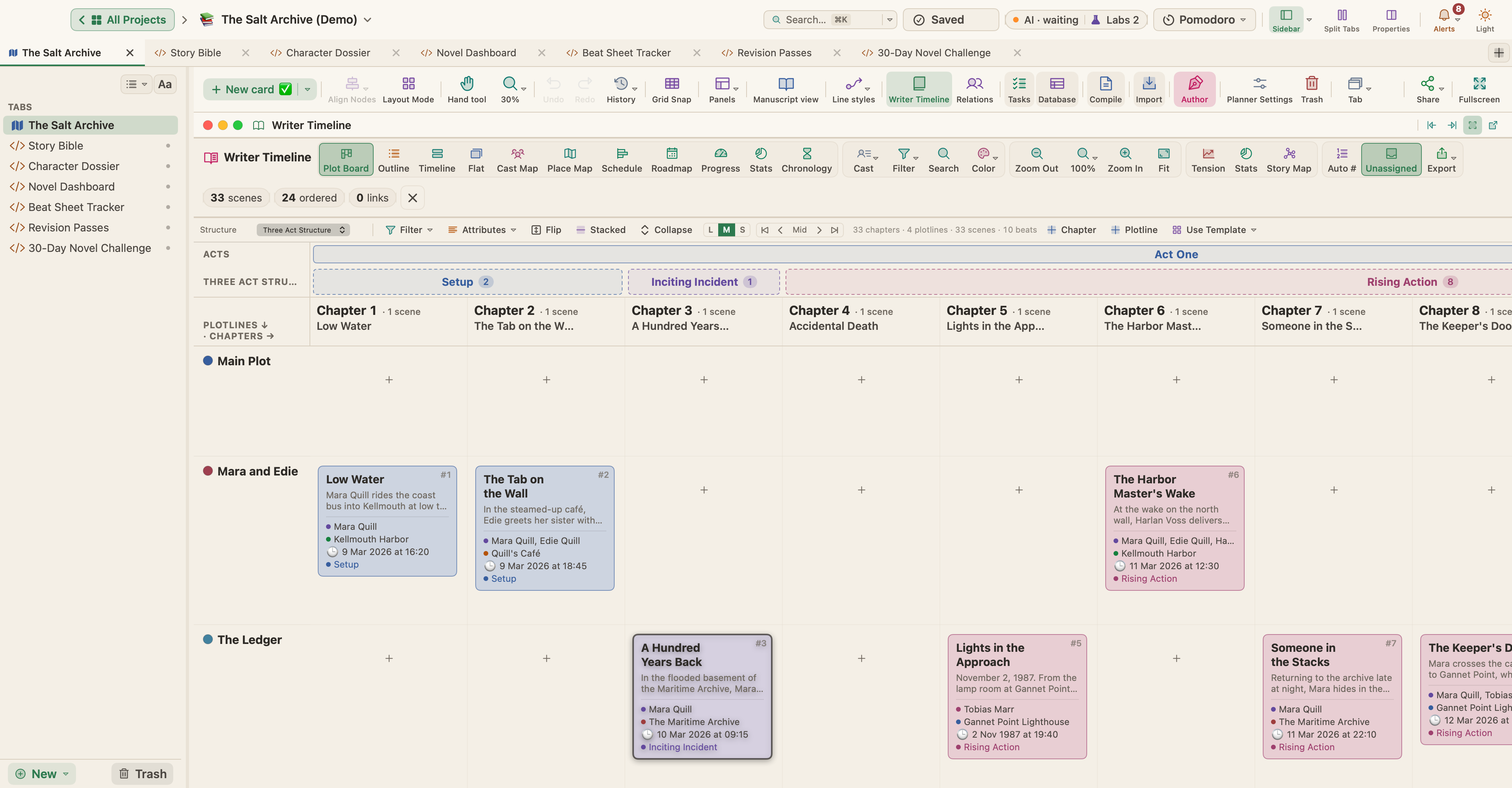
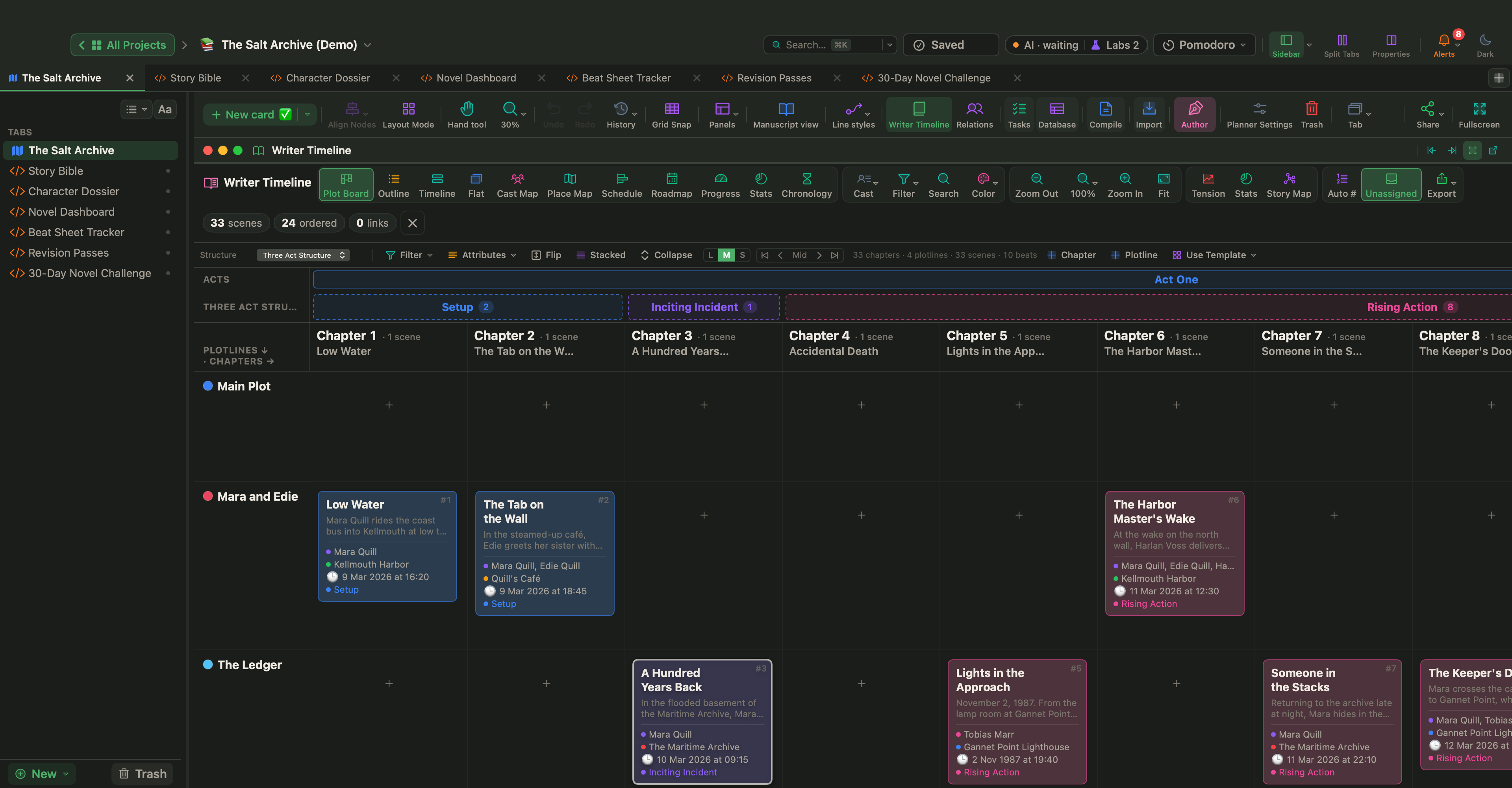
Stuck in the middle of your novel? Nine ways to get the draft moving again
Most abandoned novels stop somewhere between the first third and the midpoint. Here is how to tell which kind of stuck you are, nine ways out that work on a real draft, and how to see the gap in the middle of your book in WriterMorph.
· 7 min read
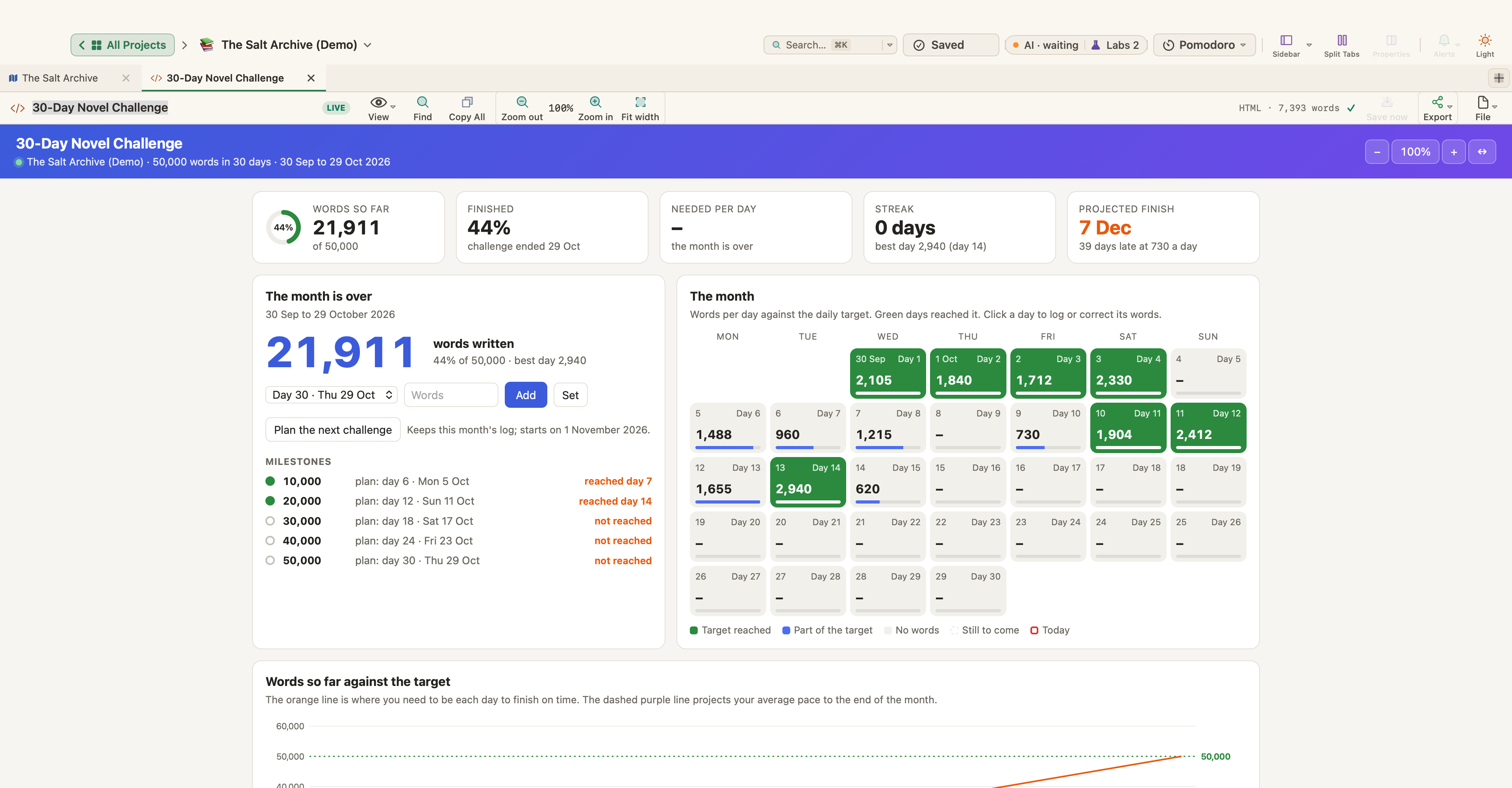
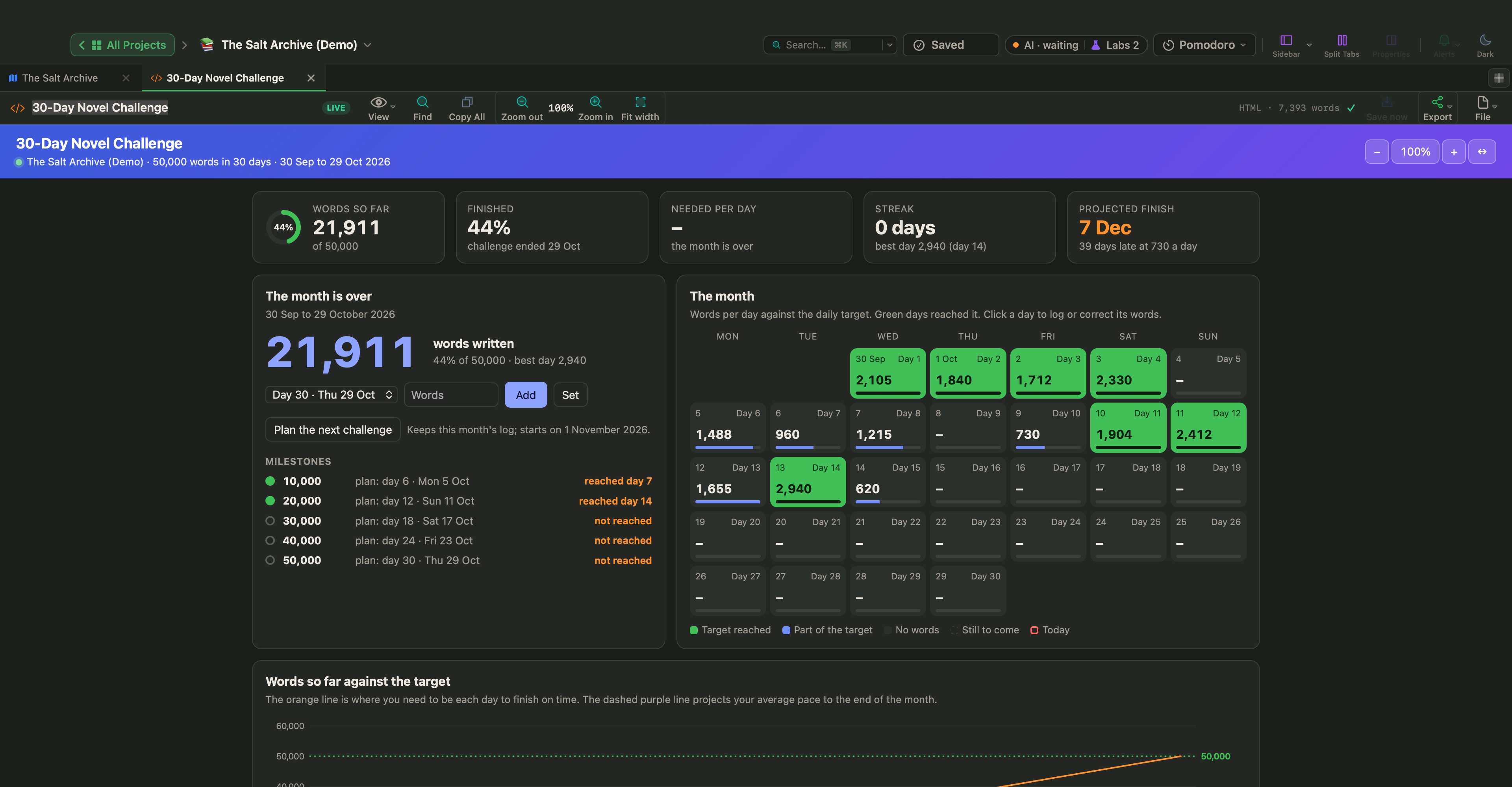
How long should a novel be? Word counts by genre, and whether 50,000 is enough
A November draft ends at 50,000 words, and the first question is whether that is a book. Here are the lengths that count as a novel, the ranges agents expect in each genre, what to do with a draft that is too short or too long, and how to keep count in WriterMorph.
· 10 min read
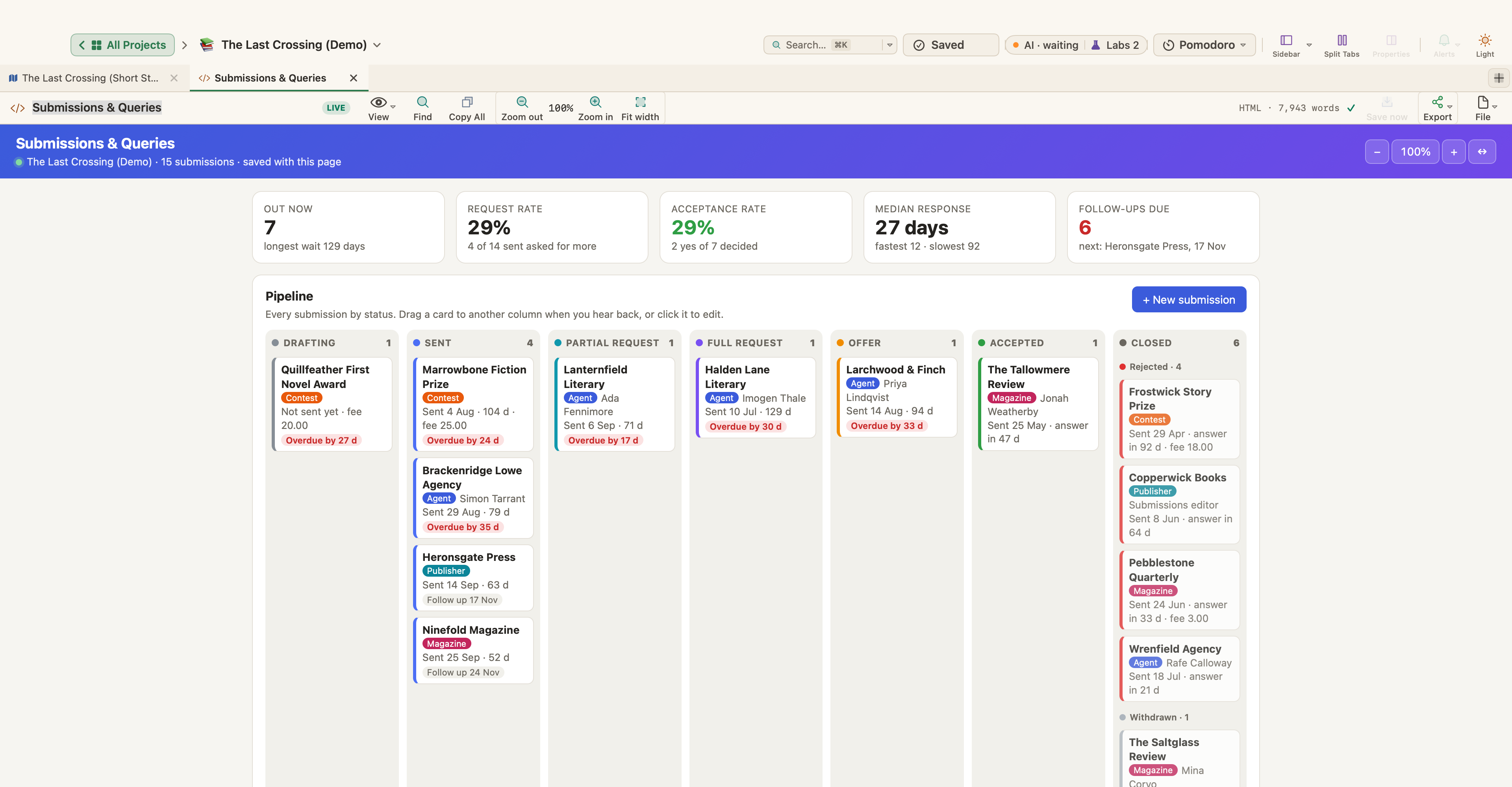
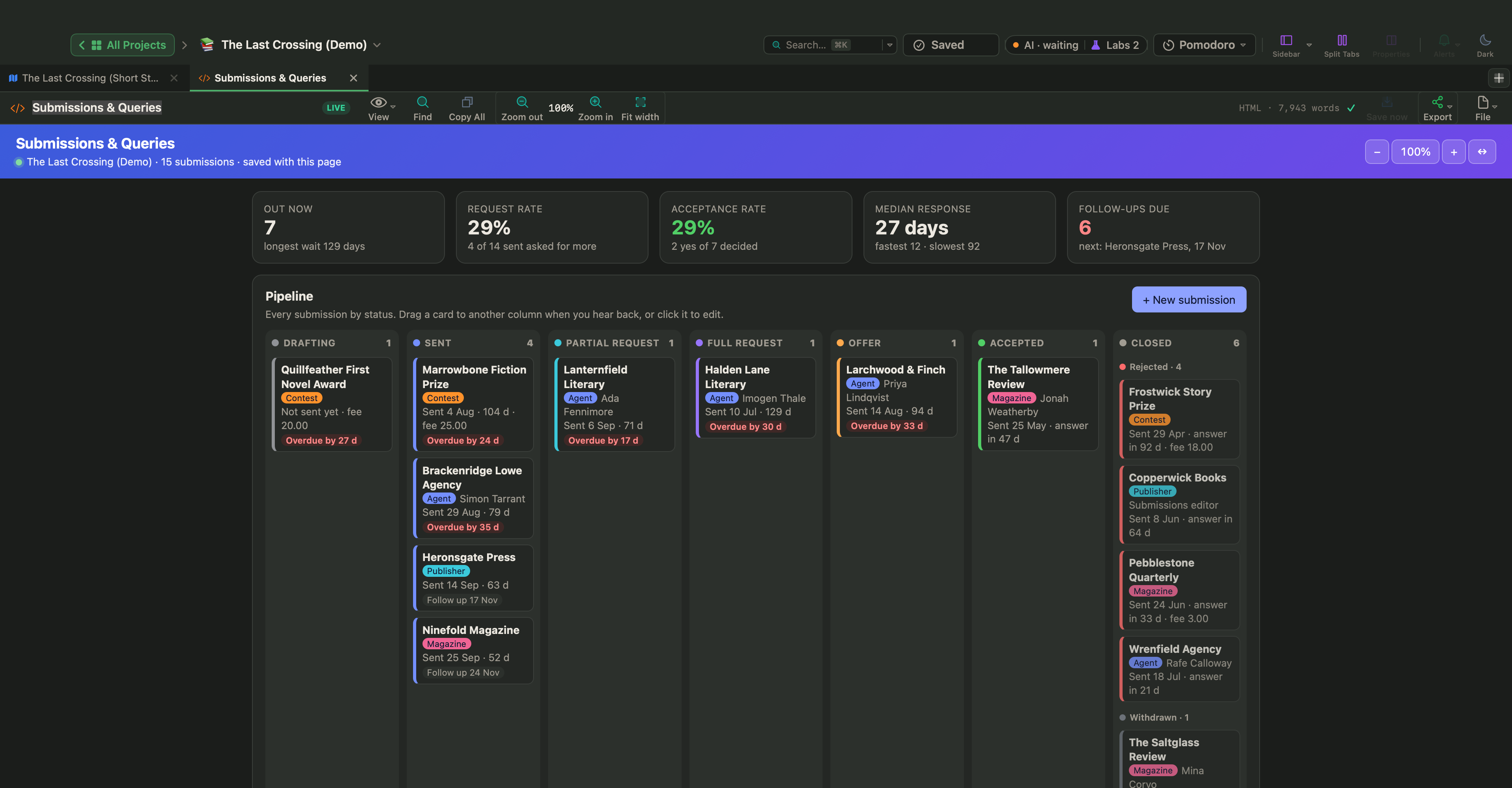
How to write a query letter: a worked example with Pride and Prejudice
A query letter has one page to make an agent ask for your novel. Here are its four parts and their lengths, then a complete letter built step by step for a book everyone knows, and a way to keep track of every version you send.
· 8 min read
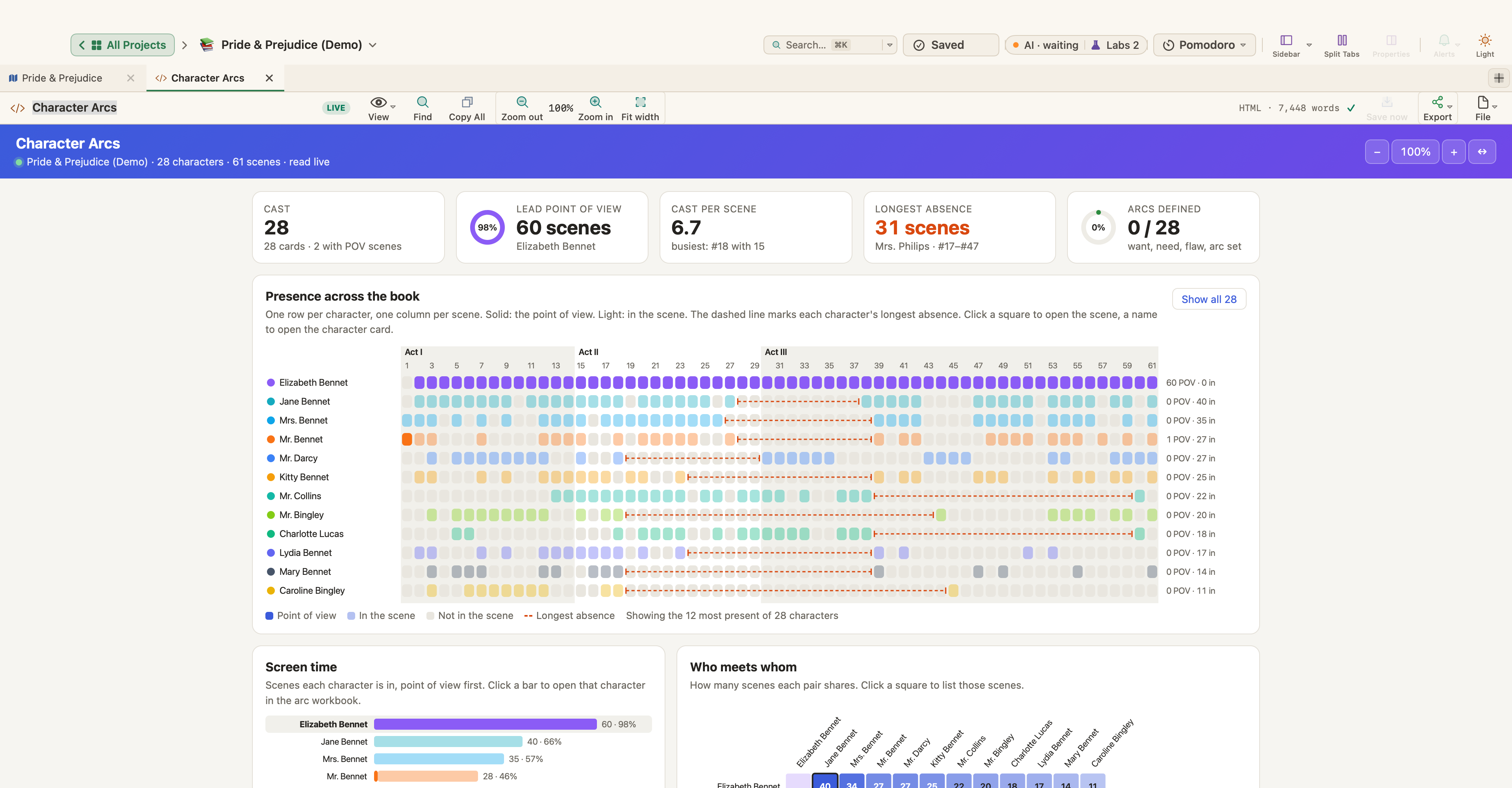
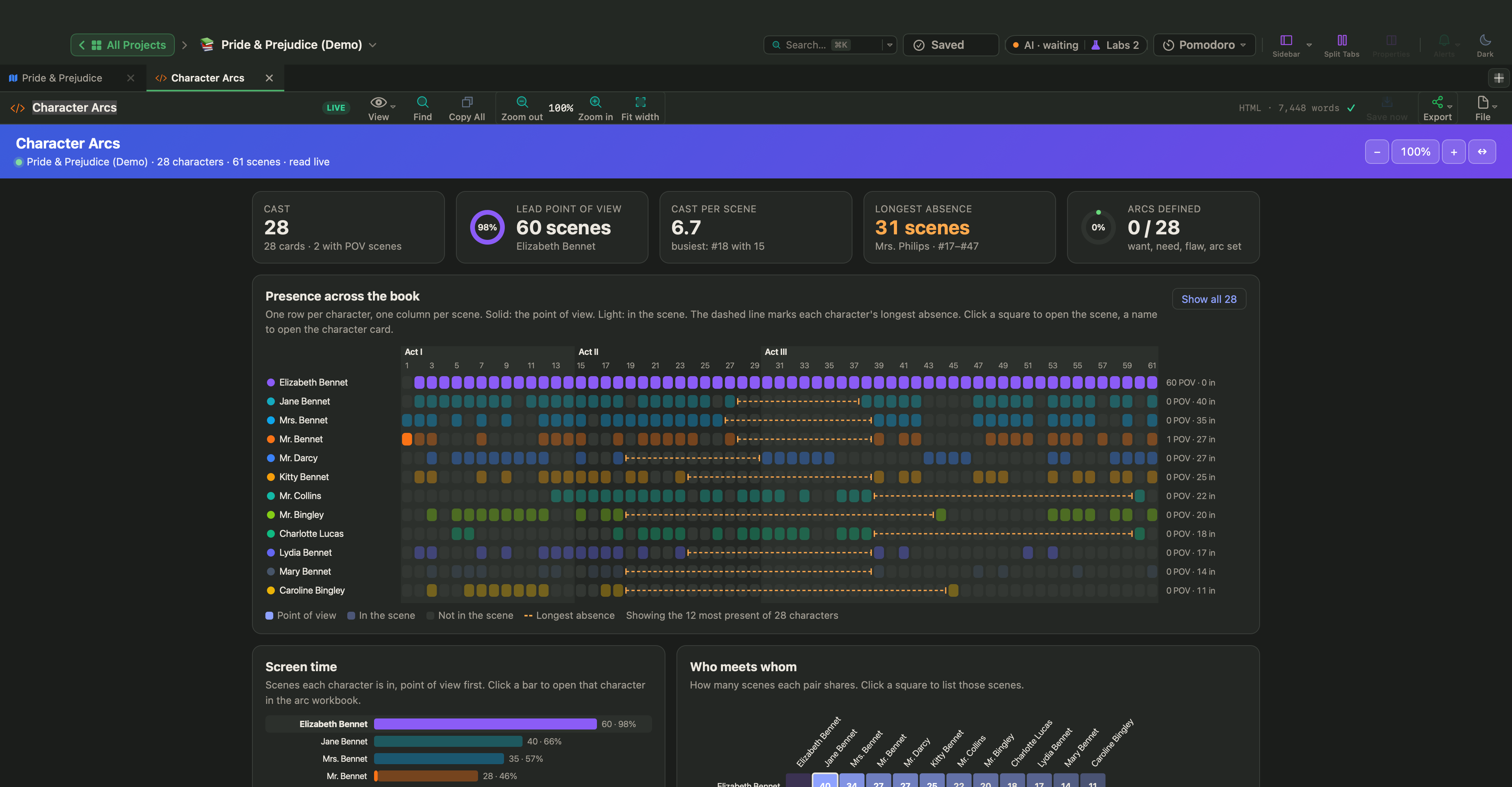
How to write a character arc: positive, negative and flat arcs, with a worked example
A plot is what happens; a character arc is what it does to one person. Here are the four parts of an arc, the three kinds, the beats where the change shows, a worked example with Elizabeth Bennet, and how to keep every character's arc in view in WriterMorph.
· 7 min read
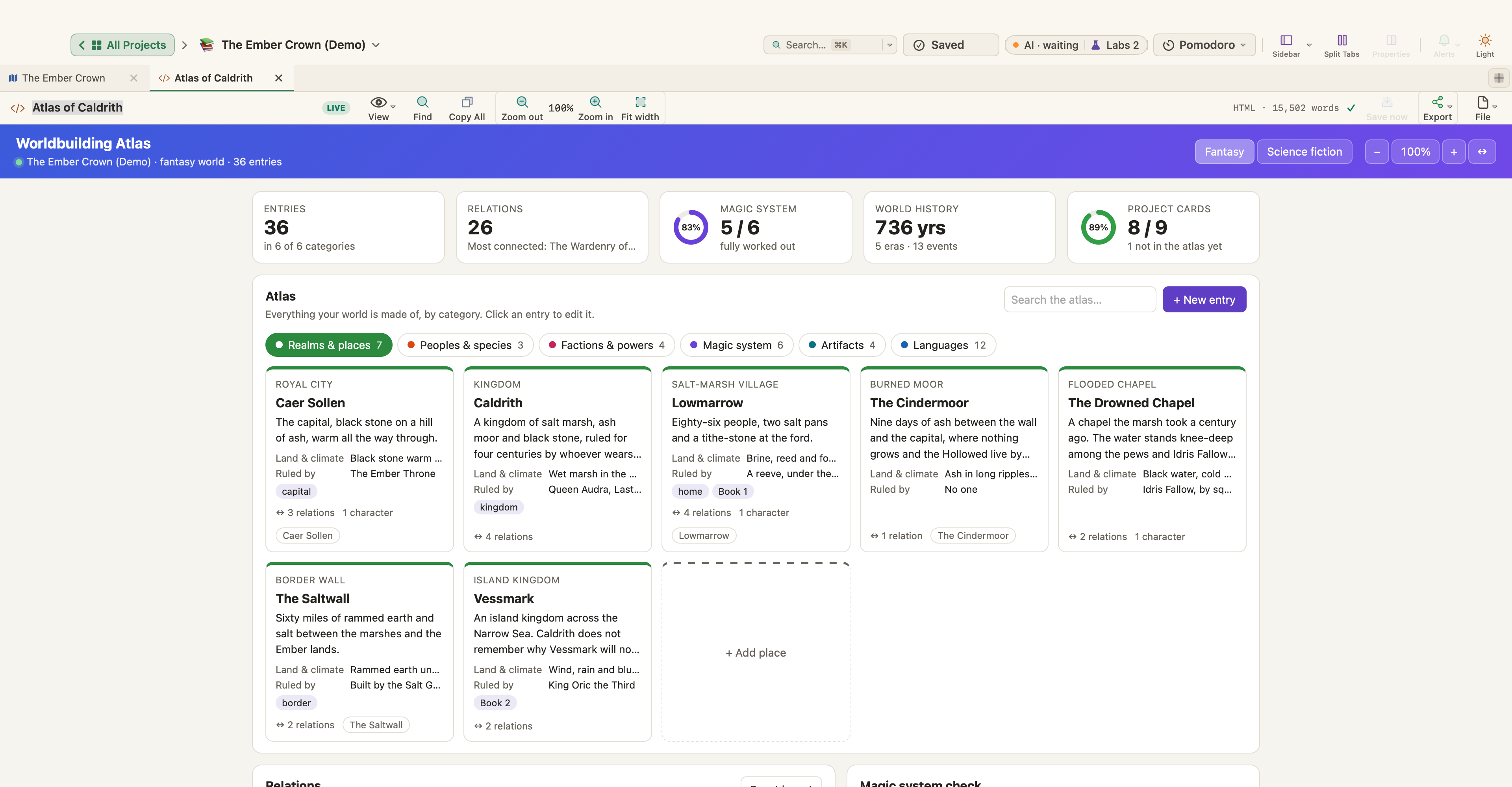
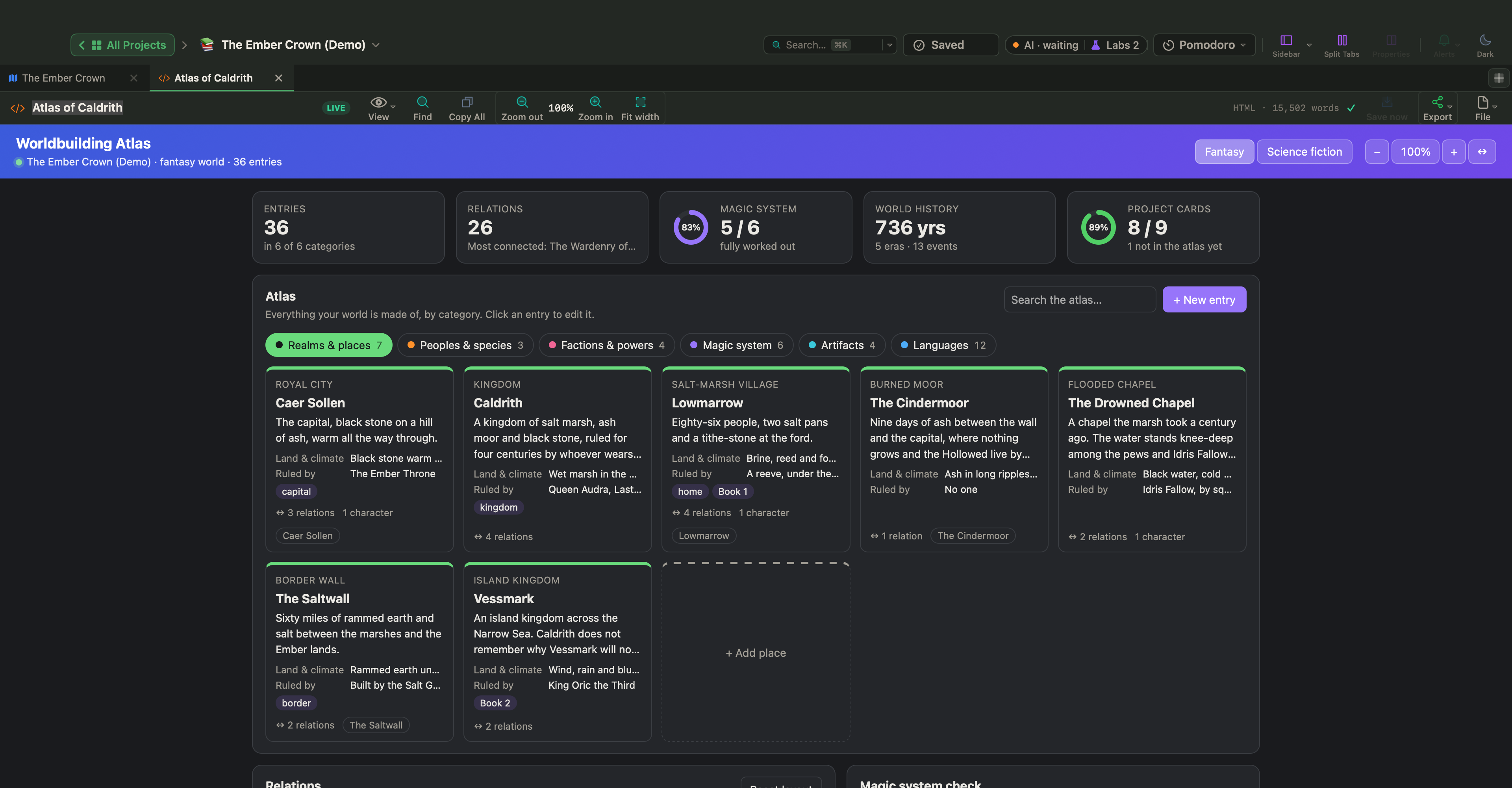
Worldbuilding for a fantasy novel: what to decide, what to leave out, and a magic system with a price
A fantasy world has to hold together for four hundred pages, and most of what you build will never be on the page. Here is what to decide before you write, how to design a magic system that makes plot, the mistakes that stop a draft, and a world bible that keeps it all straight in WriterMorph.
· 7 min read
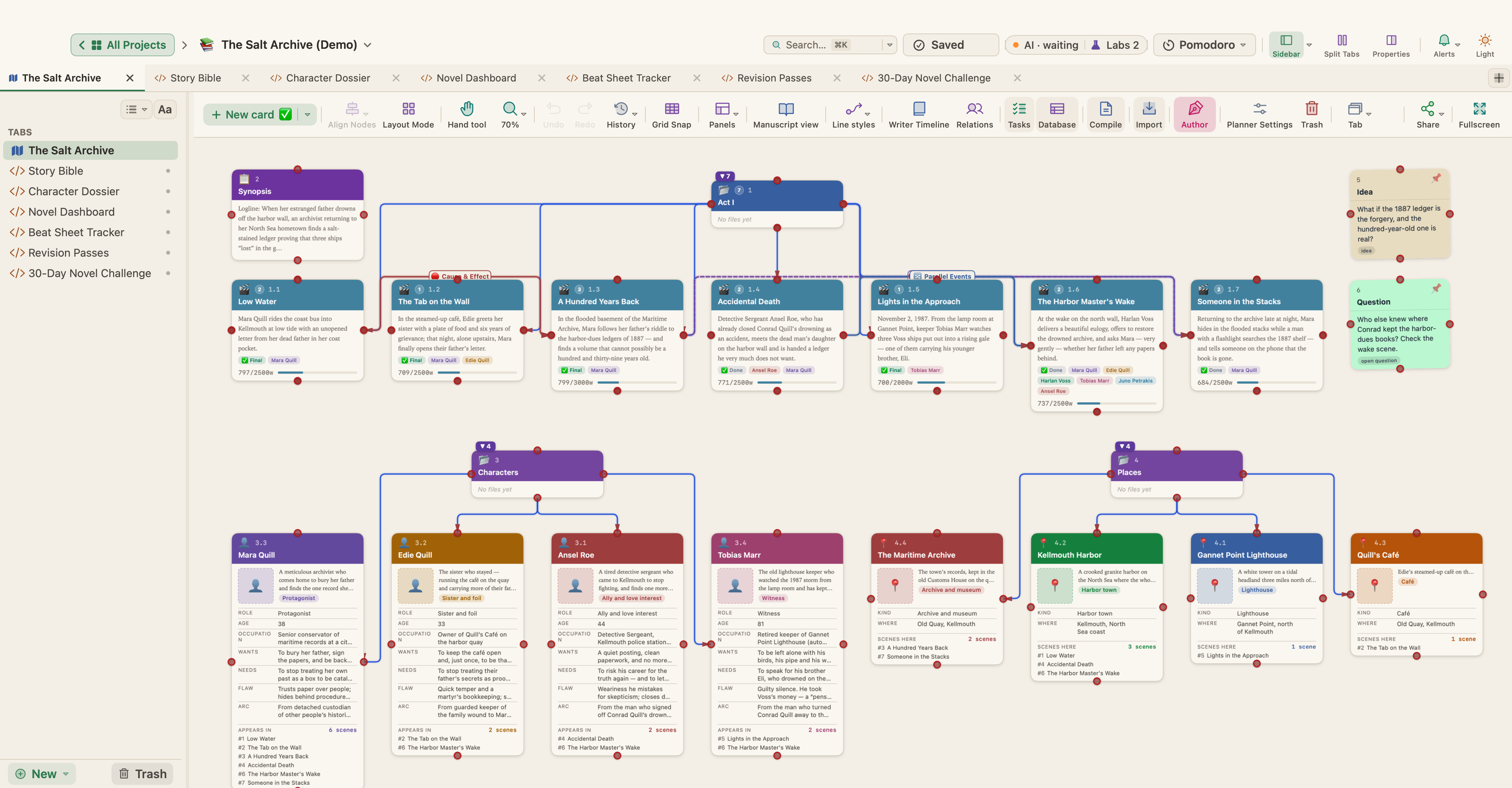
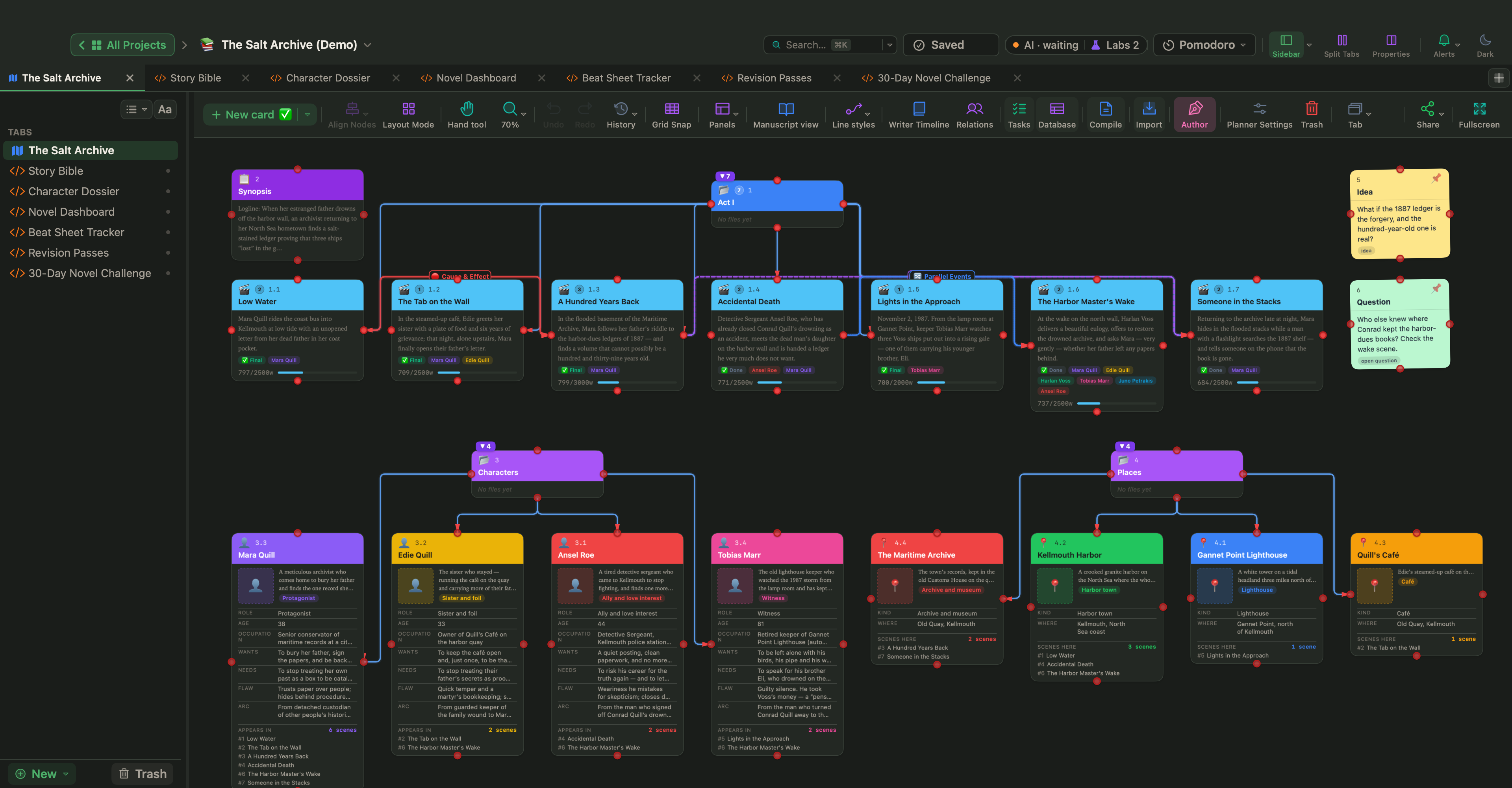
How to write a plot twist: seven kinds, and how to foreshadow them fairly
A good twist surprises the reader and then feels as if it could not have gone any other way. Here are the seven kinds, the three things every twist needs, how to hide a clue in plain sight, how to test a twist before readers do, and how to link each clue to its payoff in WriterMorph.
· 8 min read
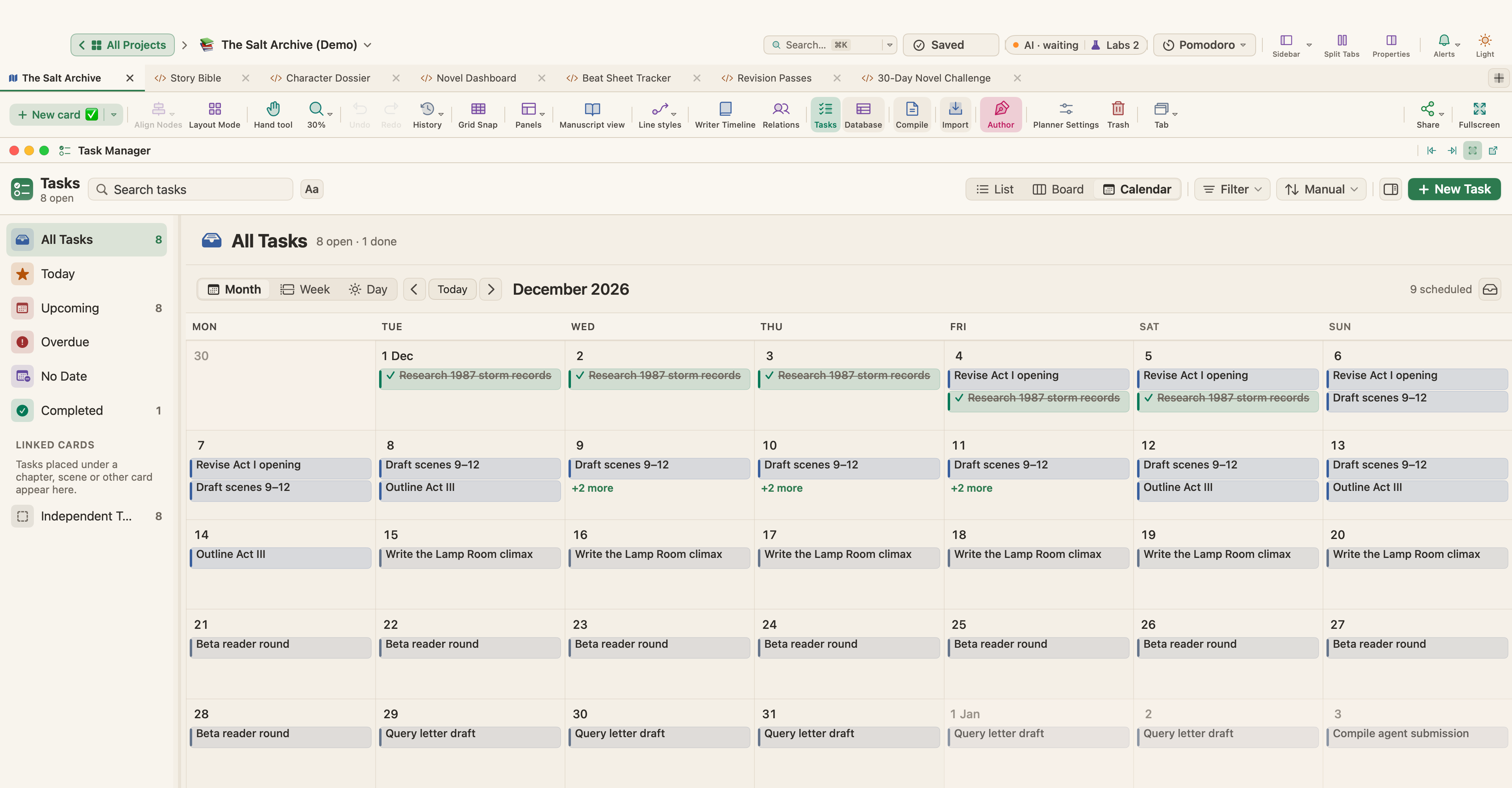
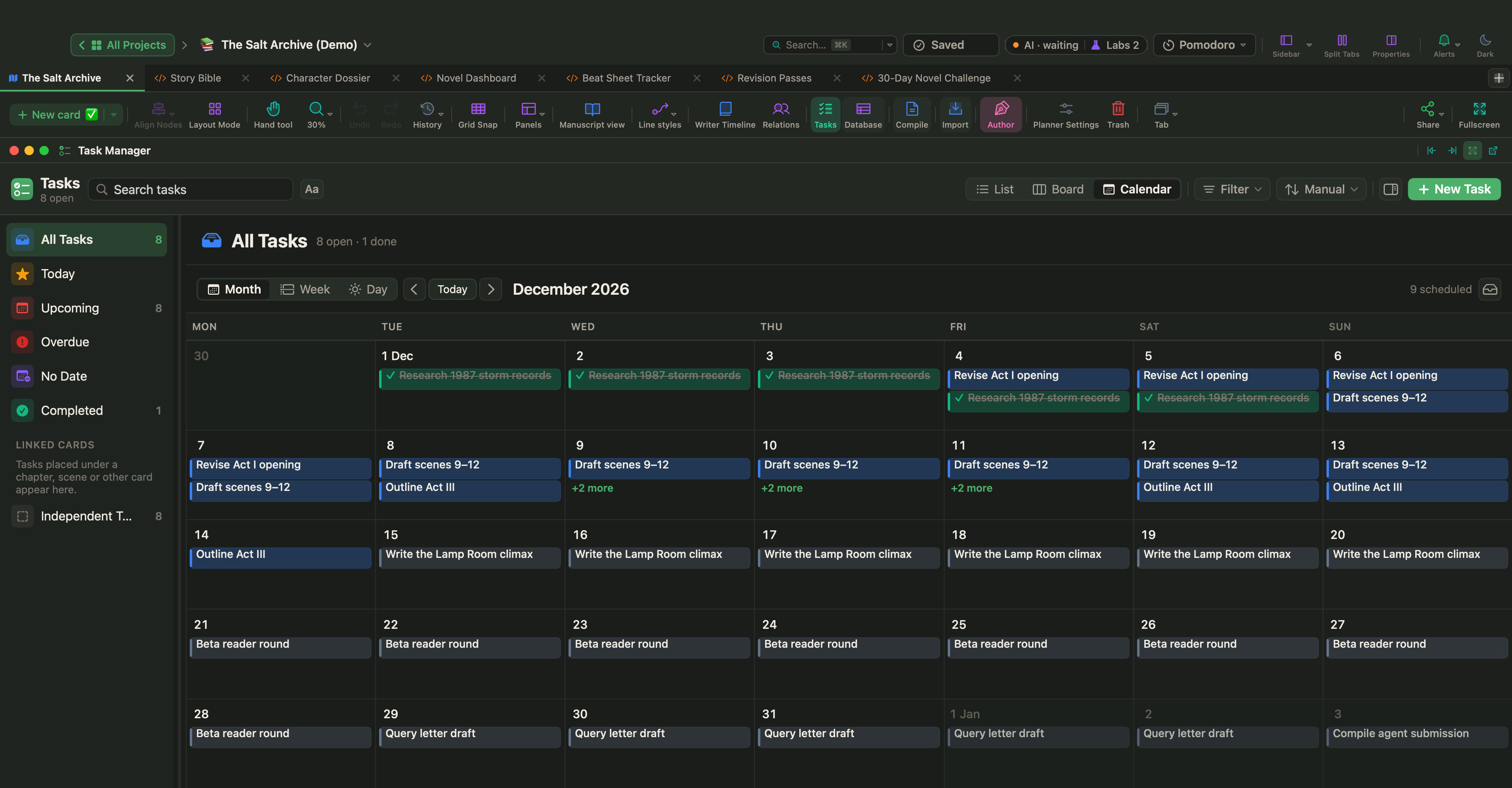
A twelve-week plan to finish your novel: set it up before the new year
A week-by-week plan from a messy draft to a manuscript in first readers' hands, with honest room for missed days. Set it up in December, start on the first Monday of January, and keep it on a calendar in WriterMorph.
· 6 min read
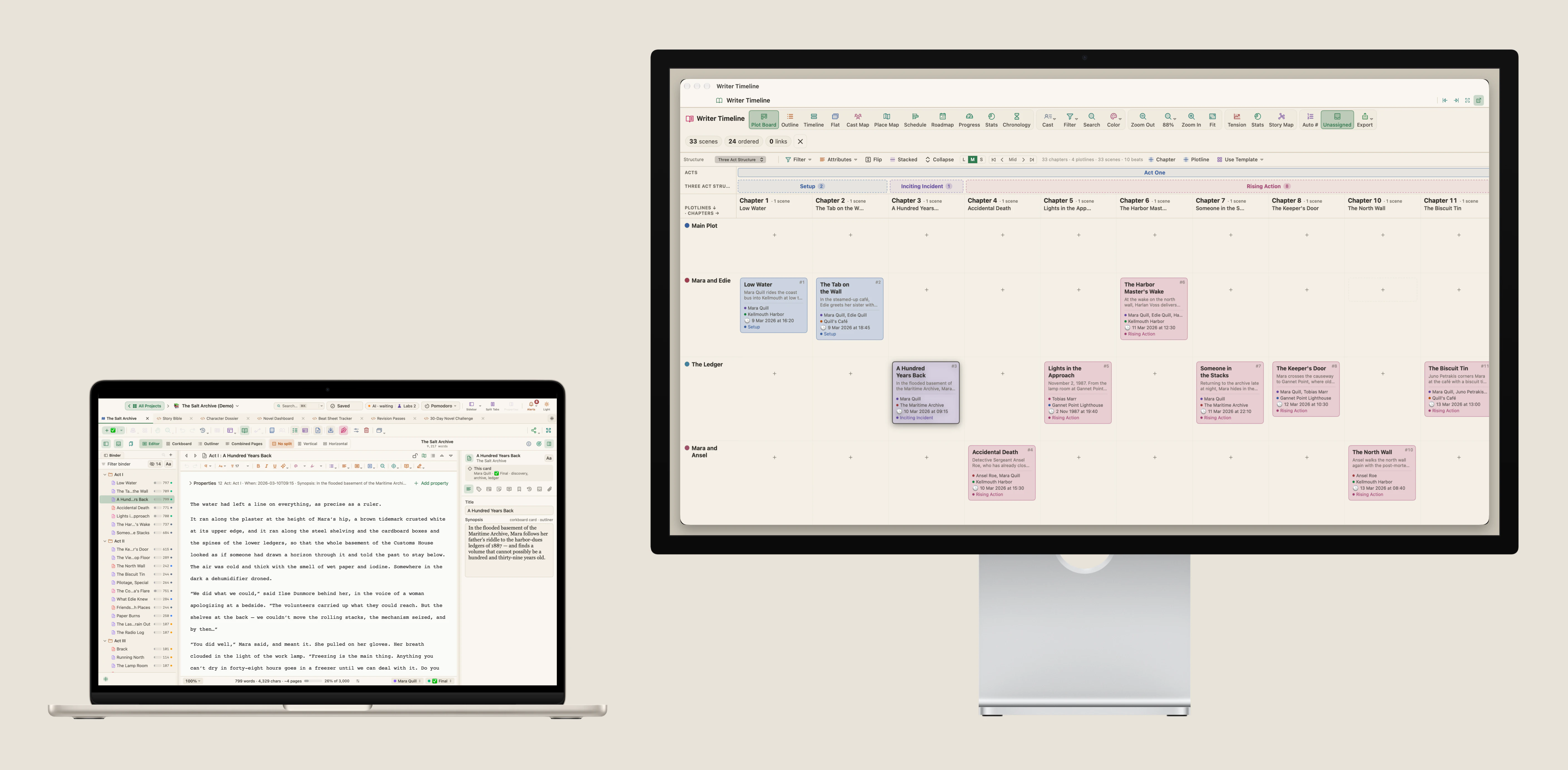
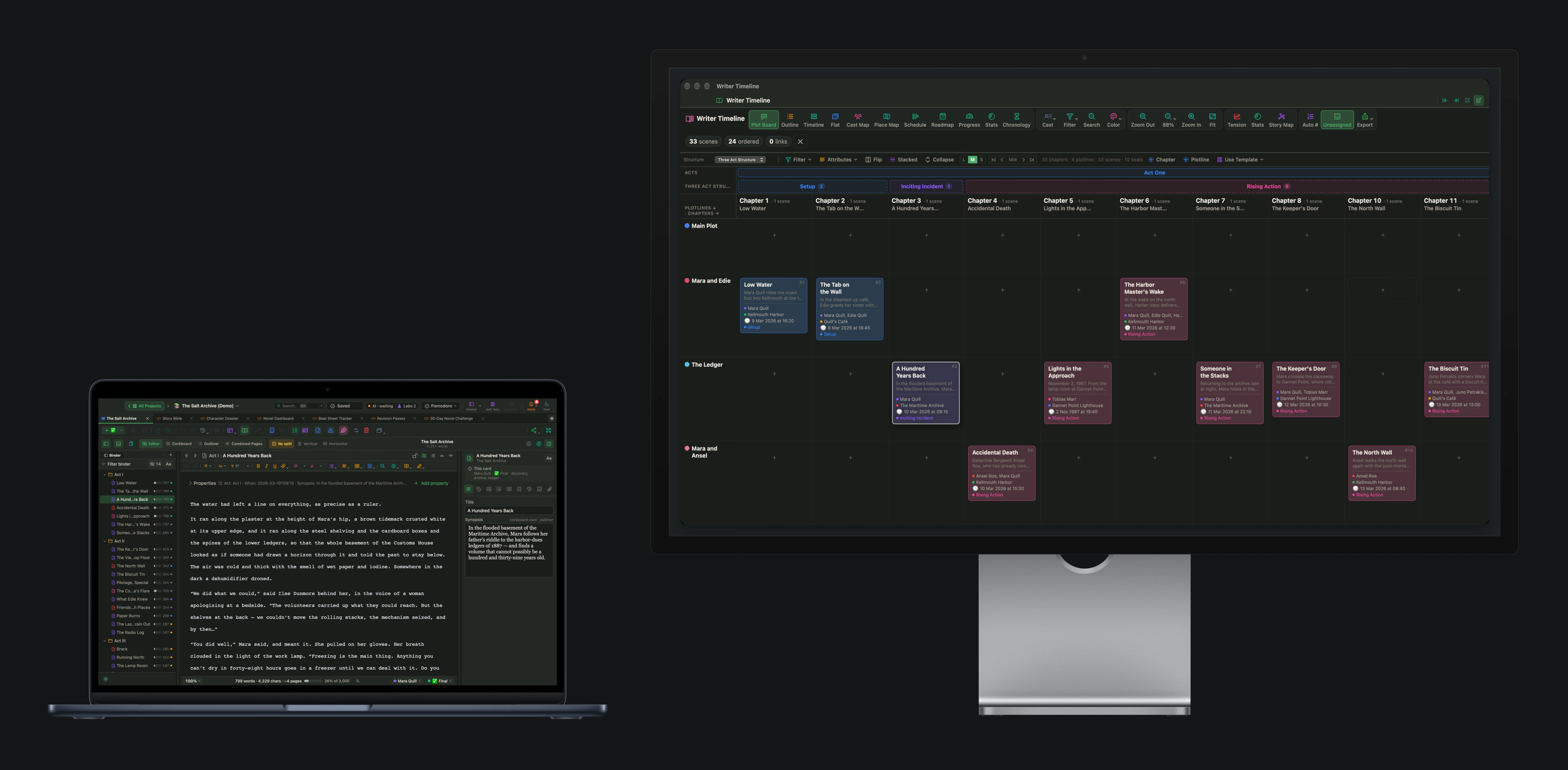
Writing on two screens: what to put where
A second screen is most useful when it holds the thing you keep looking up. Five layouts for a novel, from the plot board beside the page to an iPad as a reference screen, and how to set each one up in WriterMorph.
· 8 min read
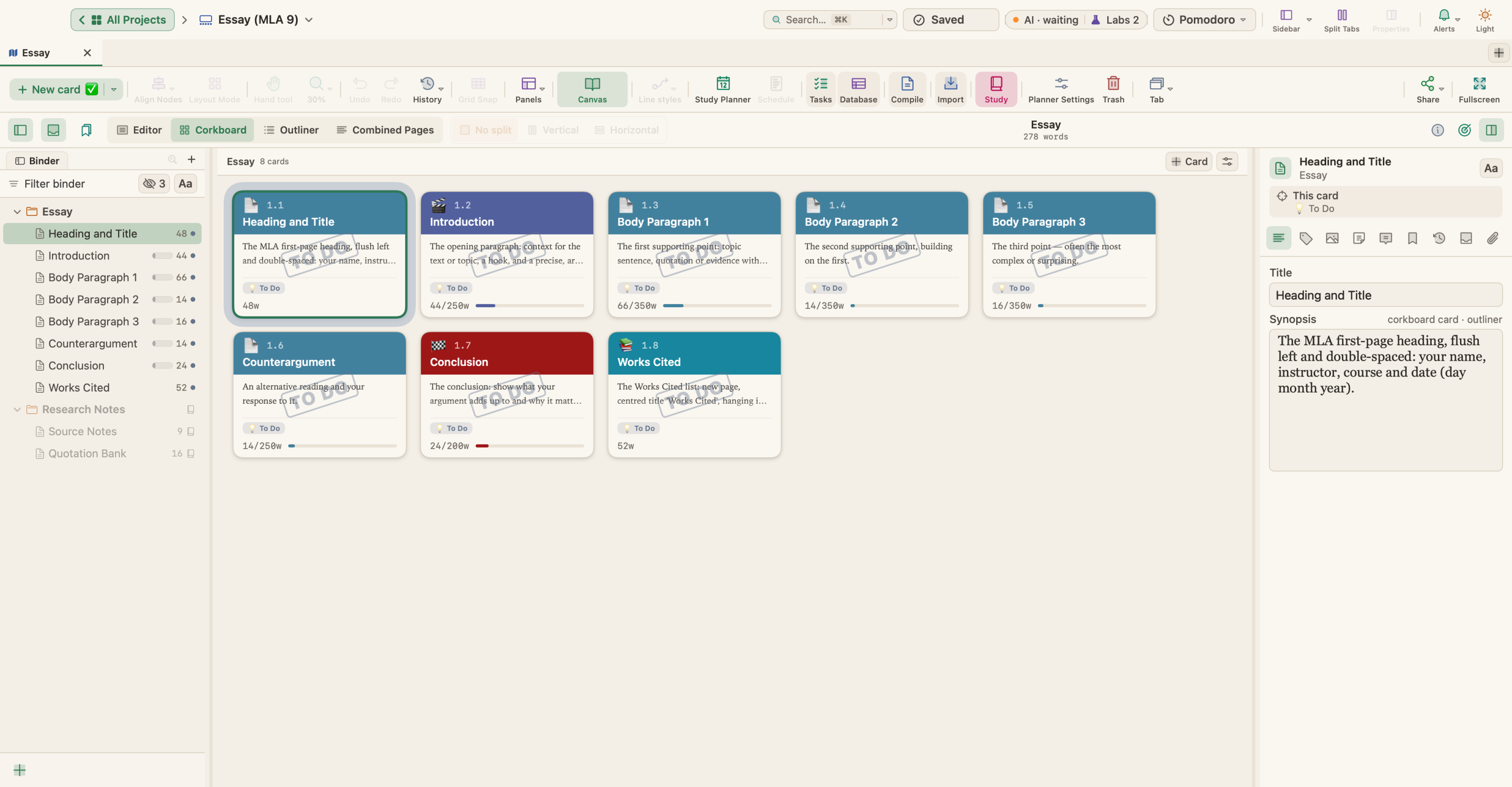
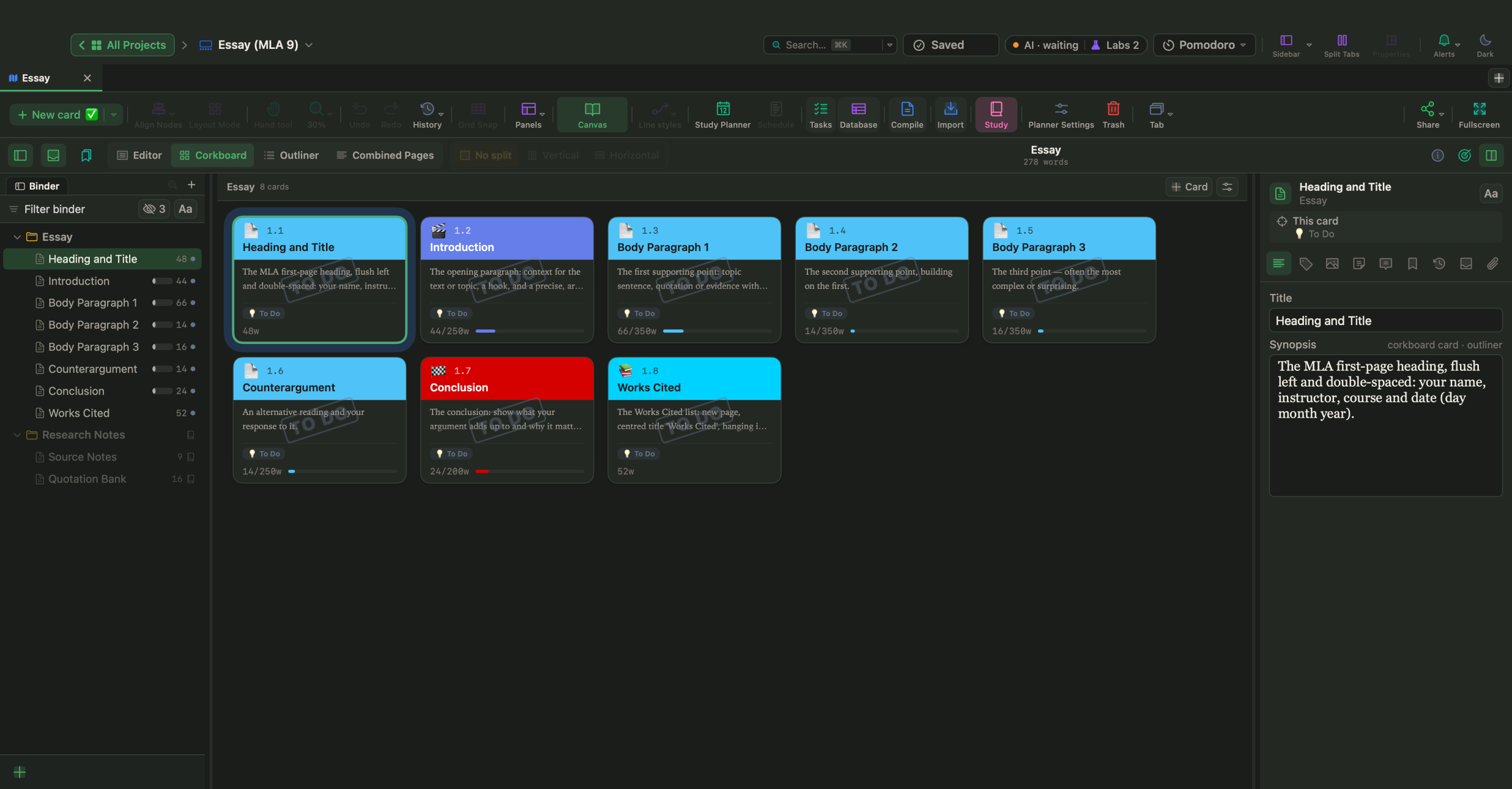
How to write an essay: from the question to a clean final draft (MLA, APA, Chicago)
Take the question apart, commit to a claim, plan one paragraph per point, draft fast, cite as you go and finish with a formatting pass. With a short comparison of what MLA, APA and Chicago ask for on the page, and the same steps in WriterMorph.
· 8 min read
After the first draft: how to map your novel and plan the second draft
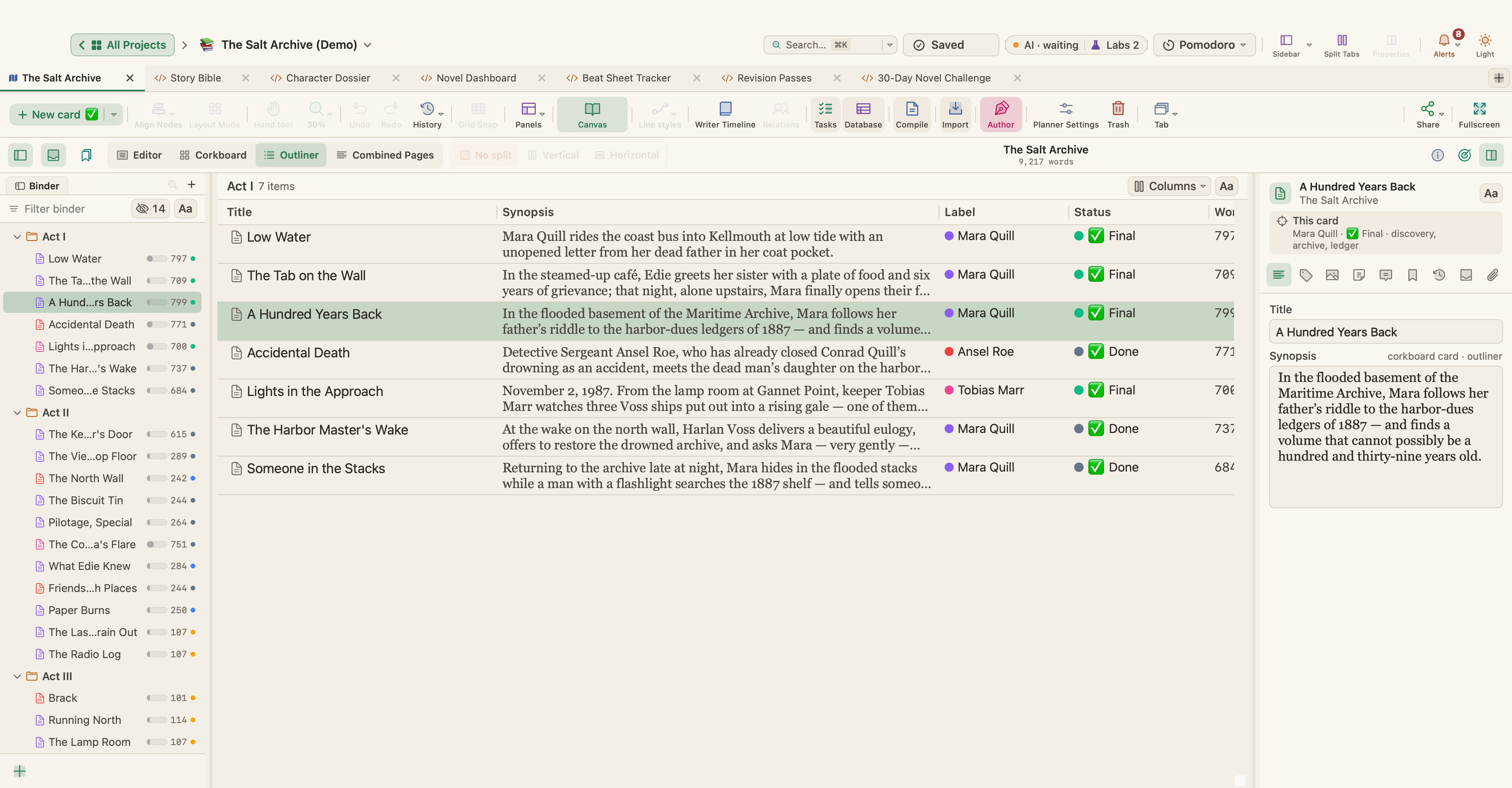
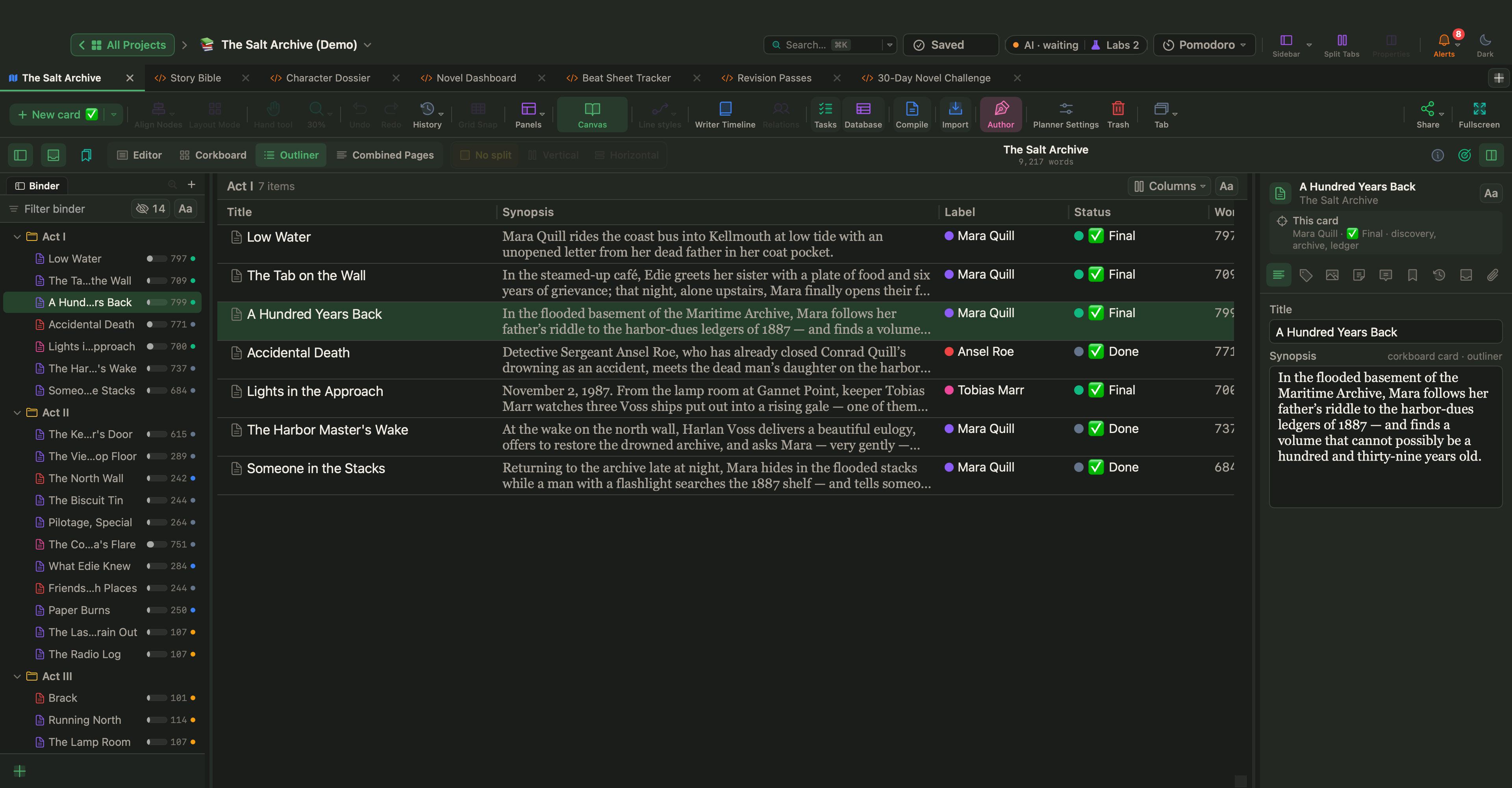
Finished a messy first draft in November? Use novelist Matt Bell's mapping method to turn it into a plan for the second draft in one evening, worked through step by step on The Salt Archive, a sample mystery.
· 9 min read
How to write a novel synopsis: a worked example with Pride and Prejudice
Agents ask for a one- or two-page synopsis with the ending included. Here is how to write one in an evening, worked through on a novel everyone knows, from 61 chapters down to about 450 words.
· 7 min read
How to interview your family for a memoir, and turn the answers into chapters
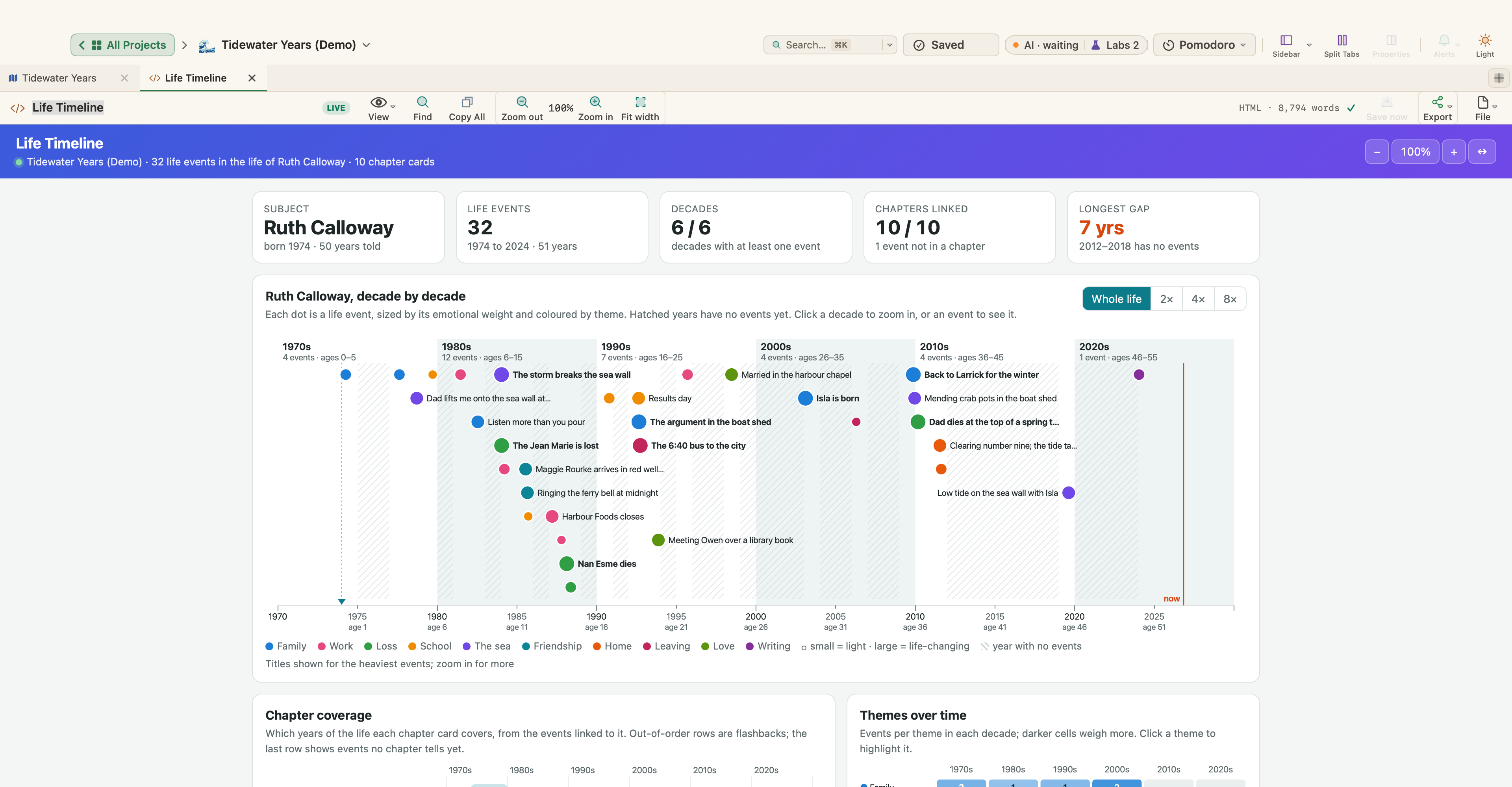
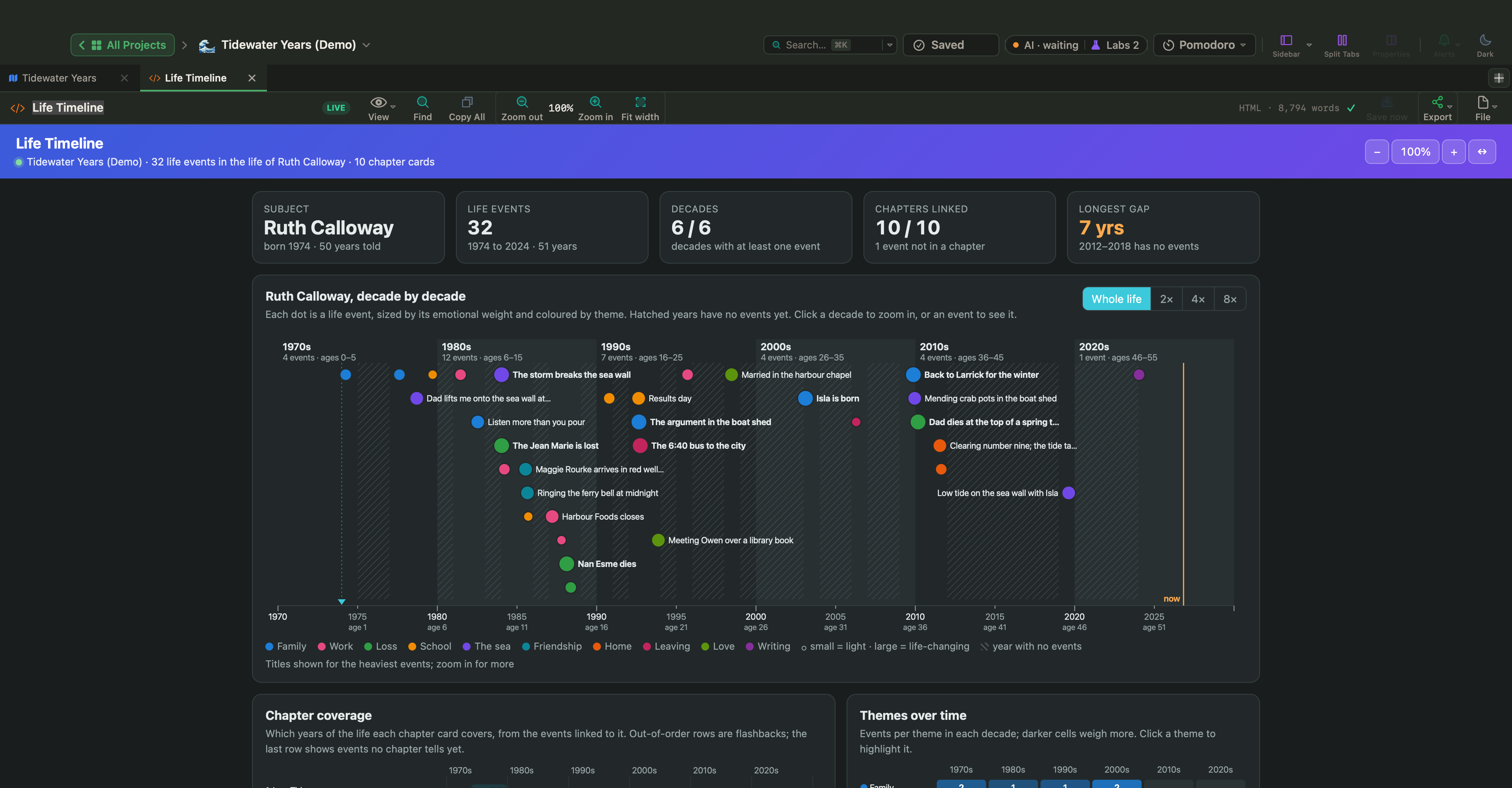
The holidays put the people who remember your childhood around one table. Here is how to find out what to ask them, run the conversation and file what you learn, worked through on Tidewater Years, a sample memoir.
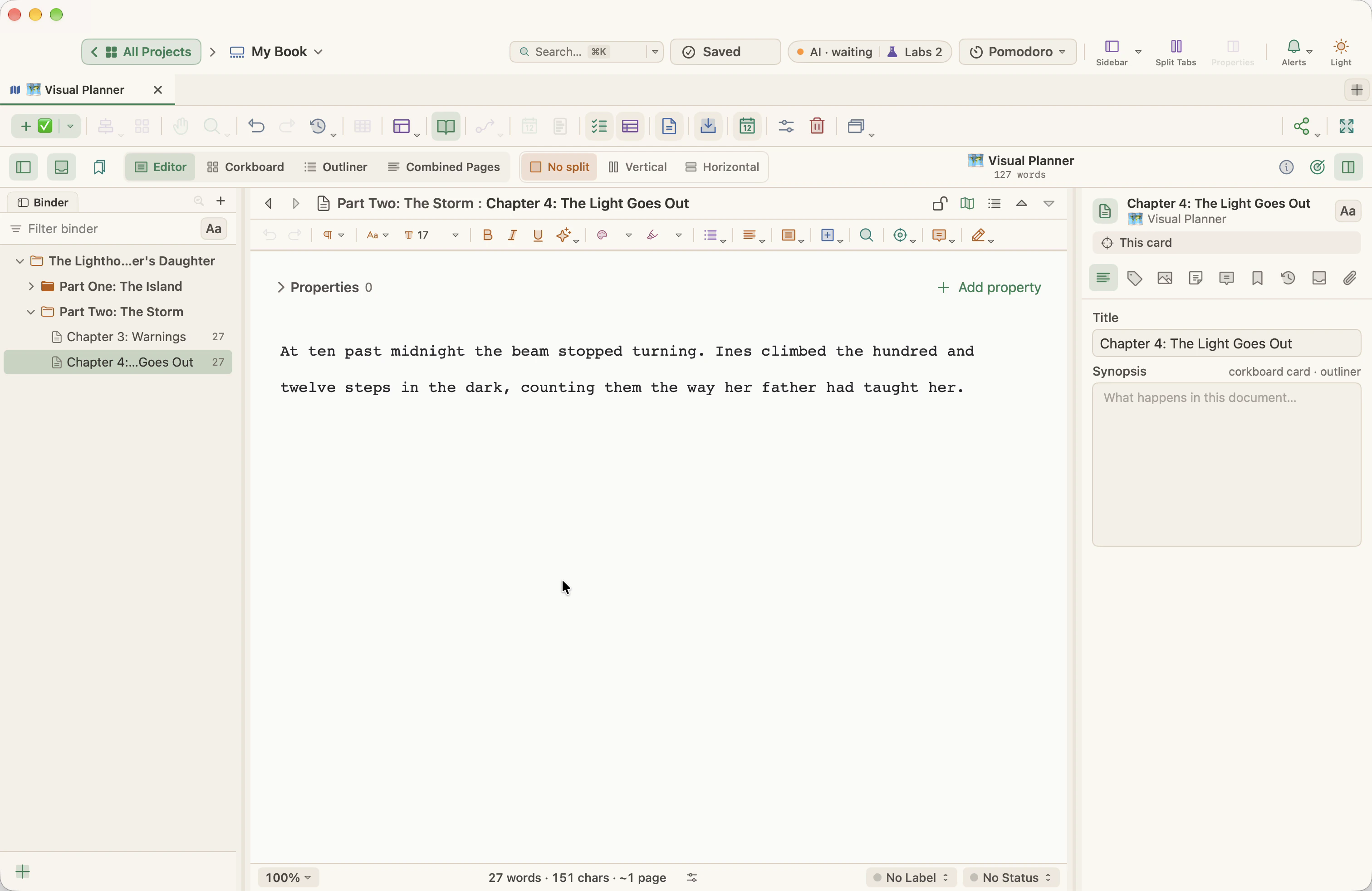
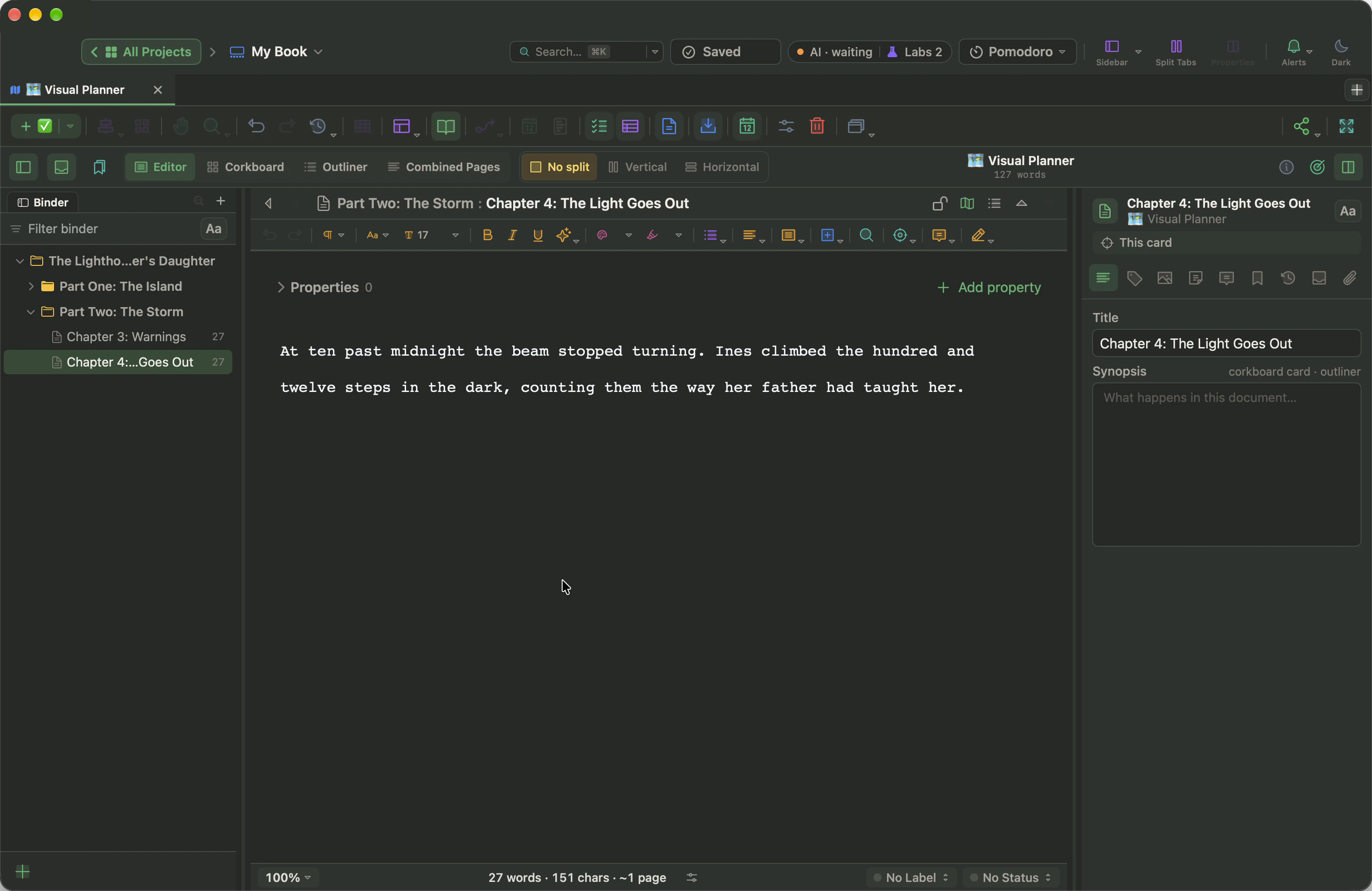
· 5 min read
How to import a Word manuscript and split it into parts and chapters
Bring a whole book from Word into WriterMorph in one step, with every part as a folder and every chapter as a document. With a video, a picture of each step and what to do when the split isn't right.
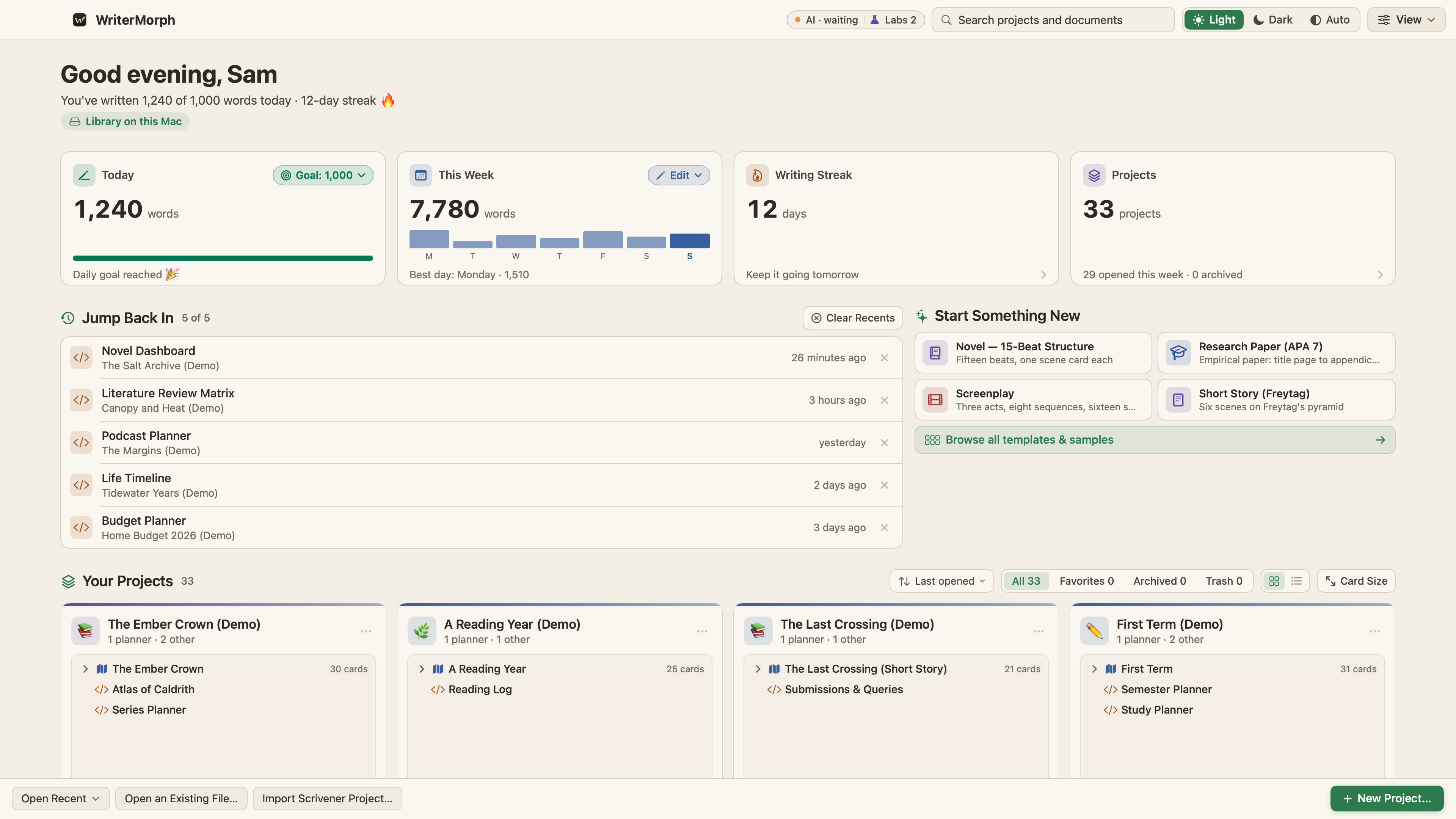
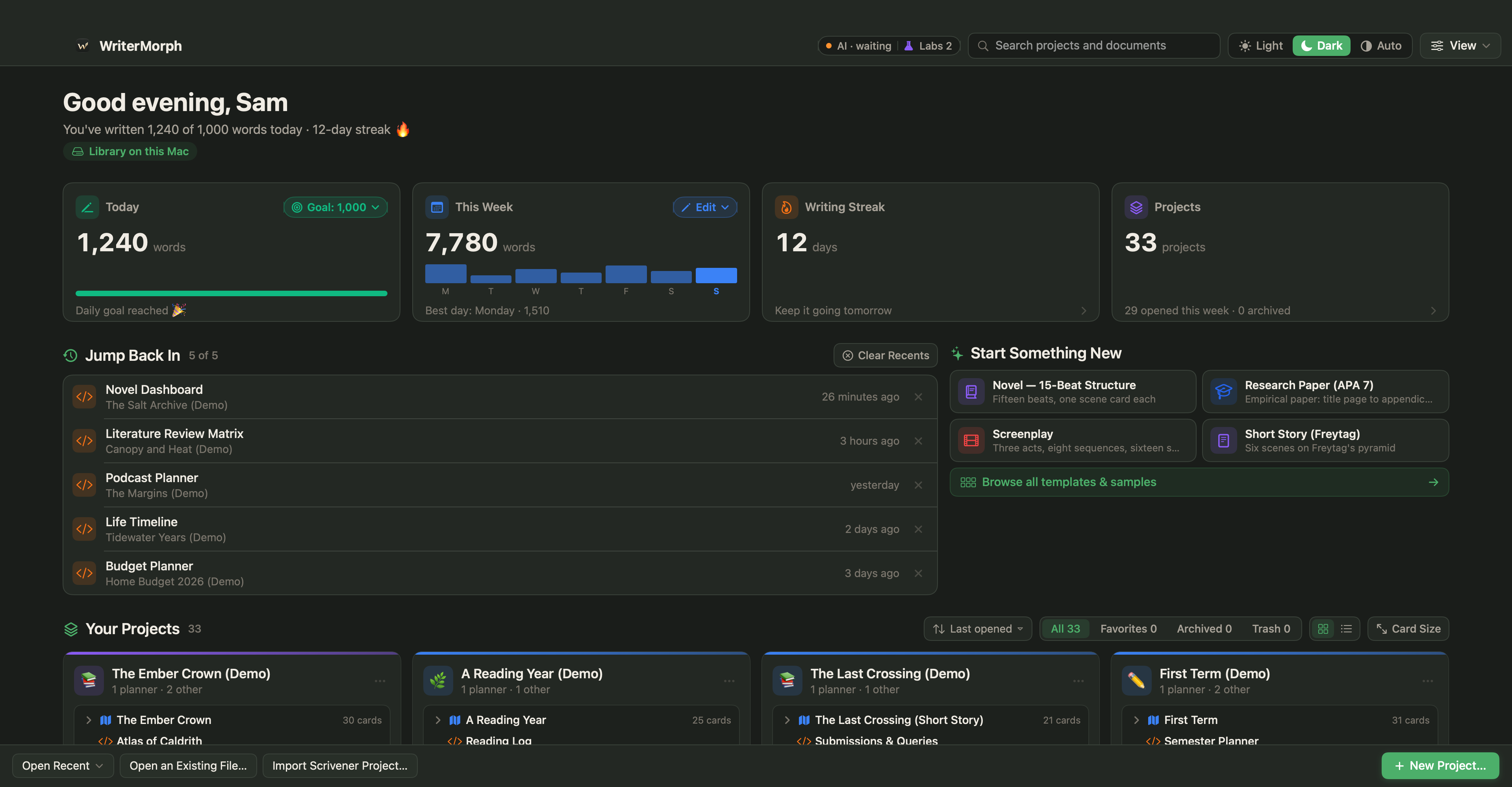
· 6 min read
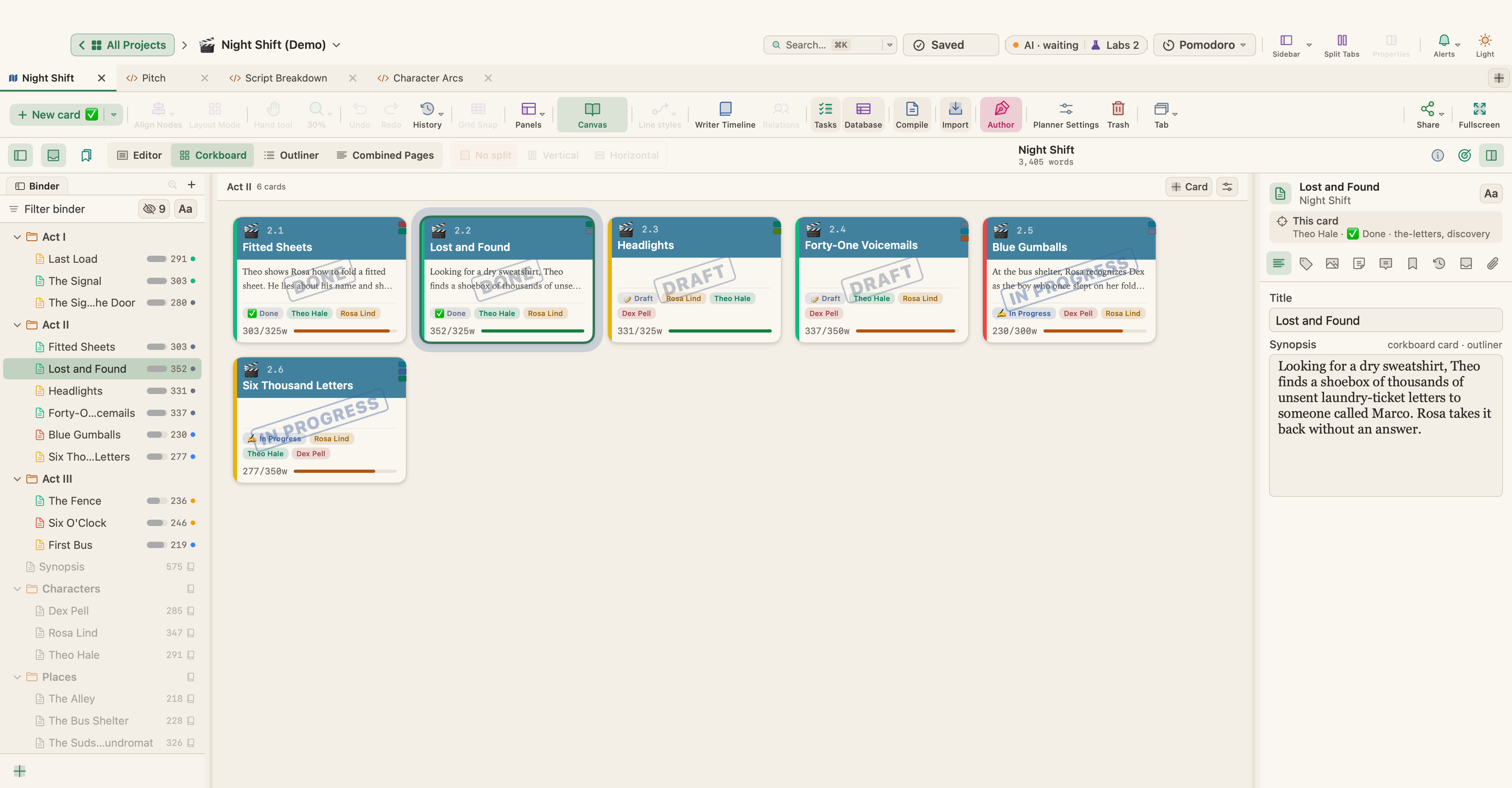
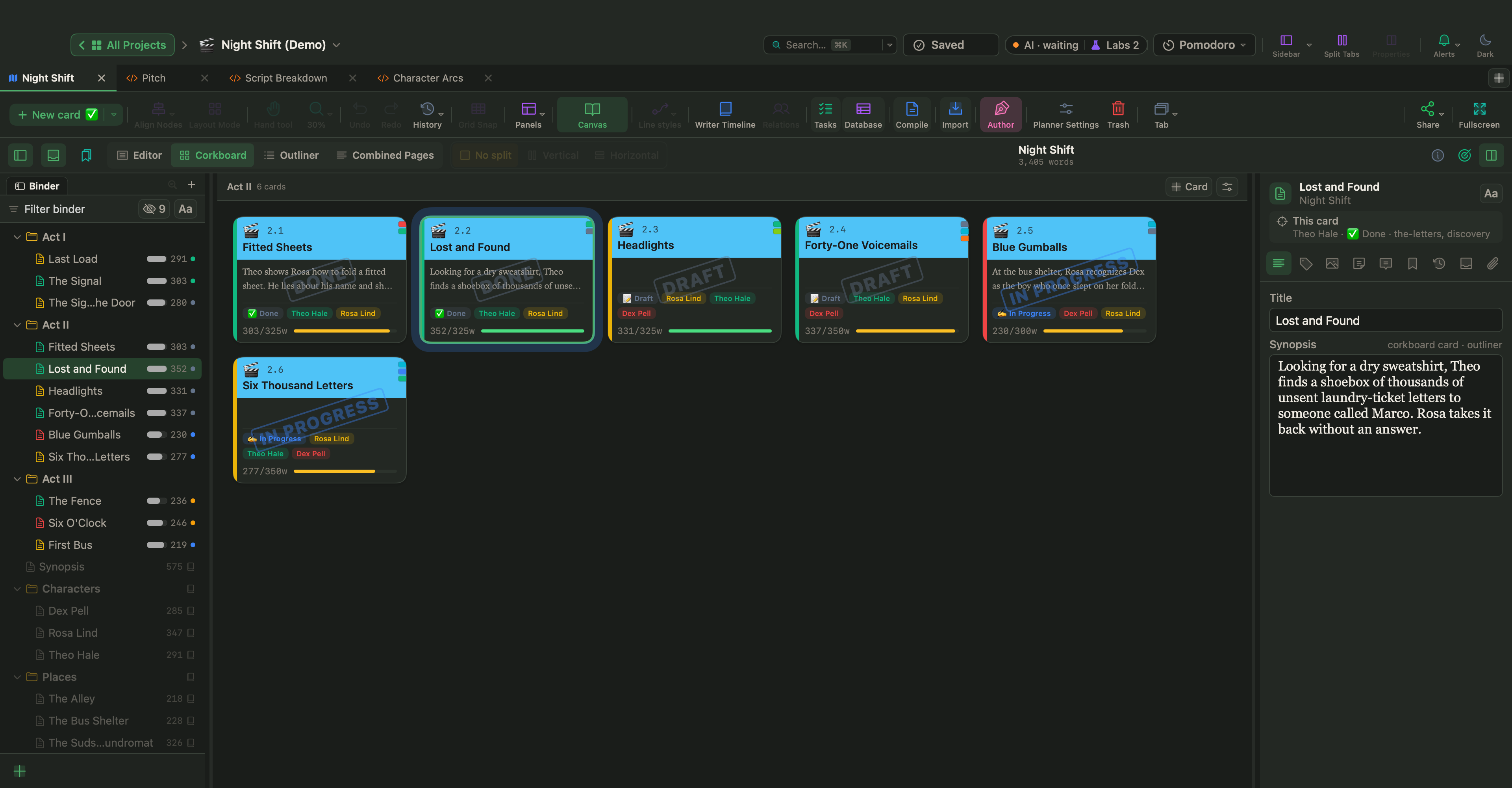
How to hit your daily word count: targets, sessions and a pace you can keep
Work out a daily target from your total and your deadline, write it in short timed sessions, keep an honest streak and get back on pace after a missed day without doubling up. Then the same in WriterMorph.
· 6 min read
How to format a screenplay: scene headings, action, dialogue and transitions
What each part of a screenplay page does, from the scene heading to the transition, the conventions readers expect and a short example scene. Then write, plan and compile a script in WriterMorph.
· 6 min read
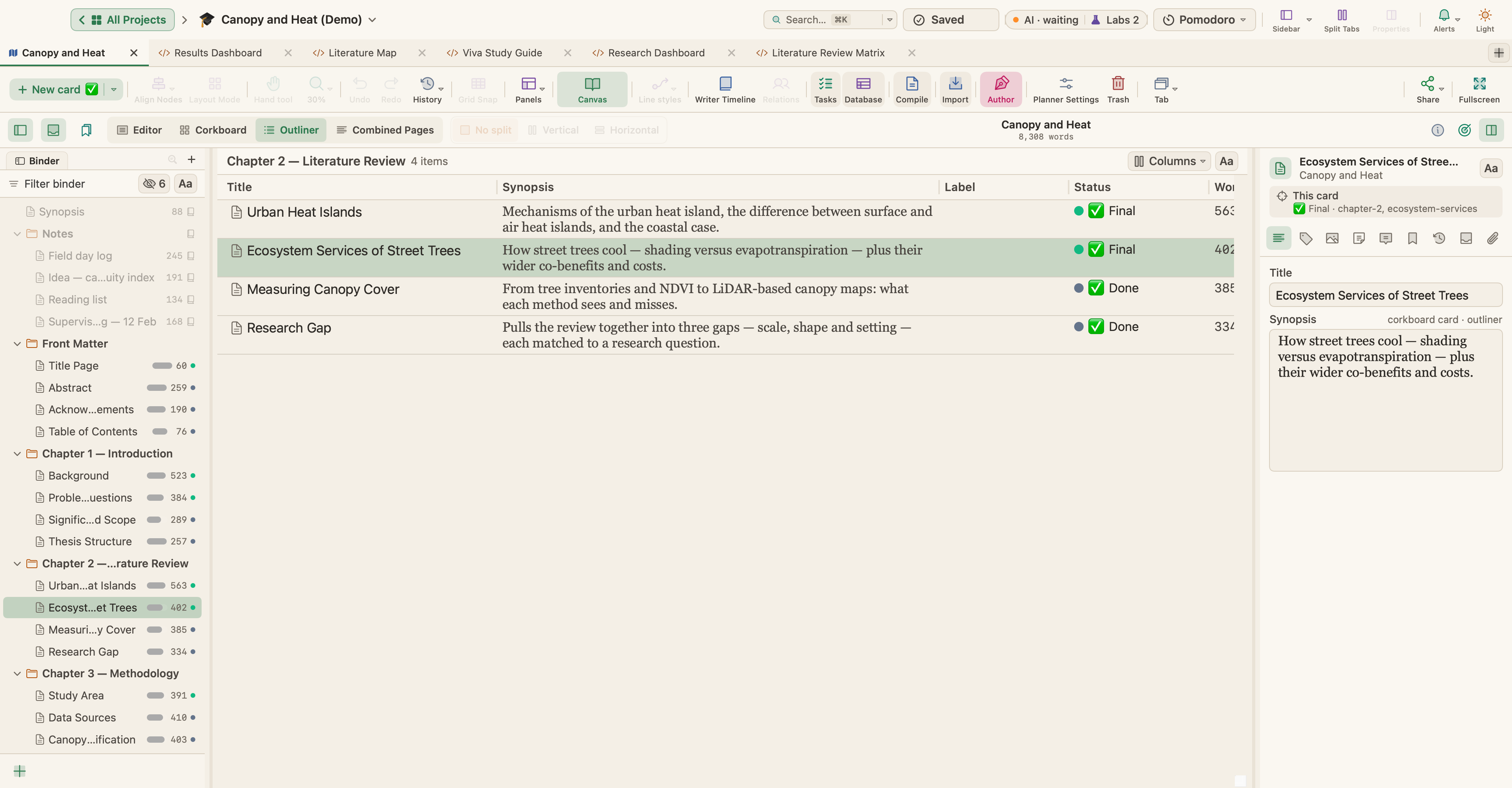
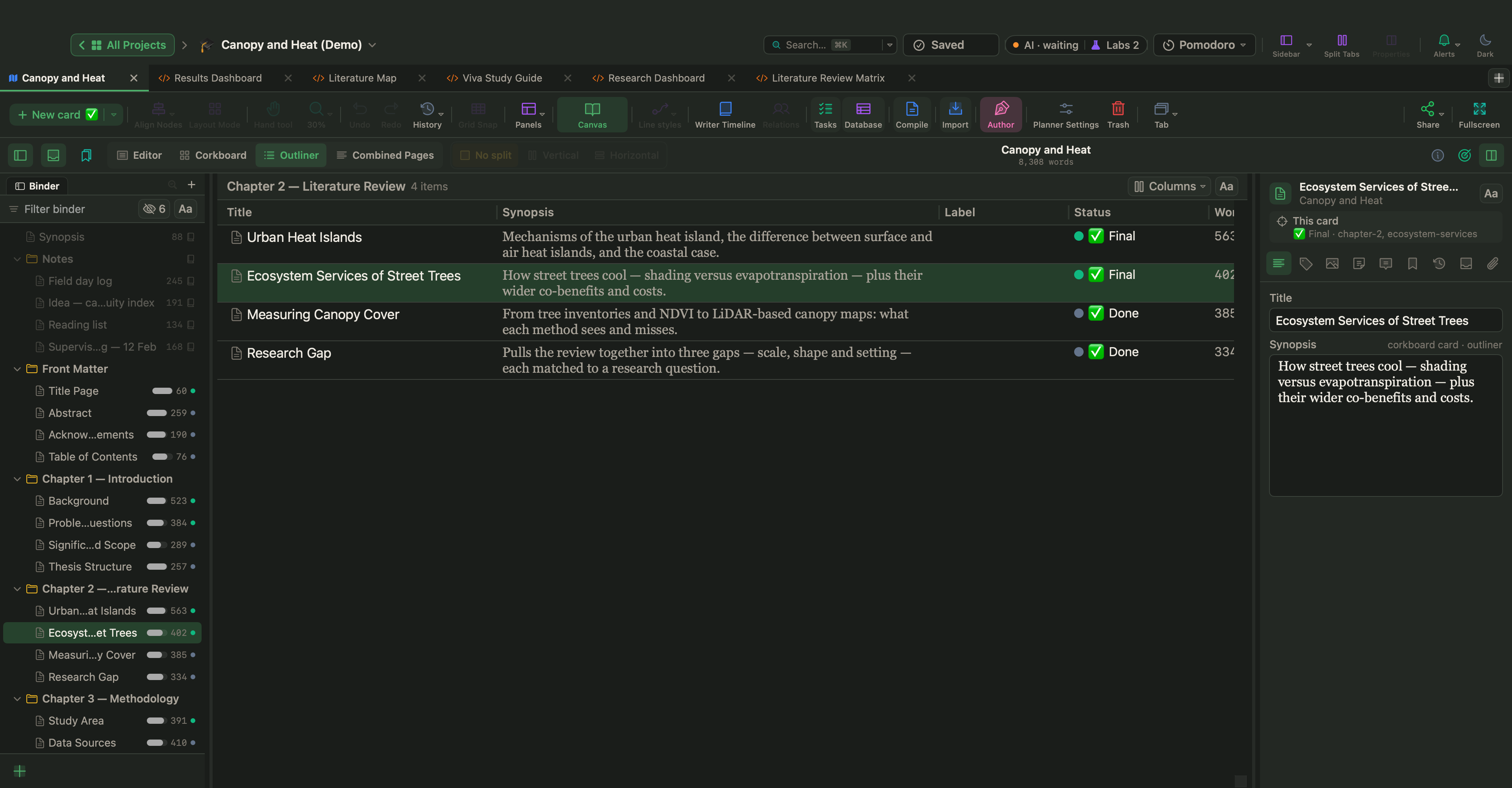
How to plan a thesis or dissertation: chapters, sources and a timeline you can keep
Turn your research question into a chapter plan, count back from the submission date, keep every source tied to the chapter it supports, and set the whole thesis up in WriterMorph.
· 6 min read
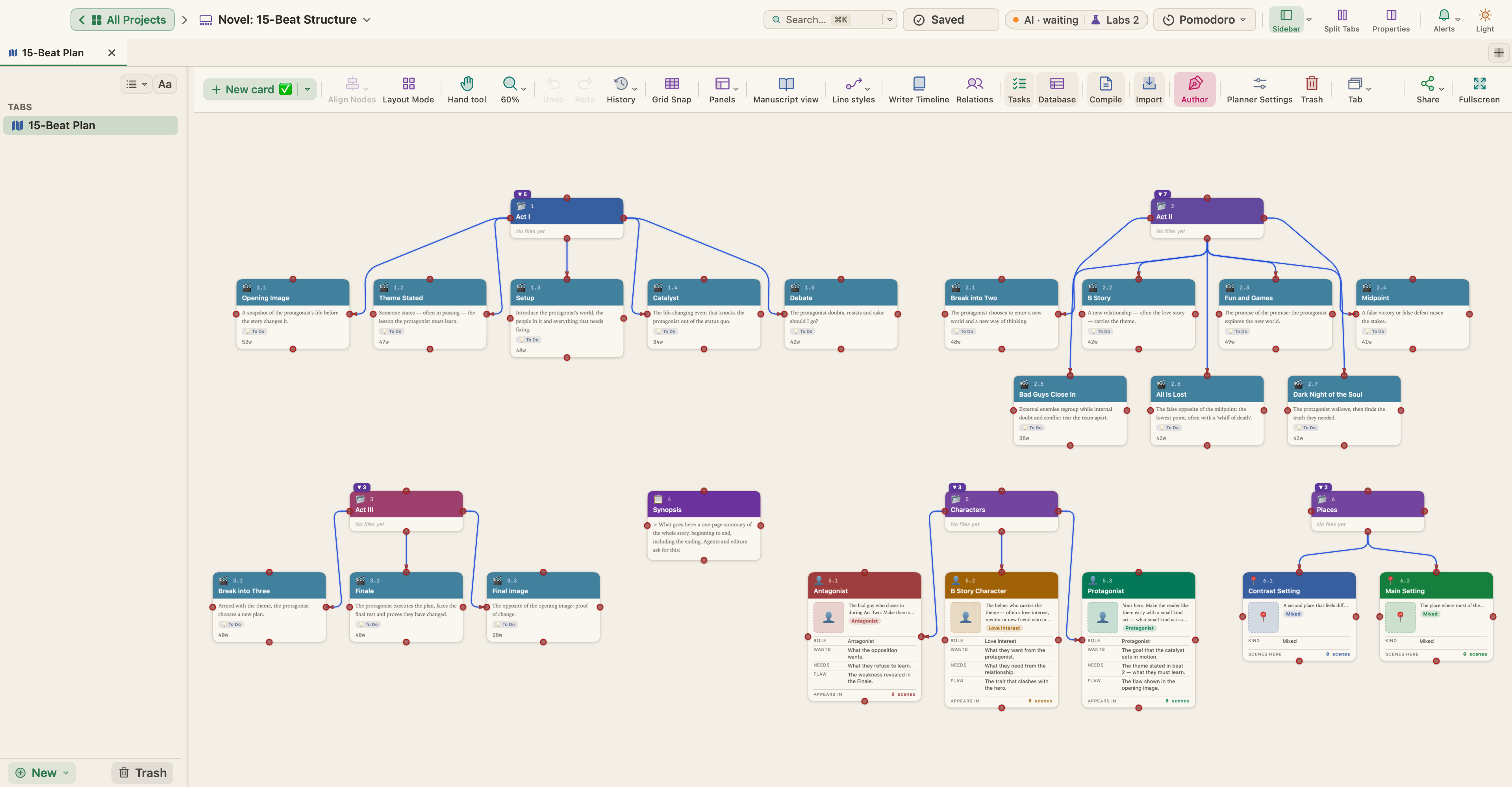
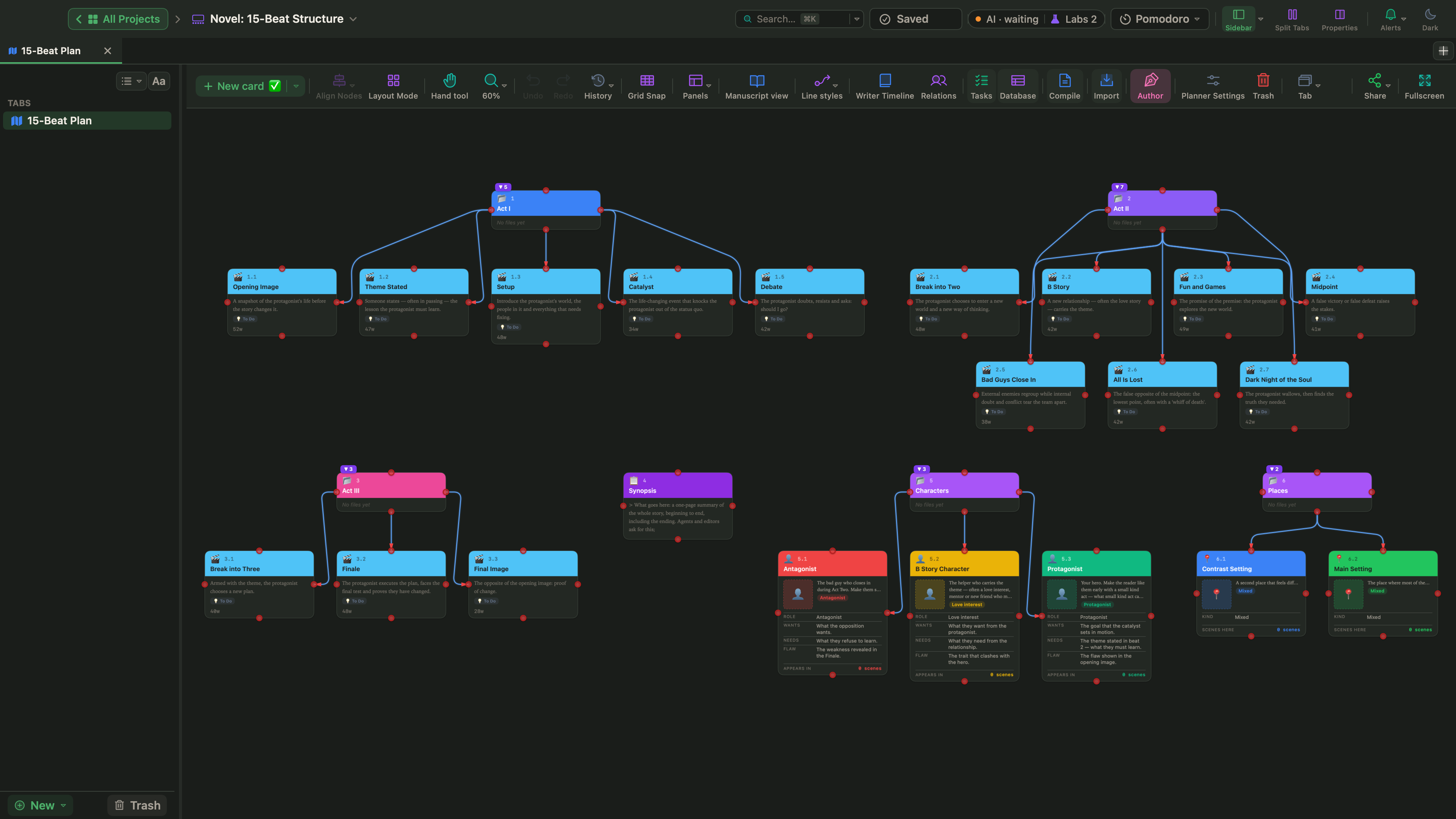
Save the Cat! beat sheet for novels: the 15 beats and how to plan with them
What each of the fifteen beats does in a novel, roughly where it falls, which beats to plan first and the mistakes to avoid. Then the same beats as scene cards in WriterMorph.
· 6 min read
The Hero's Journey for novelists: the twelve stages, the inner journey and how to plan them
What each of the twelve stages does, how an inner journey runs under the outer one, how to use the pattern without turning every book into a quest, and how to plan it as scene cards in WriterMorph.
· 6 min read
Three-act structure for novels: setup, confrontation, resolution, step by step
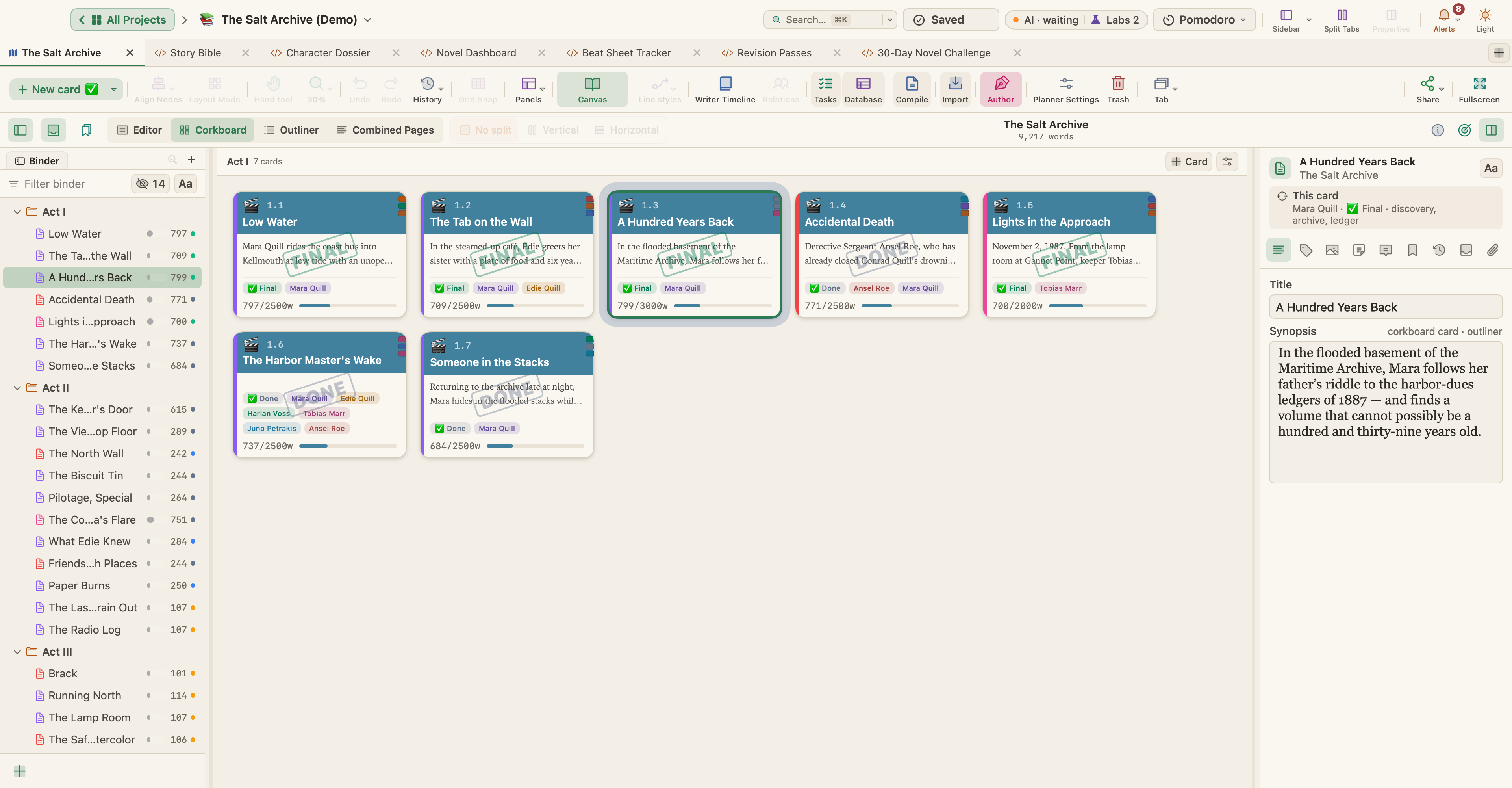
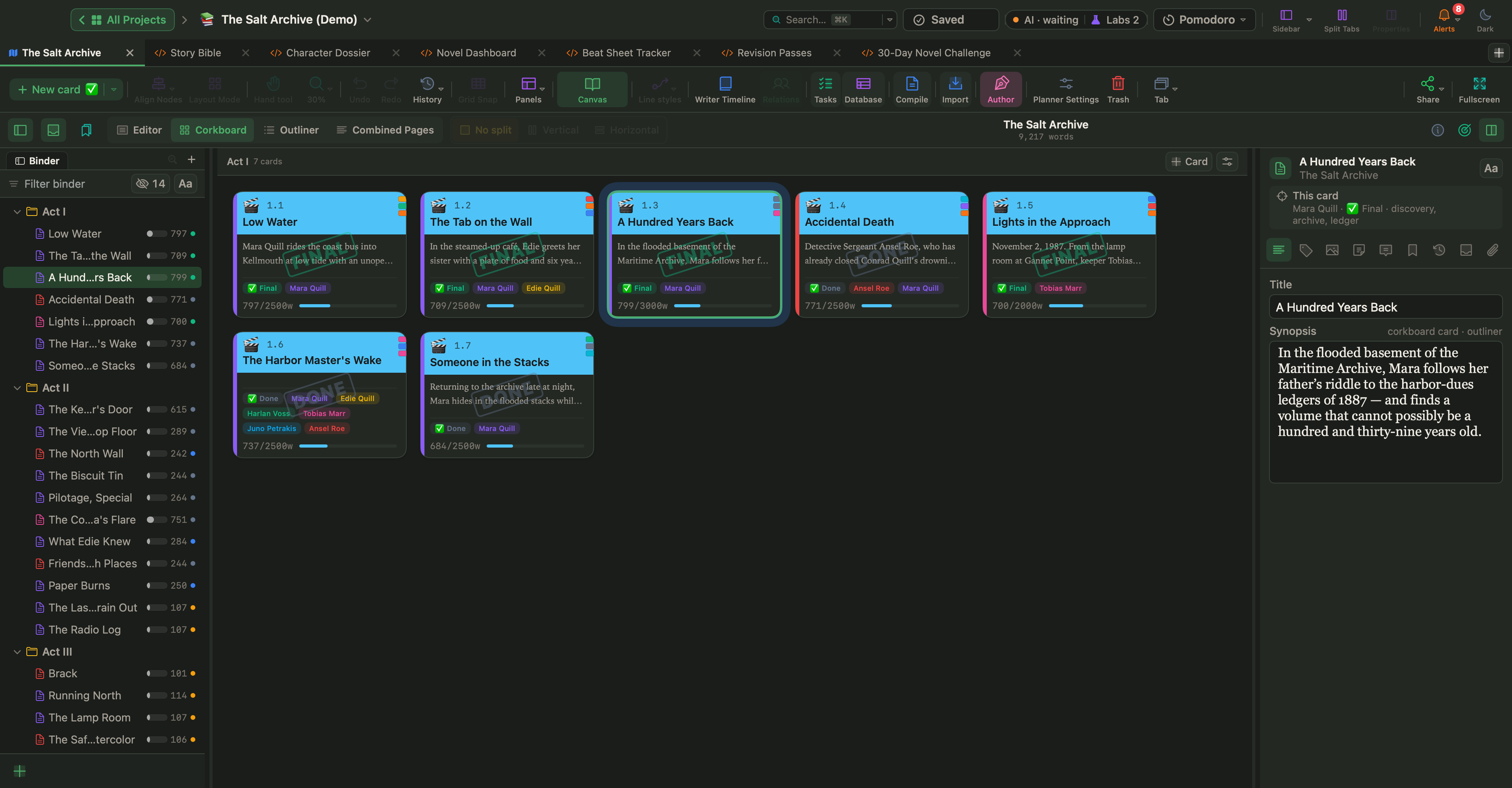
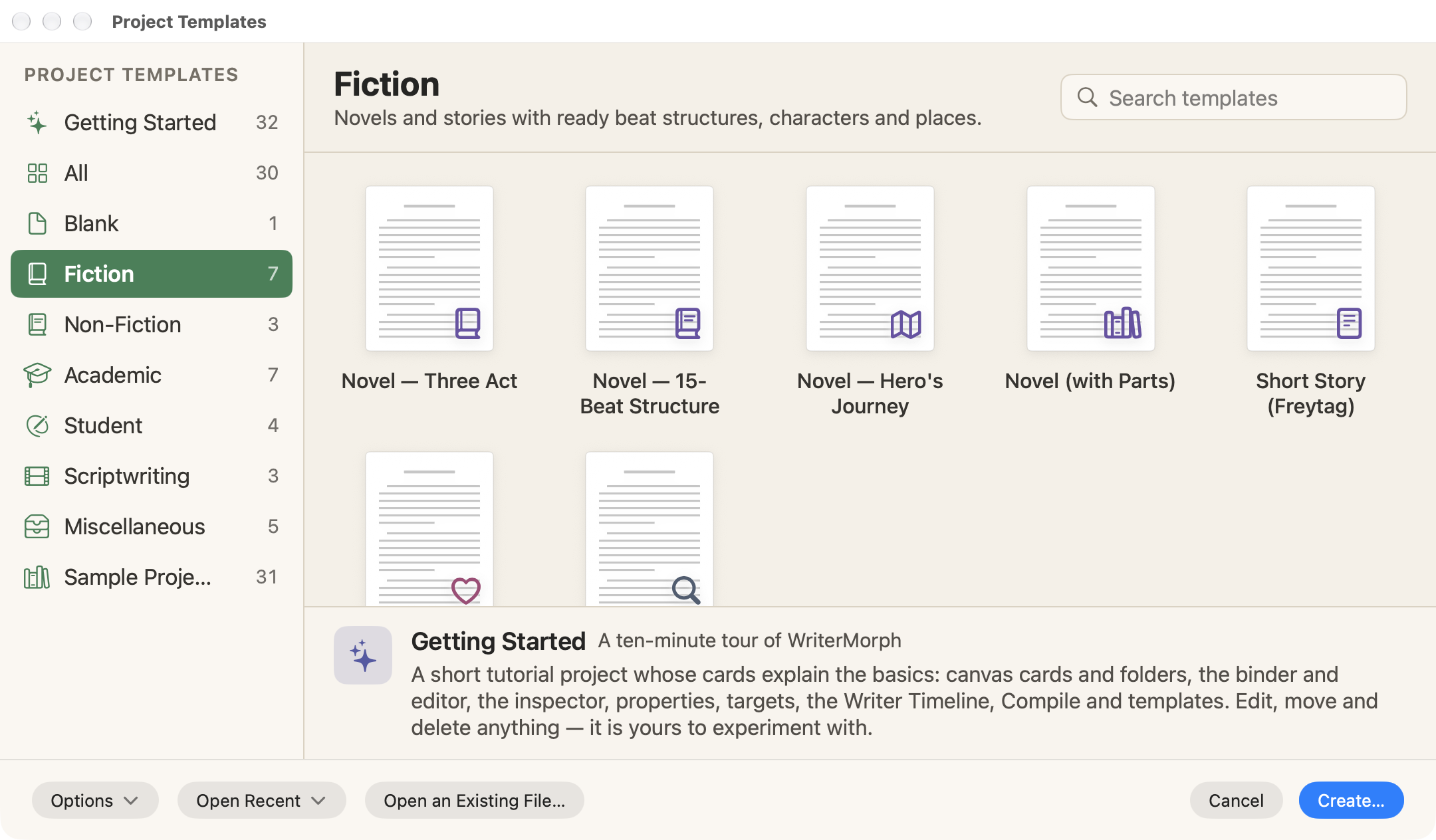
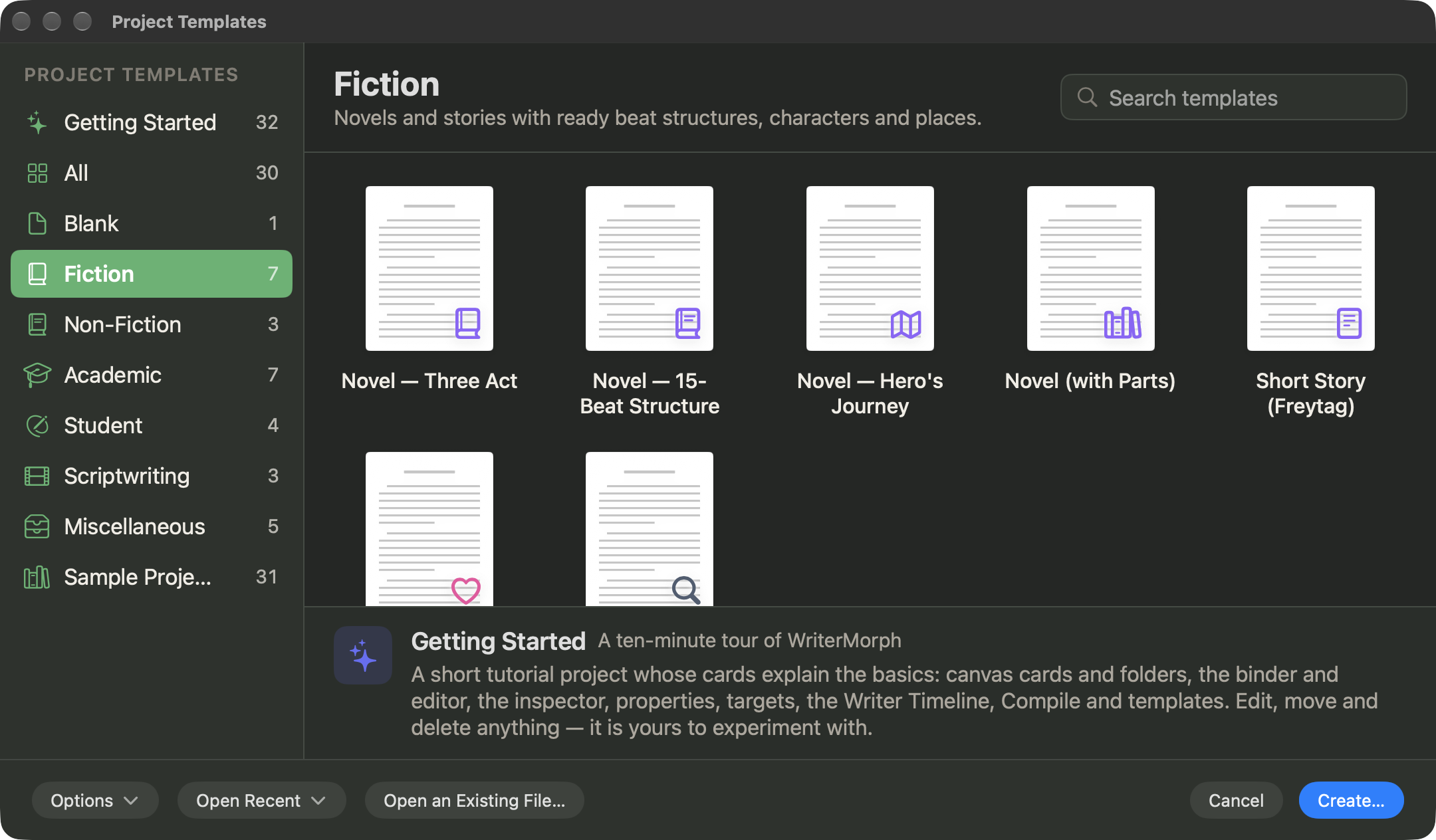
What each act of a novel has to achieve, where the two plot points and the midpoint go, and a worked thirteen-scene plan. Then the same plan built act by act in WriterMorph.
· 6 min read
How to plot a romance novel: the beats readers expect, planned in WriterMorph
Two leads with arcs of their own, a conflict that keeps them apart, the beats from meet-cute to happy ending and a slow burn paced on purpose. Then the same plan in WriterMorph's Romance Novel template.
· 7 min read
How to plot a mystery or thriller: the crime, the clues and a fair-play solution
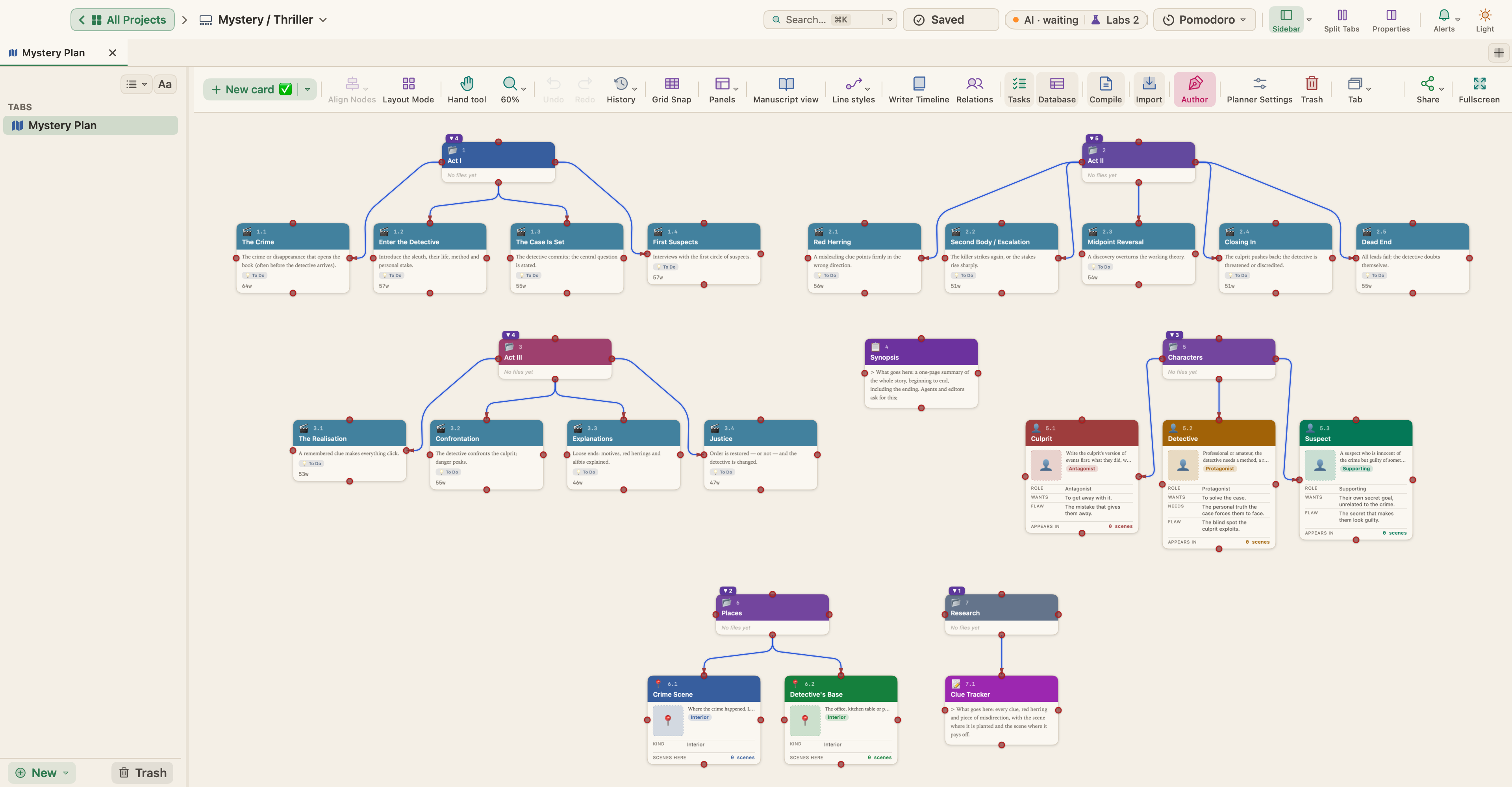
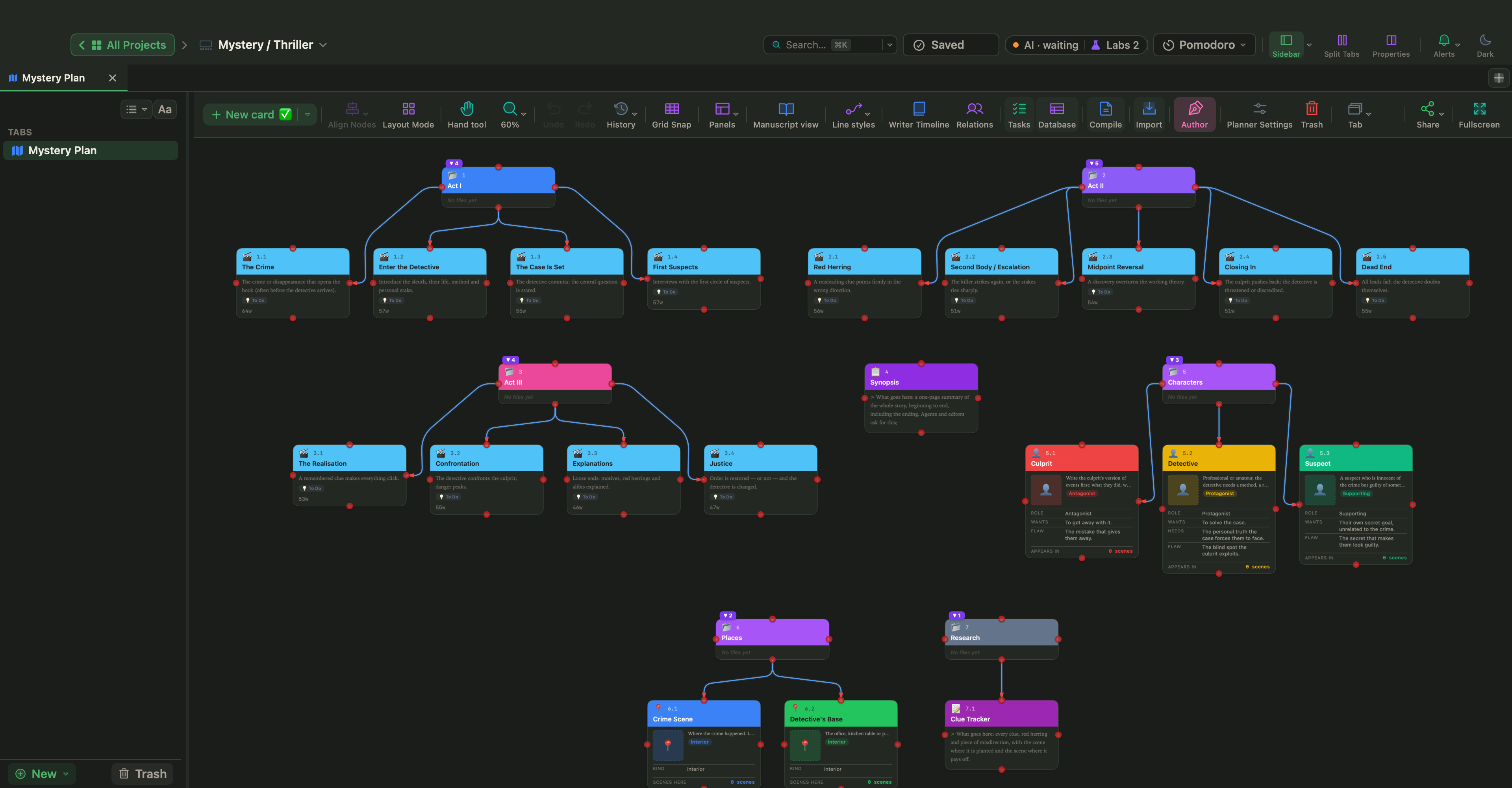
Plan a mystery backwards from the crime, give every suspect a motive and a secret, plant clues and red herrings fairly, and land the reveal. Then plot it with the Mystery / Thriller template in WriterMorph.
· 6 min read
How to write a short story: one change, Freytag's pyramid and a finished draft
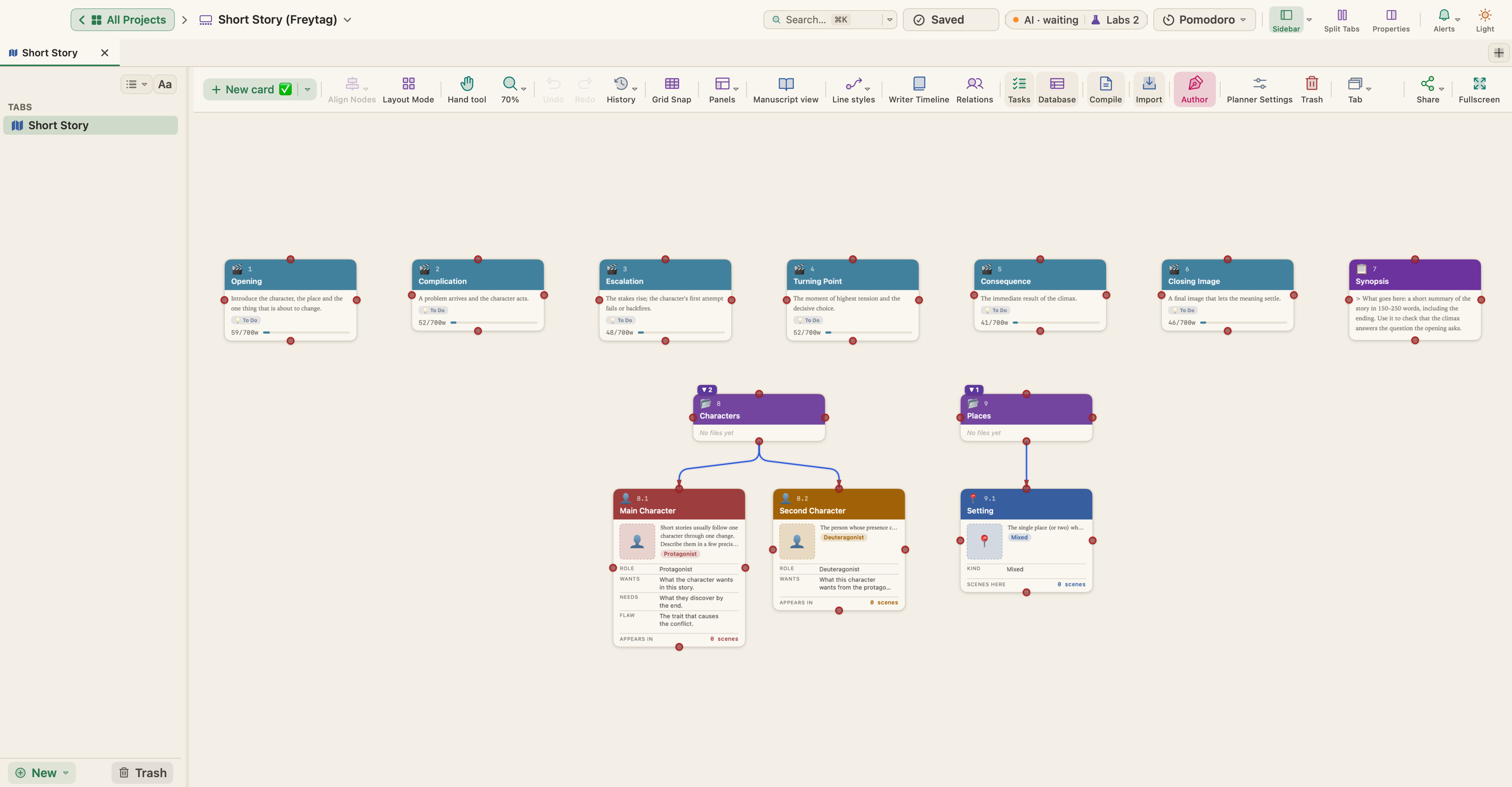
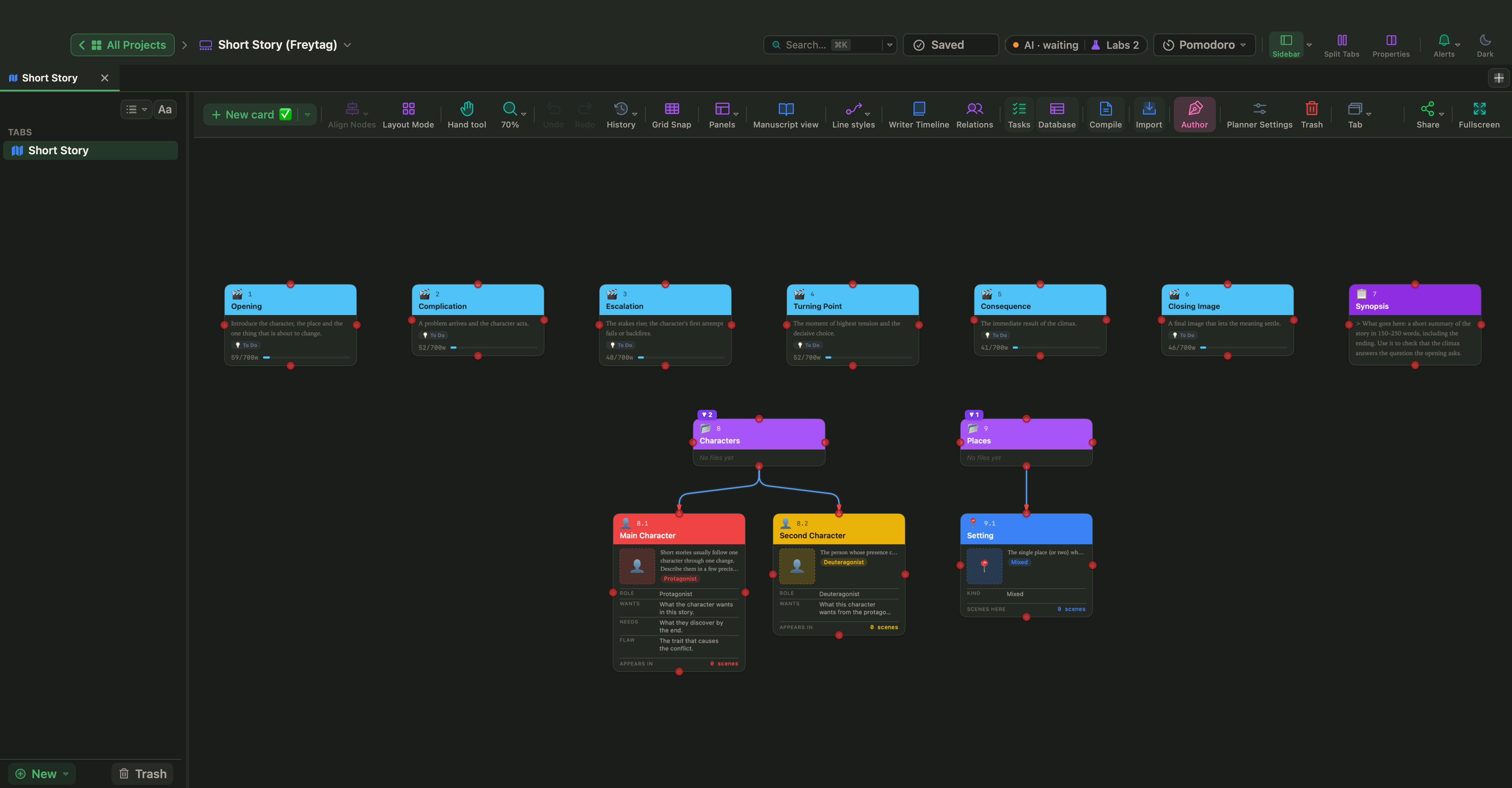
A short story follows one character through one change. Plan it on Freytag's pyramid in a handful of scenes, keep it to length, revise it and send it out. Then the same steps in WriterMorph.
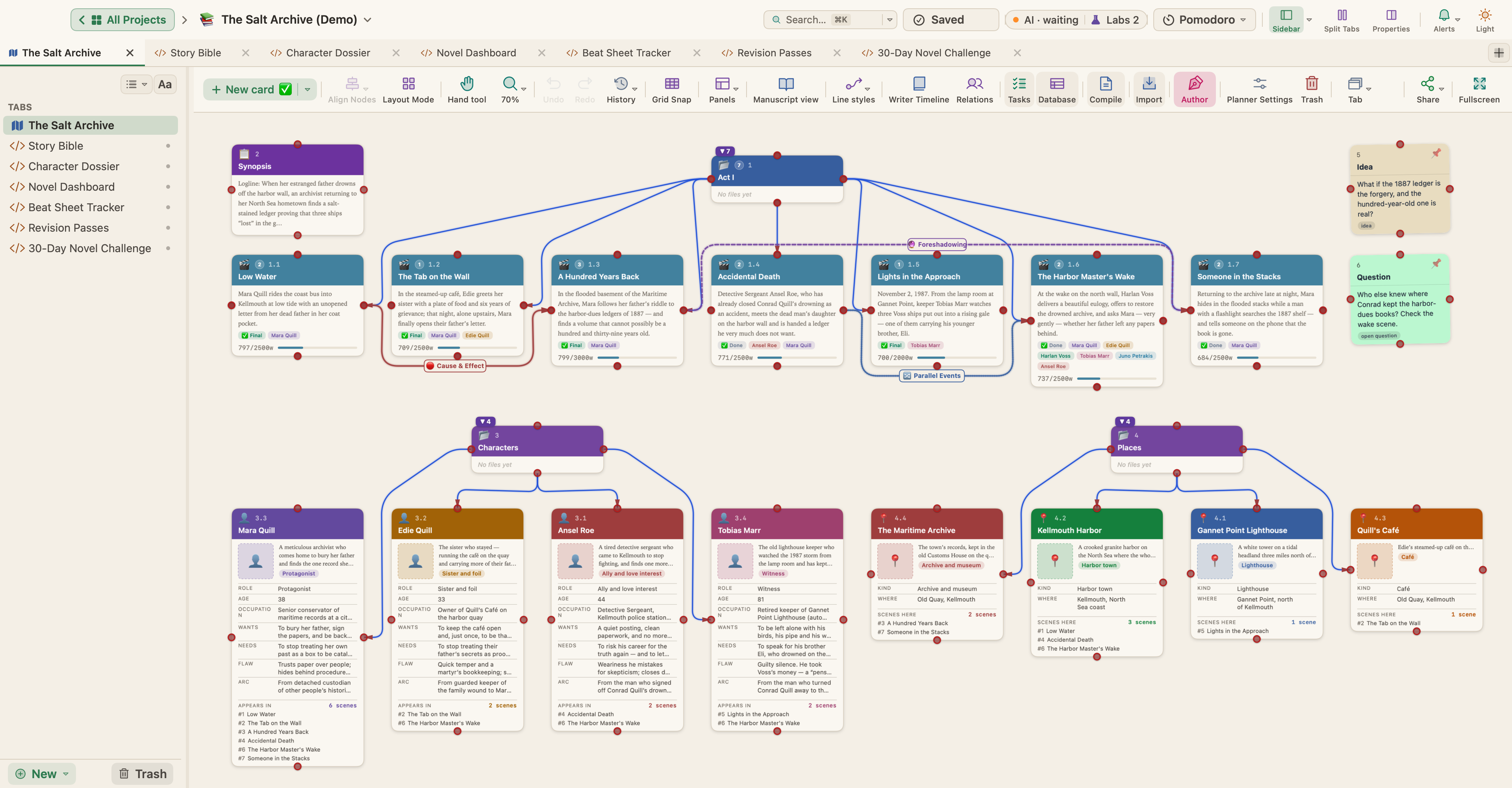
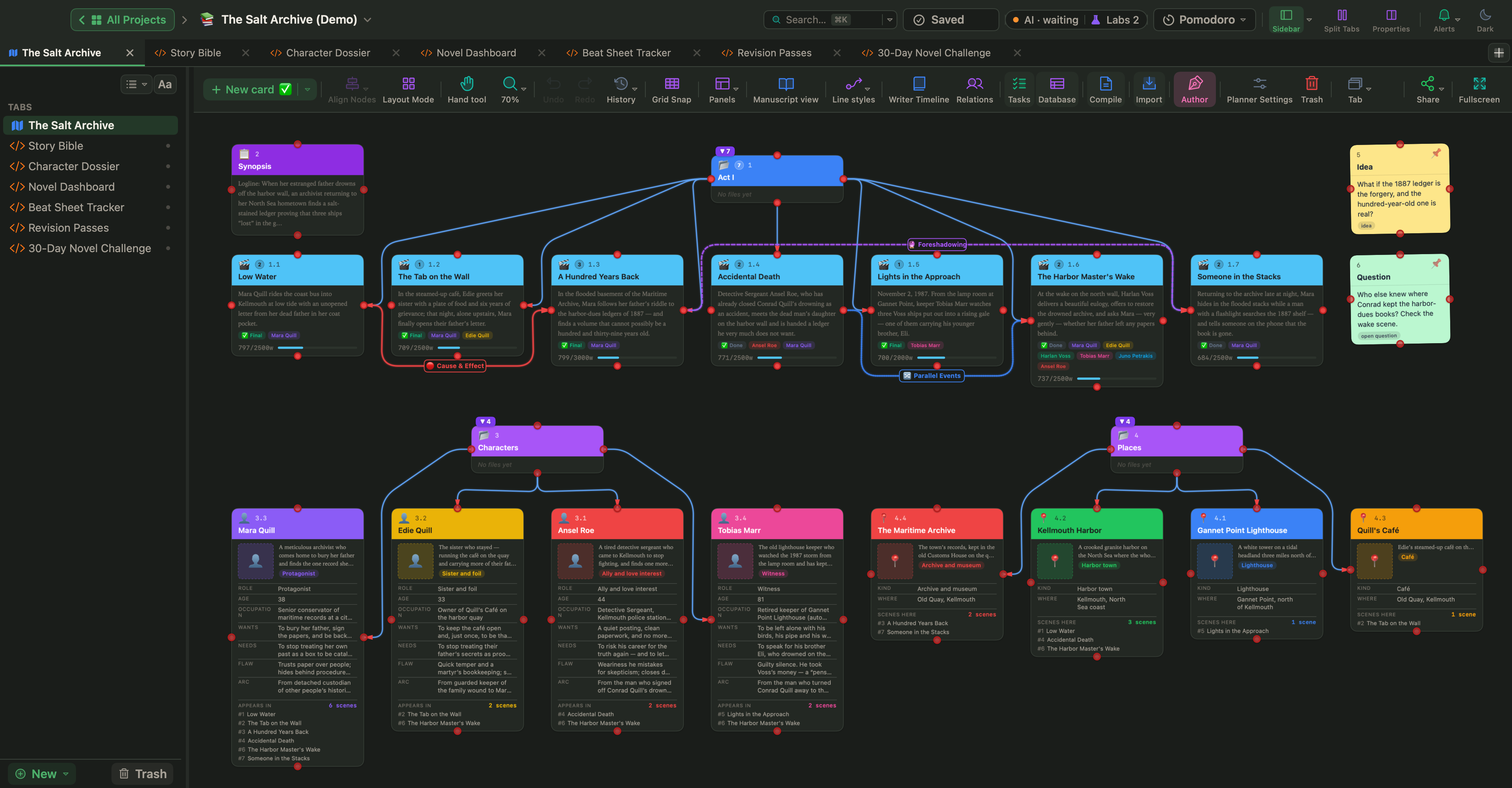
· 6 min read
How to outline a novel: from one sentence to a scene list
Write the premise in one sentence, find the turning points, break the story into scene cards and move them until the gaps show. Then do the same in WriterMorph.
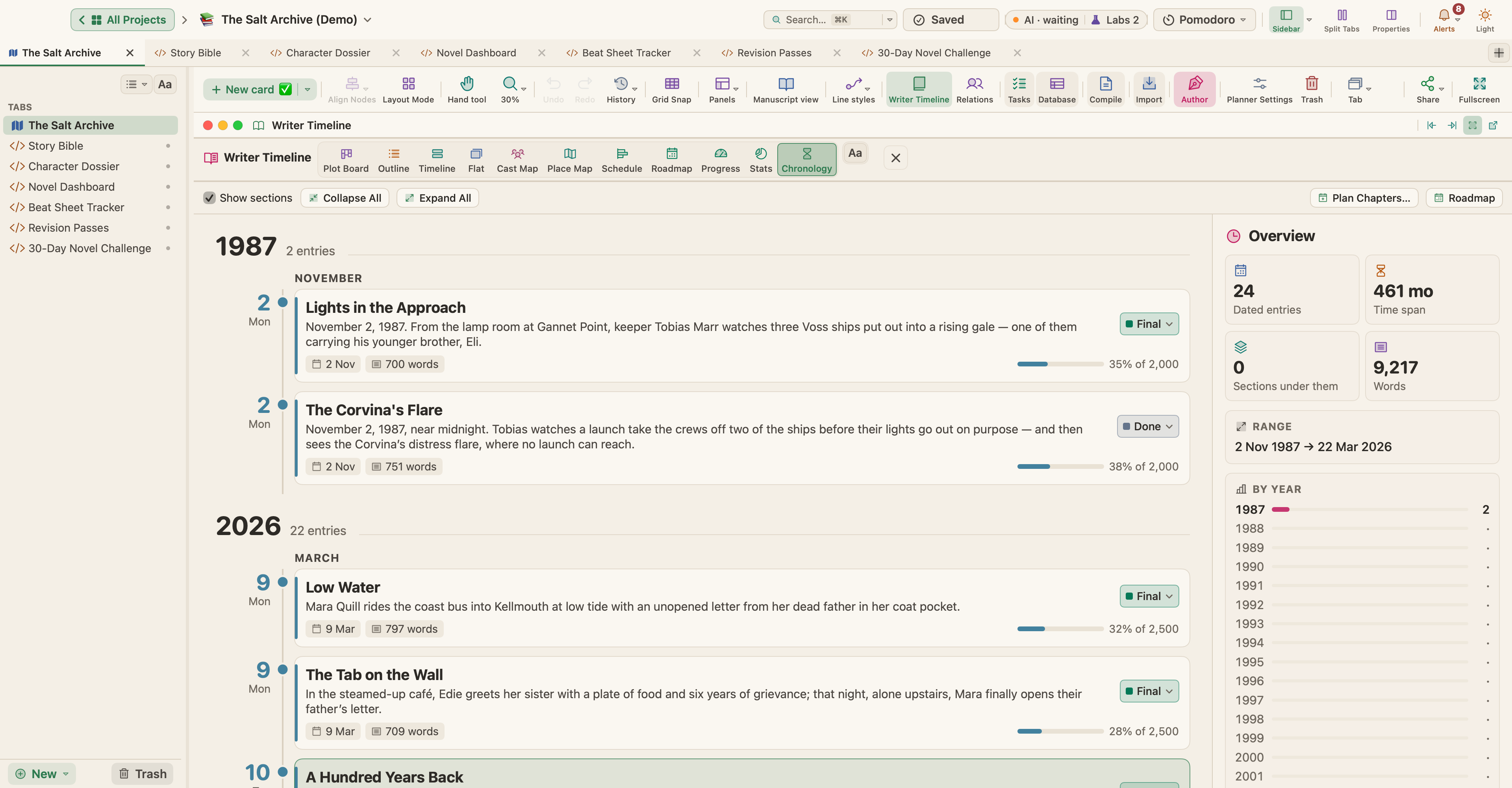
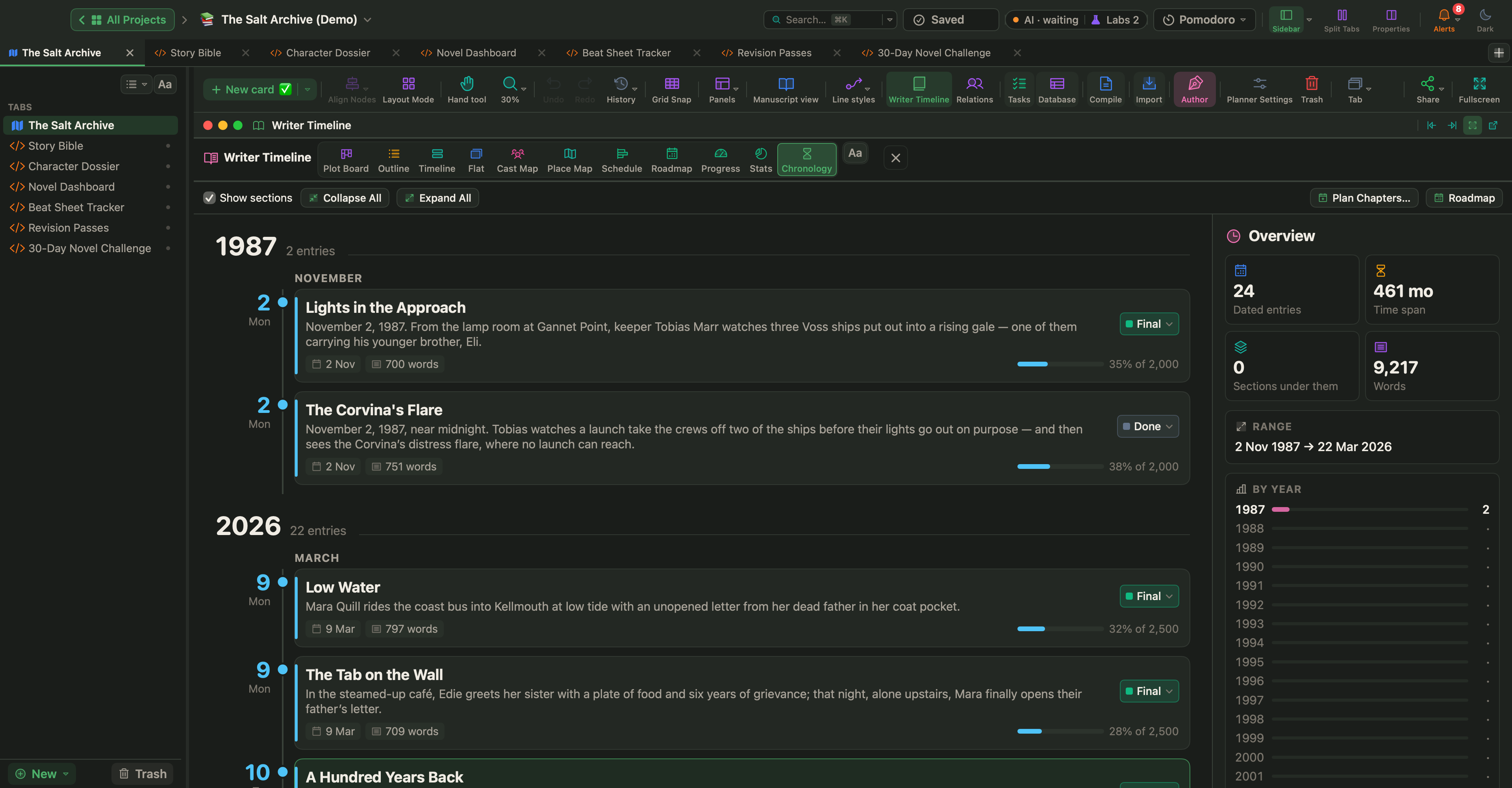
· 5 min read
How to keep your novel's timeline straight: story time, flashbacks and continuity
Track when every scene happens, keep story time apart from reading order, handle flashbacks and parallel plotlines, and catch continuity slips before a reader does. Then see how WriterMorph keeps the chronology for you.
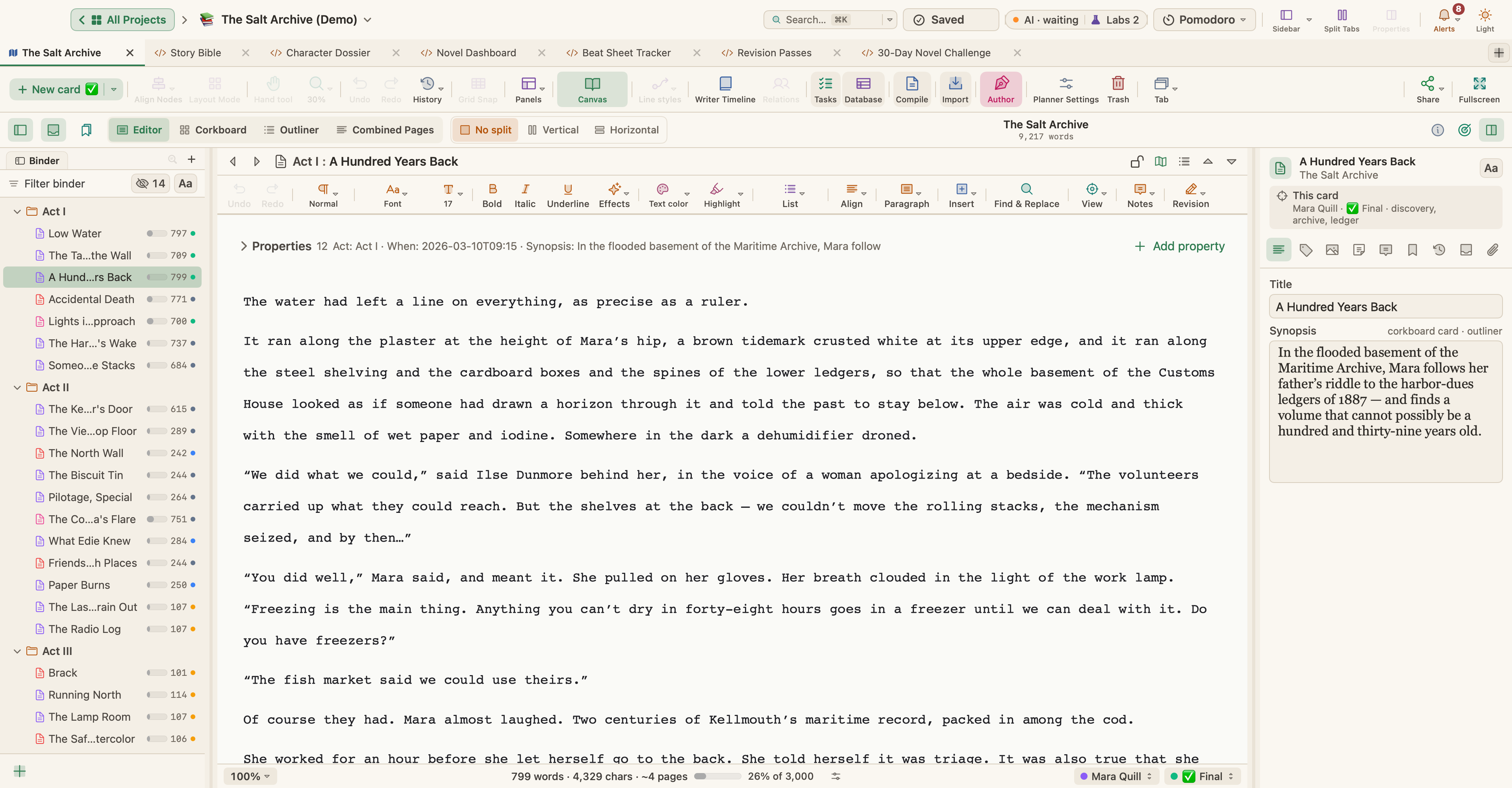
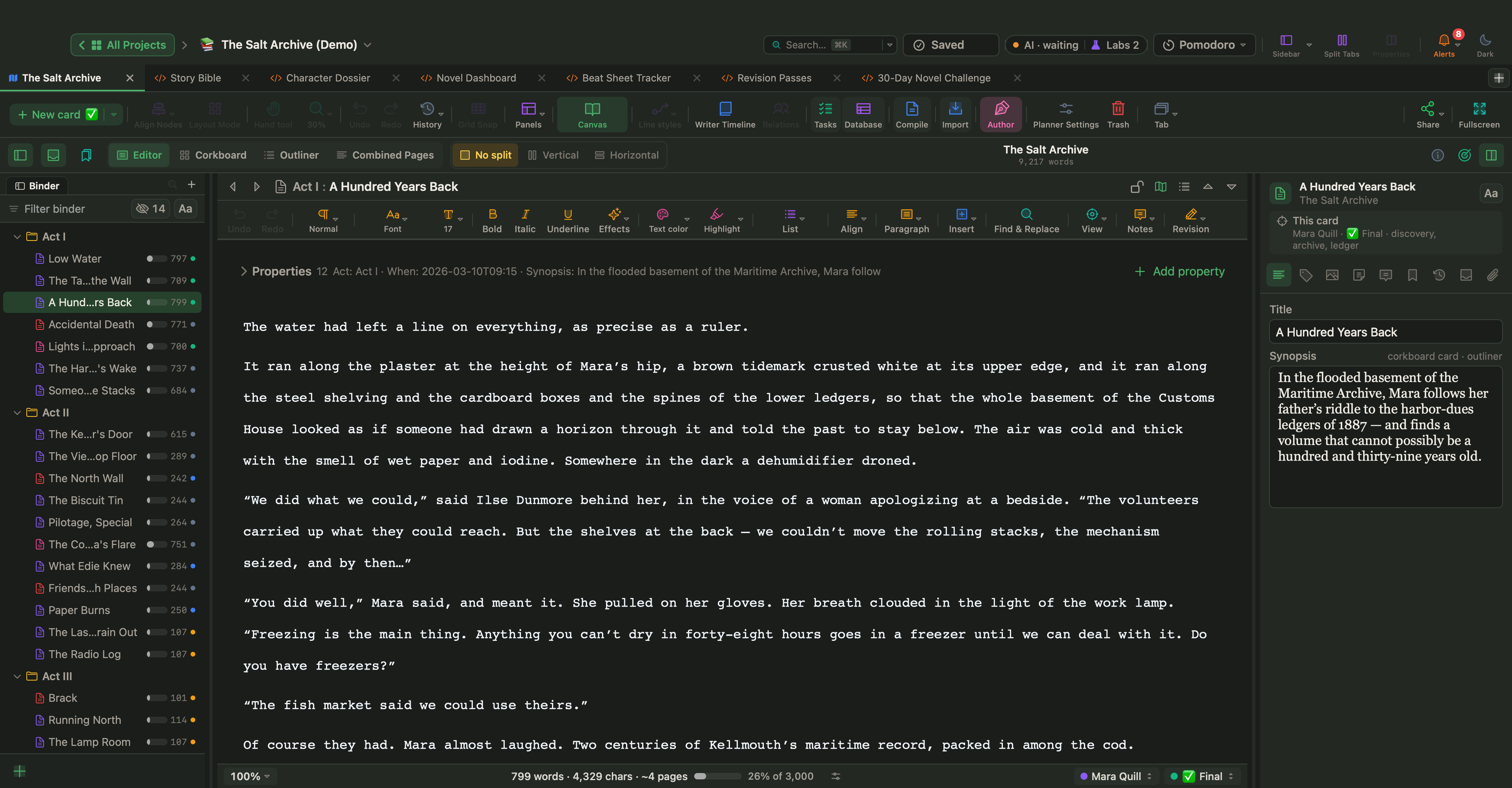
· 5 min read
Moving from Scrivener to WriterMorph: what comes across and where to find it
How to import a Scrivener project into WriterMorph, where the tools you already use live, and the few things that work differently.
· 6 min read
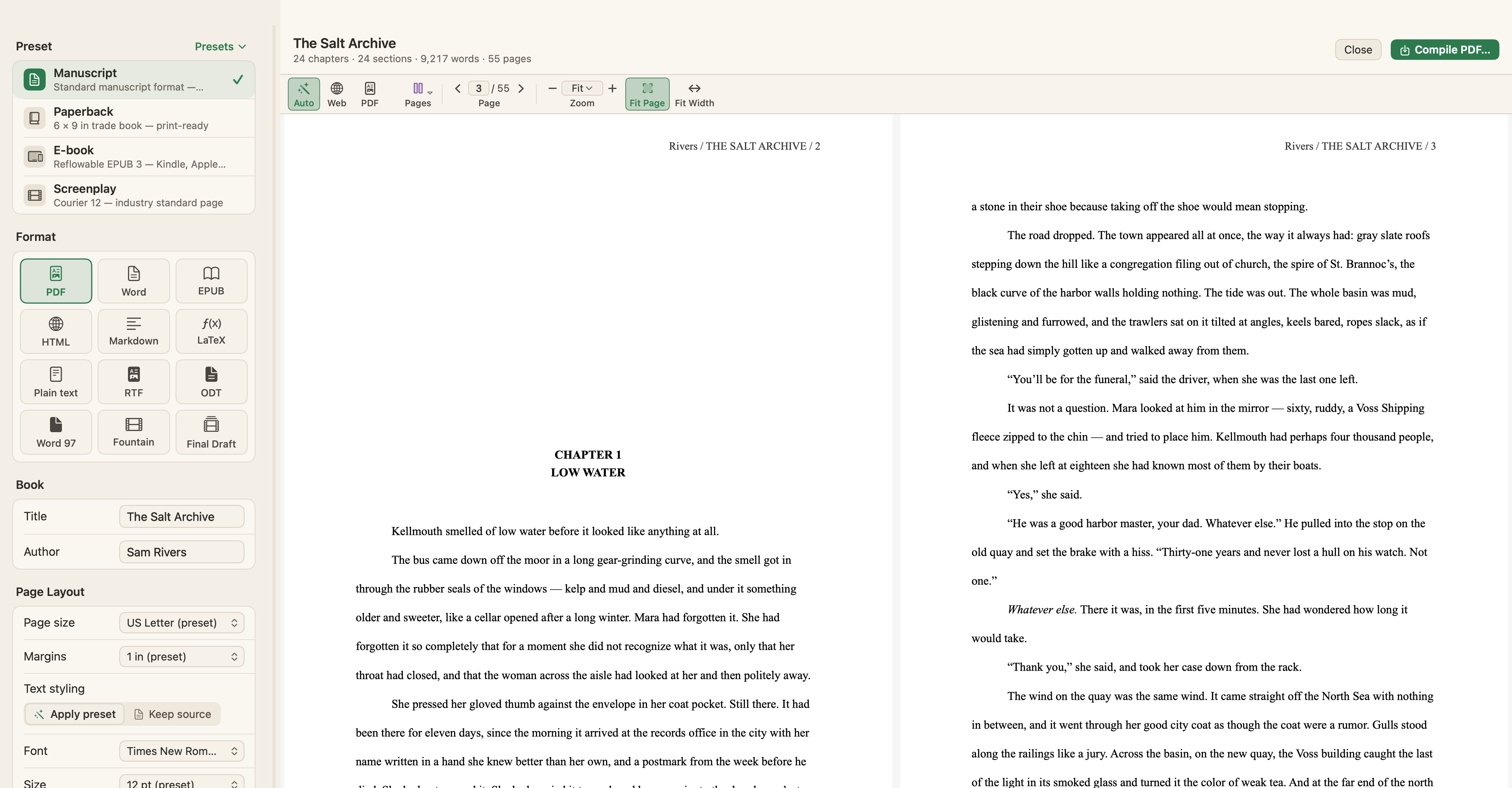
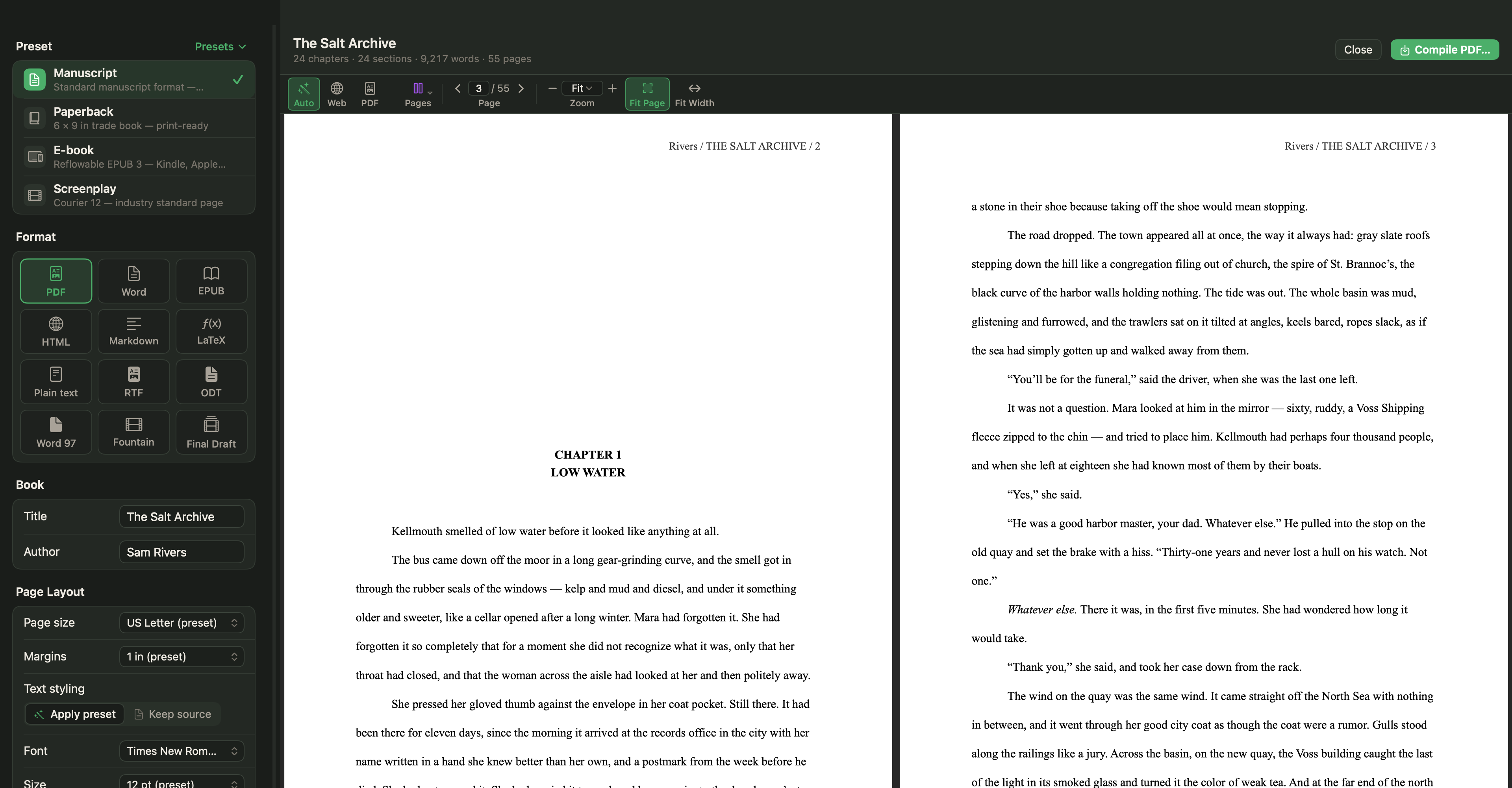
From draft to submission: how to format and compile your manuscript
What to check before you compile, the manuscript format agents and publishers expect, which file to send, and how Compile Studio turns your binder into it.
· 7 min read
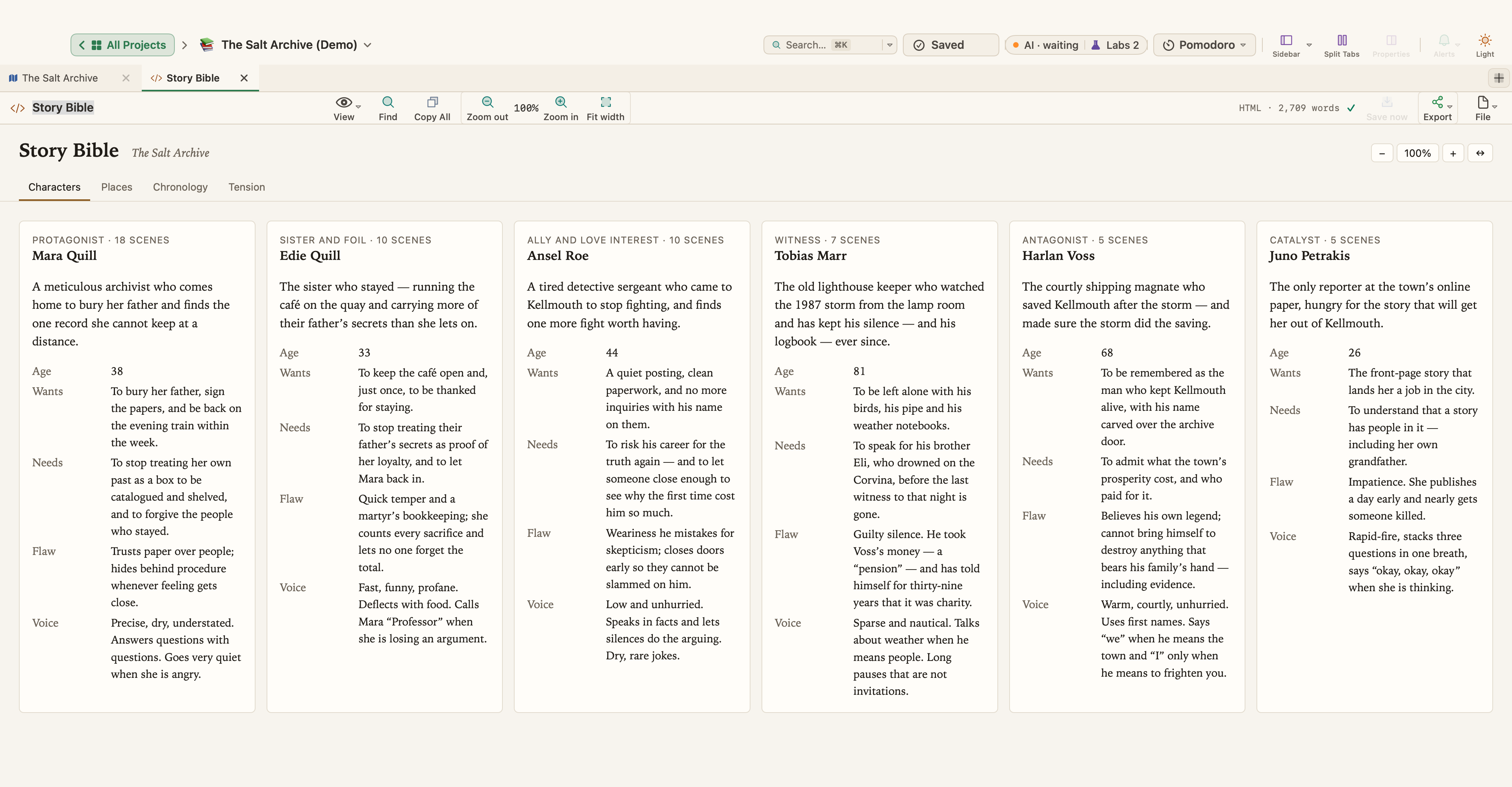
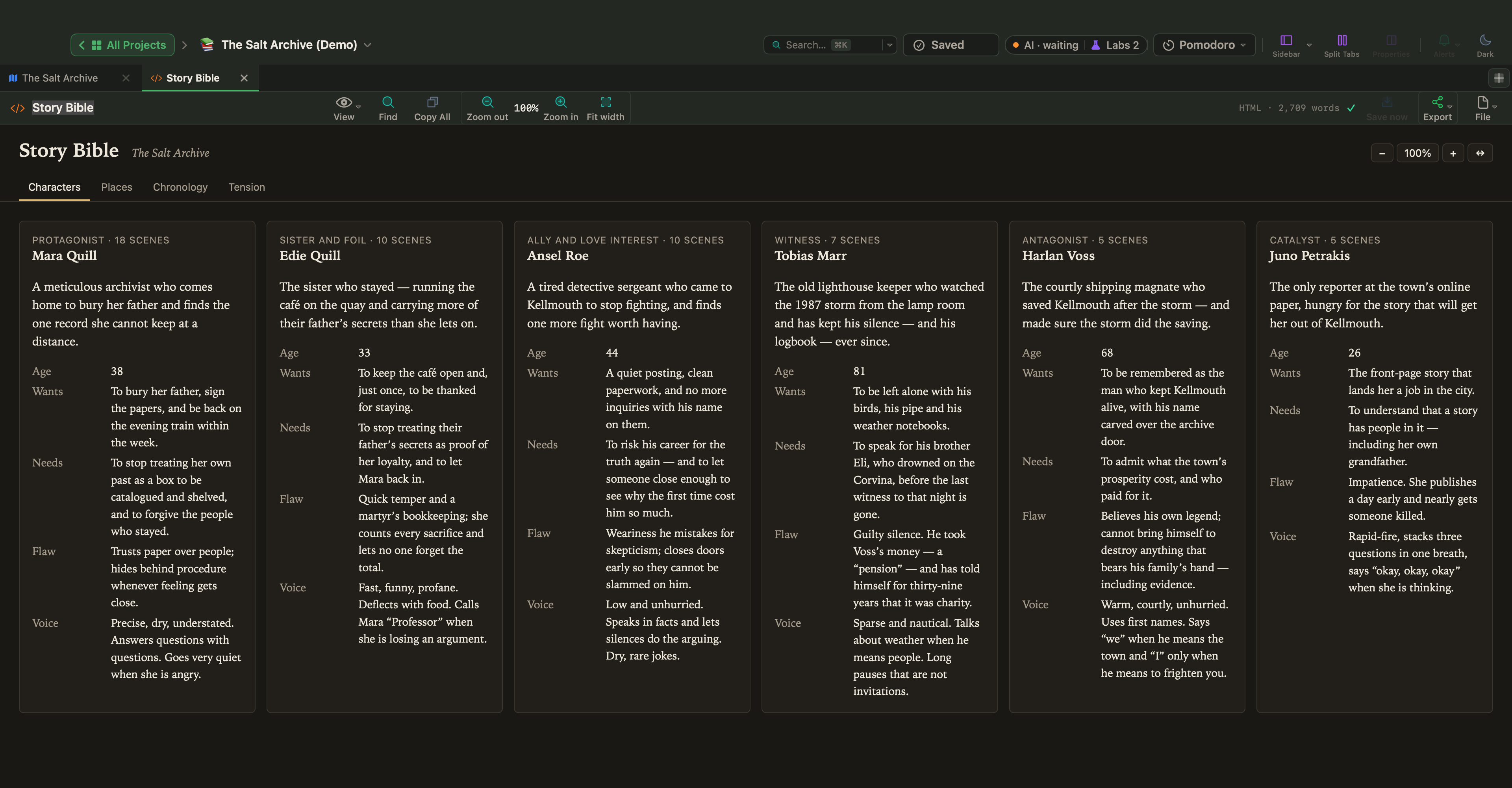
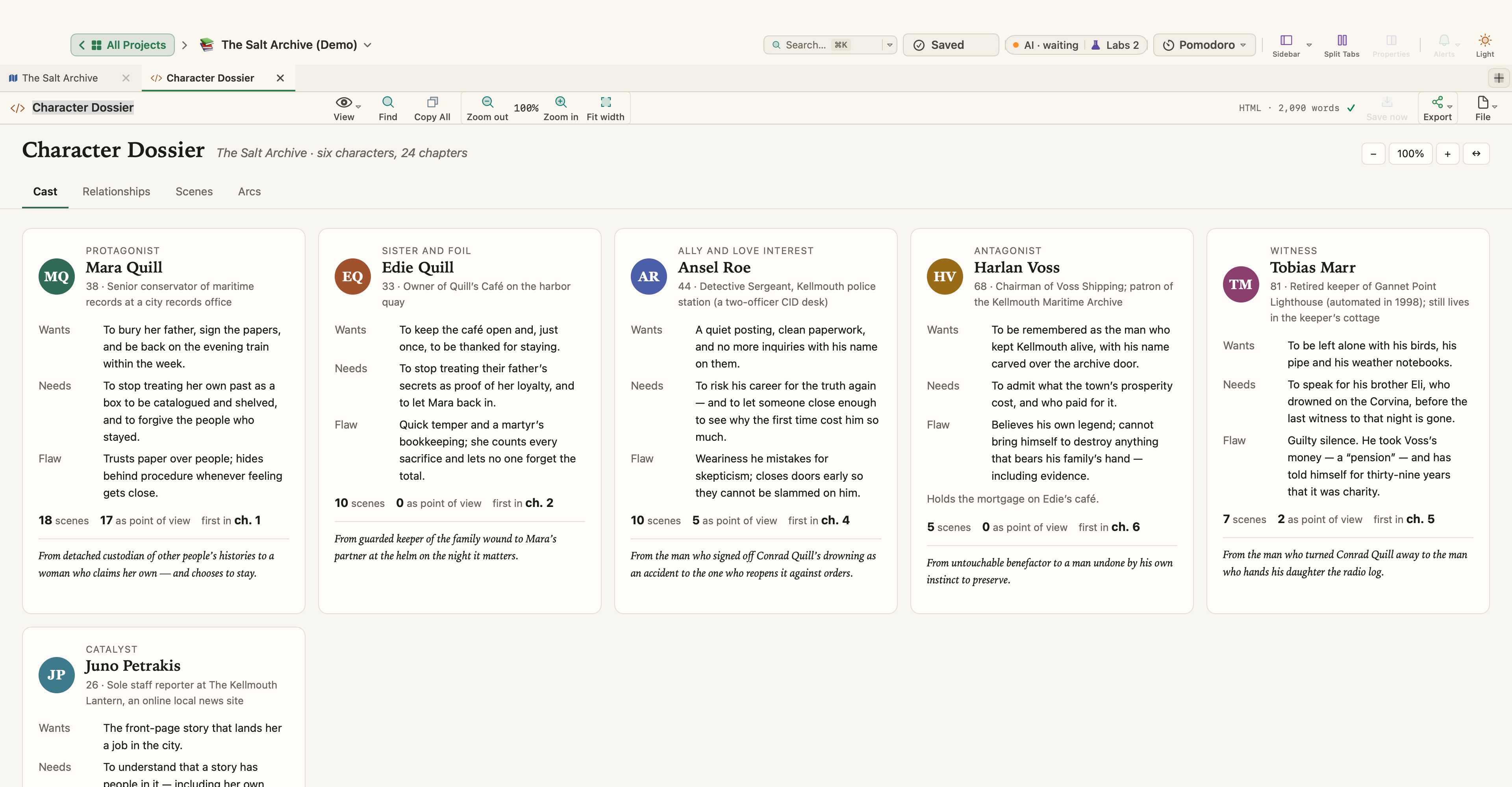
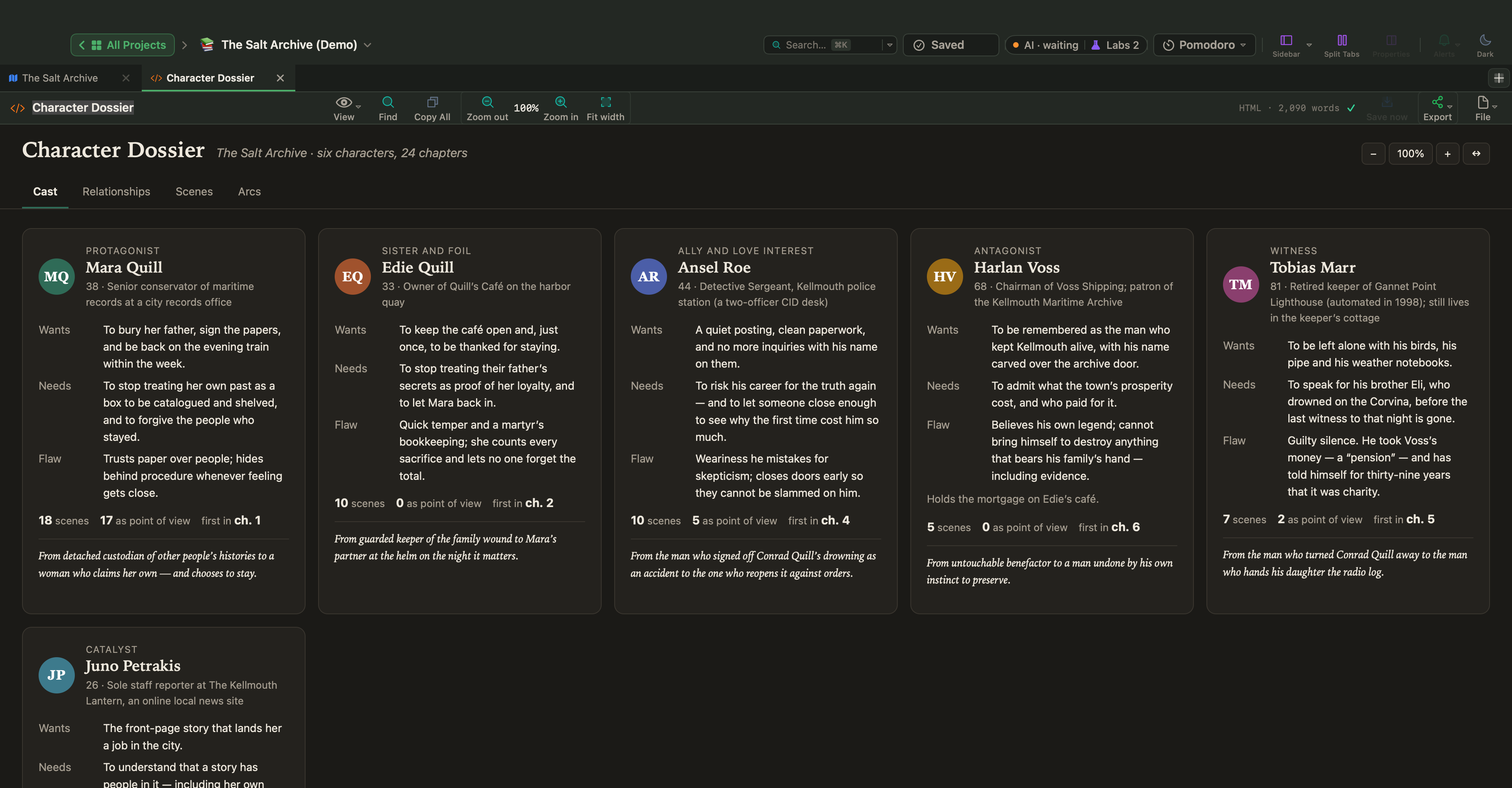
How to build a story bible for a novel or a series
What a story bible holds, how to keep it small and current, and how to use it to catch continuity errors, with the steps in WriterMorph.
· 5 min read
Connect any AI app to WriterMorph
WriterMorph has no AI of its own. Bring the one you already use, through one open standard: Claude Code, Codex, local AI in LM Studio or any other app that supports MCP, whatever the brand.
· 6 min read
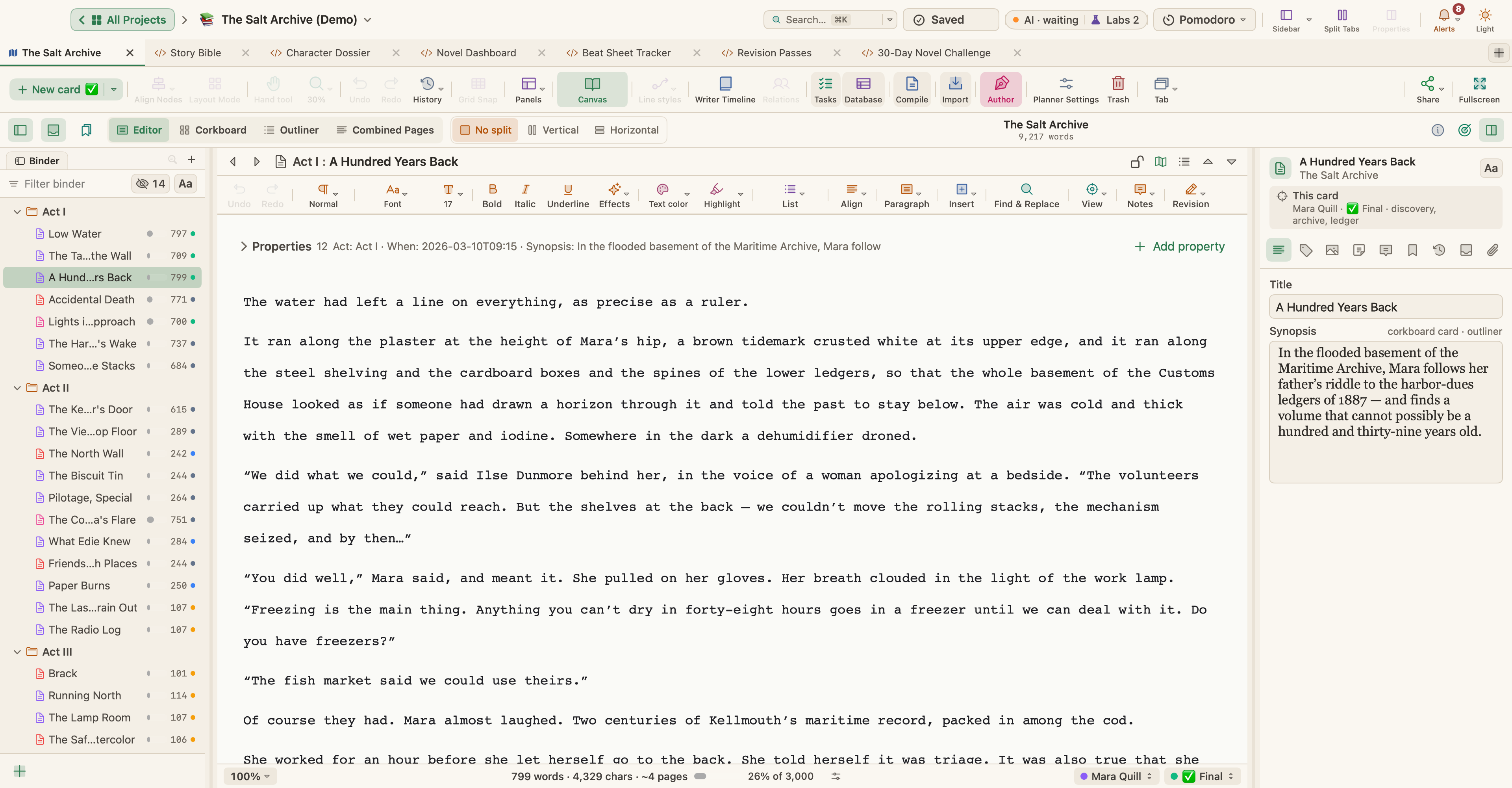
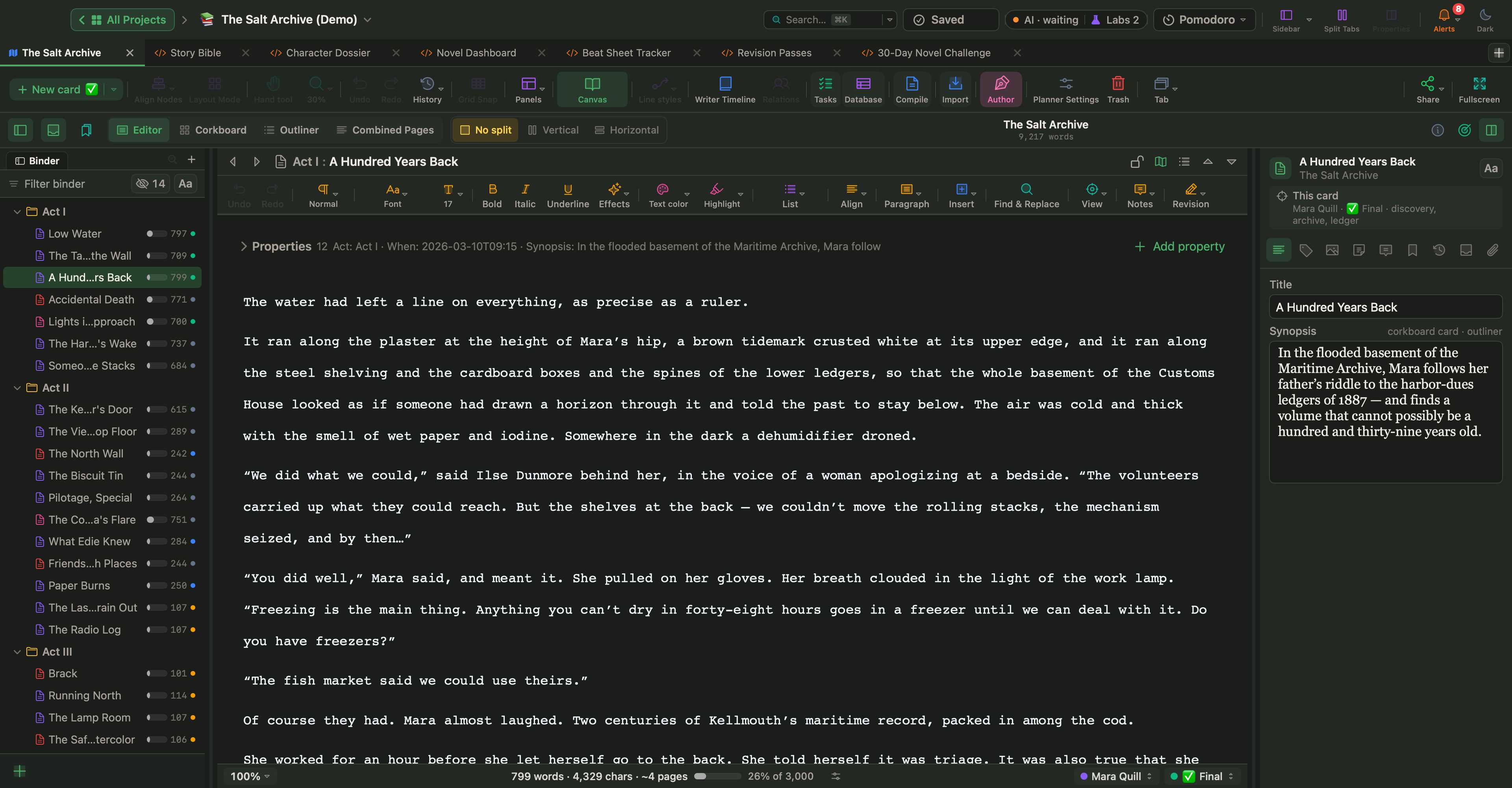
How to write a scene that works: goal, conflict and a turn
Give the viewpoint character something to want, put something in the way, and make the scene turn so the story is different at the end. Then plan and check each scene on its card in WriterMorph.
· 7 min read
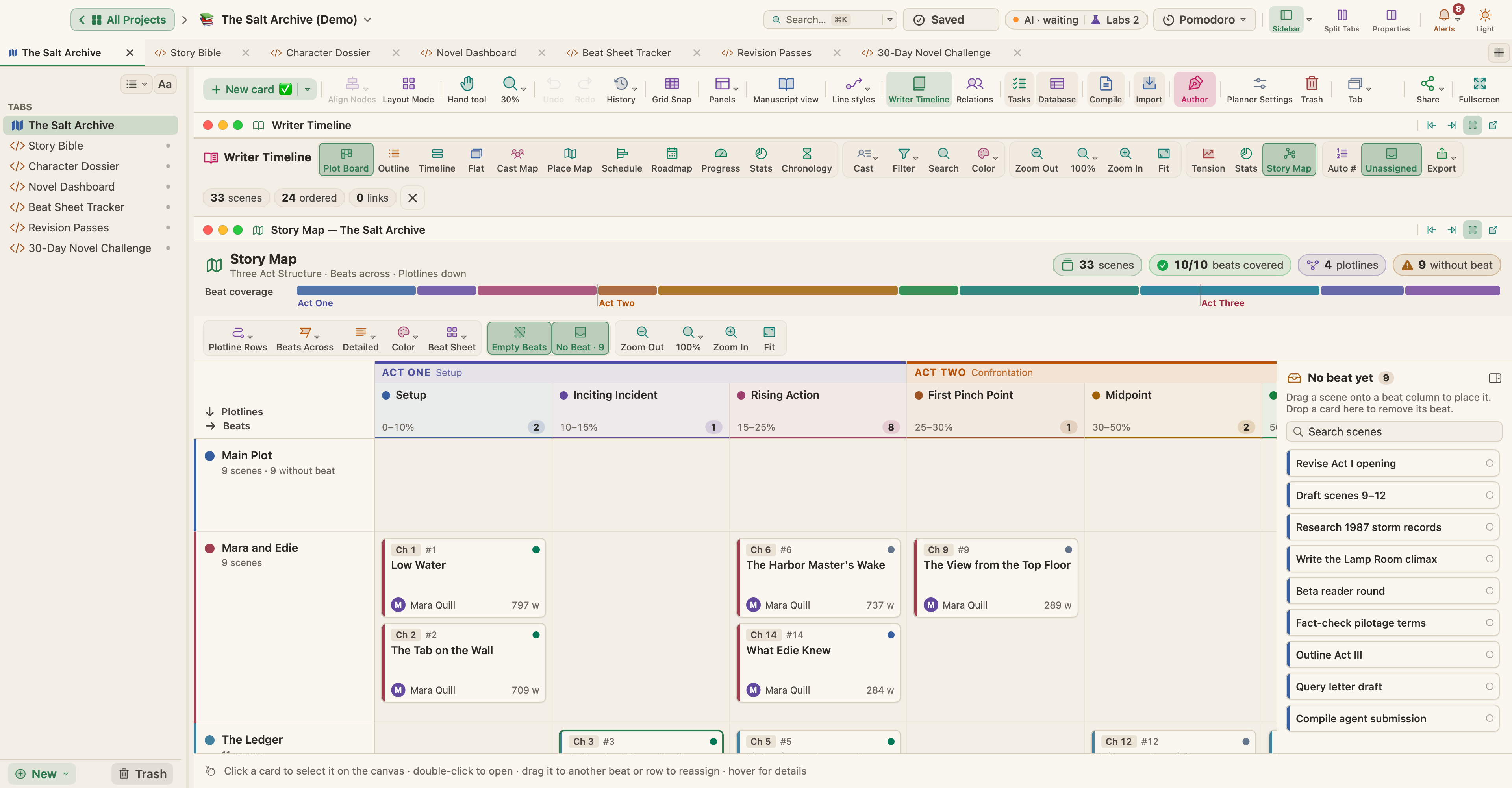
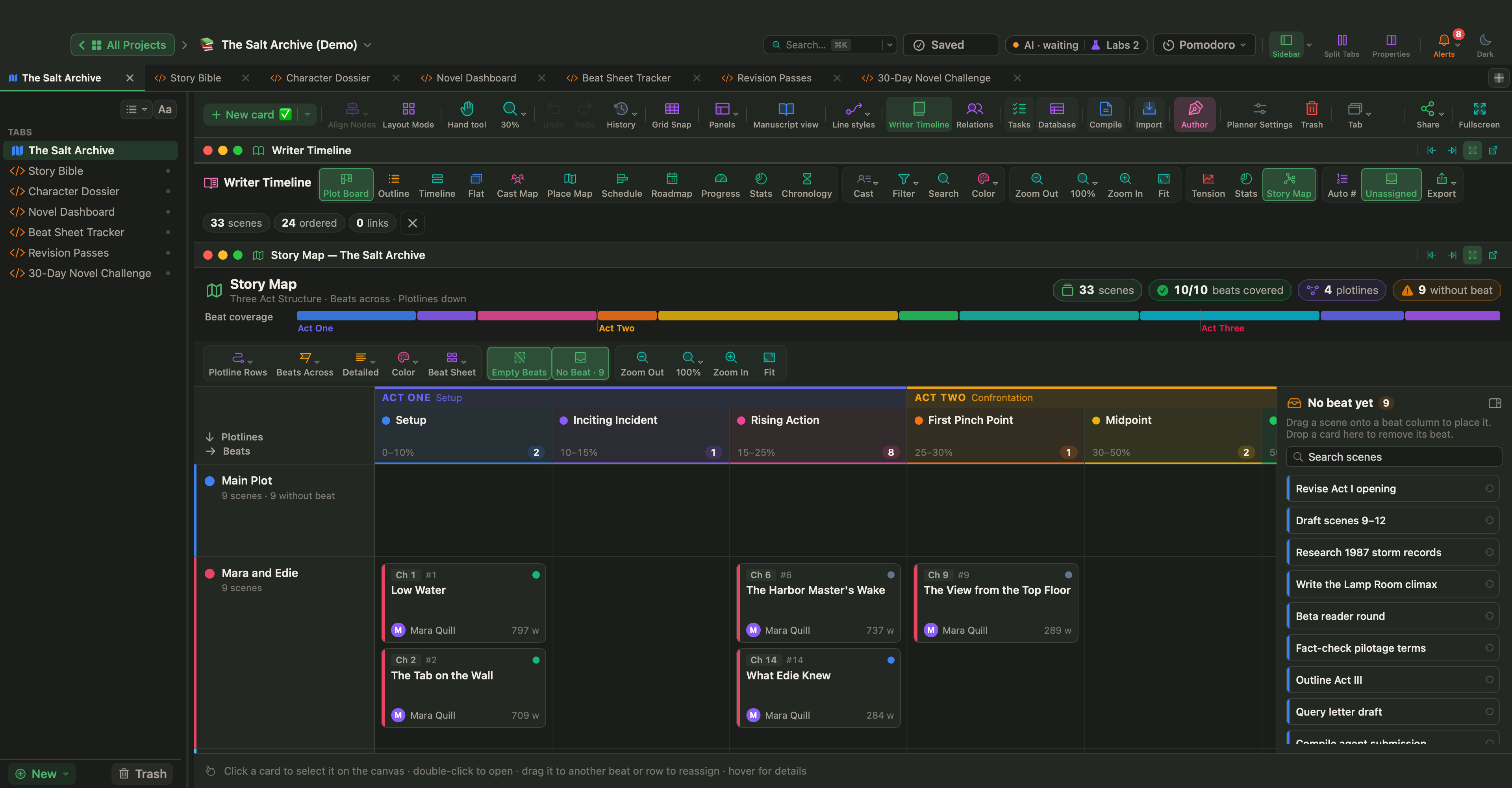
Story structure and turning points: acts, beats and choosing a beat sheet
What acts, sequences and turning points do, how to choose a beat sheet that suits the book you are writing, and how to check a draft's structure in WriterMorph without forcing it into a formula.
· 7 min read
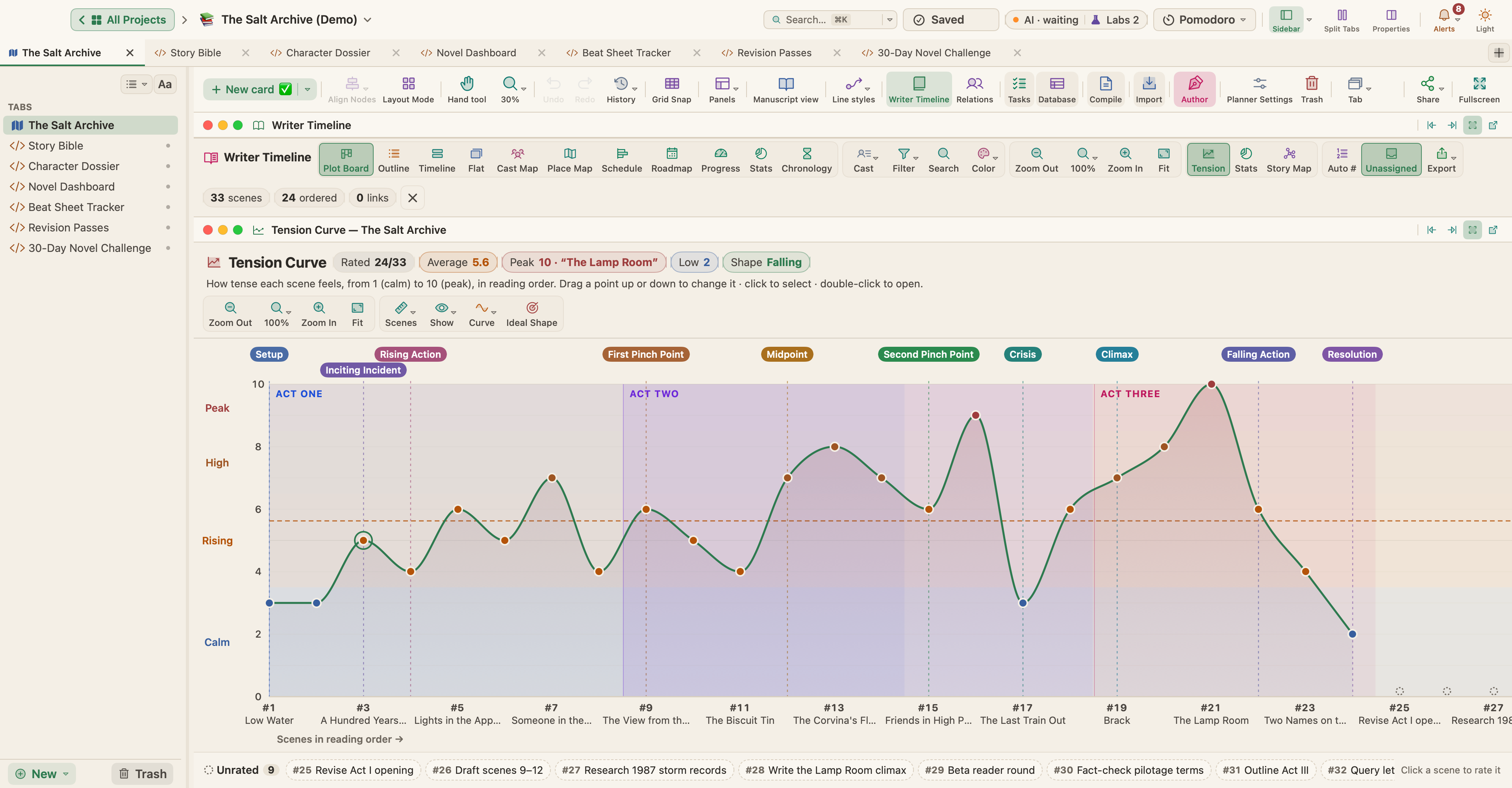
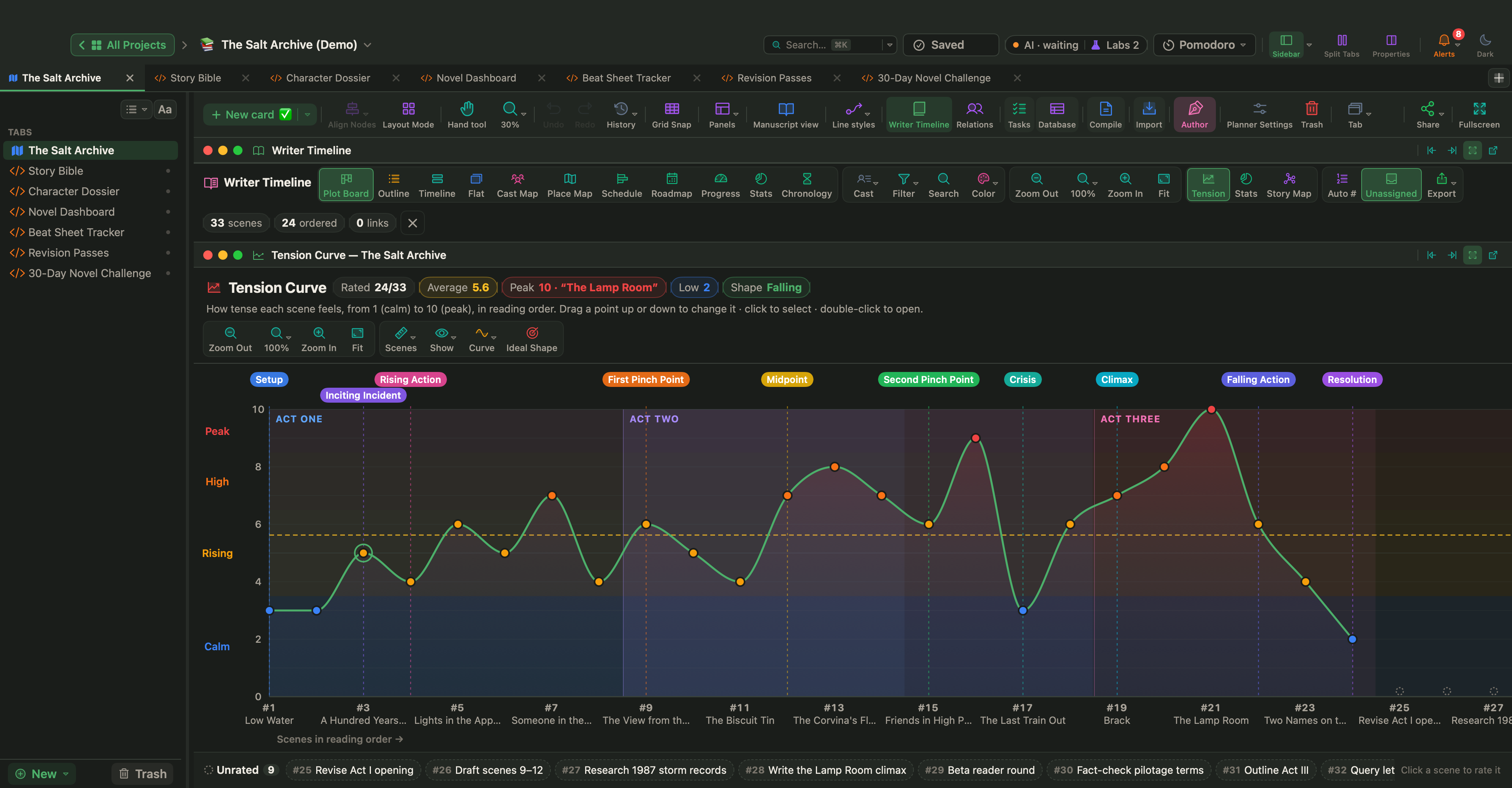
Pacing a novel: where tension should rise, rest and peak
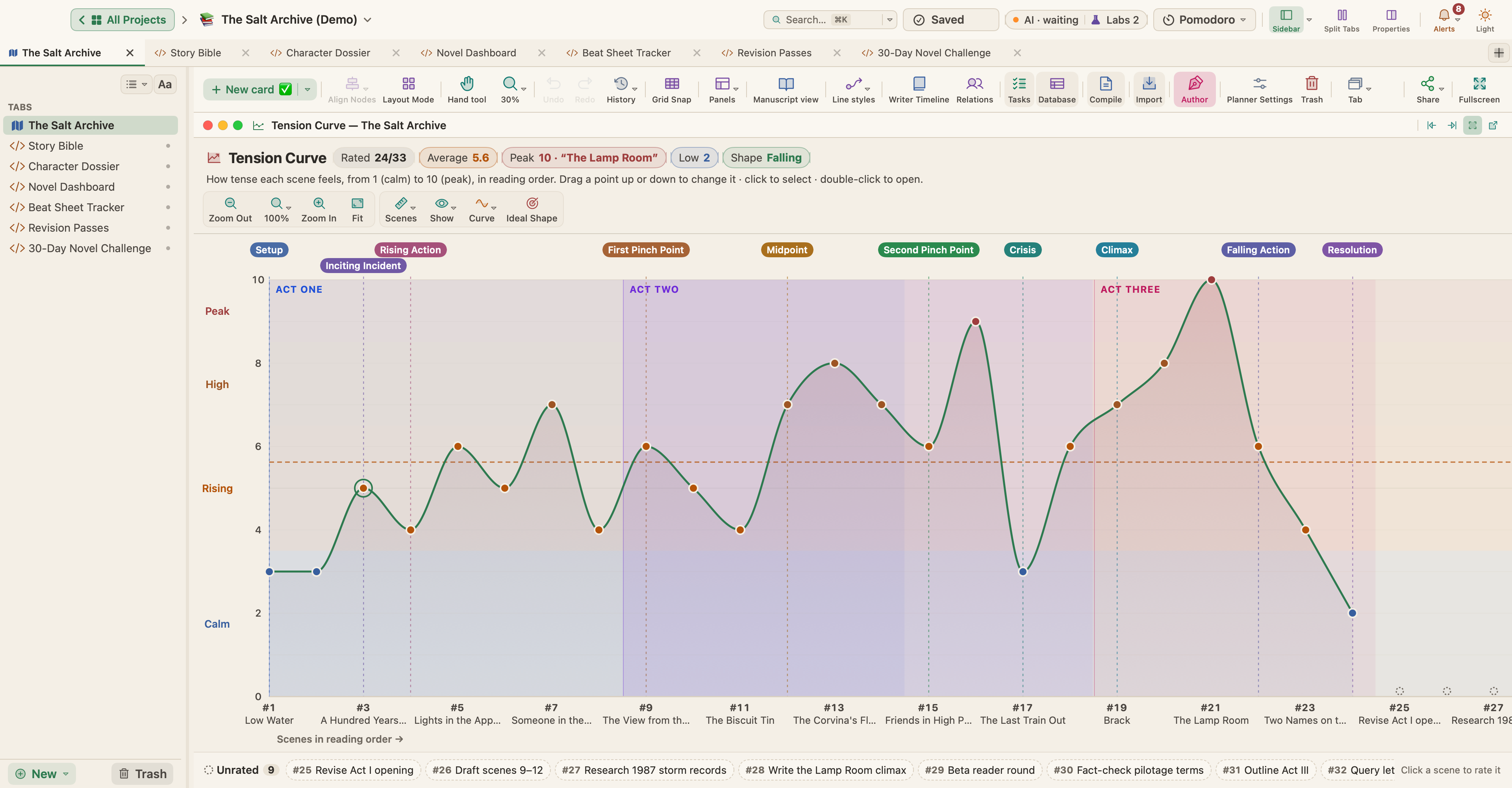
Tension is not the same as action. See the shape of your book, learn where it should climb, rest and peak, and fix a sagging middle, a rushed ending or a flat climax, with the tension curve in WriterMorph.
· 7 min read
Protagonist, antagonist and conflict: how to build characters who drive the plot
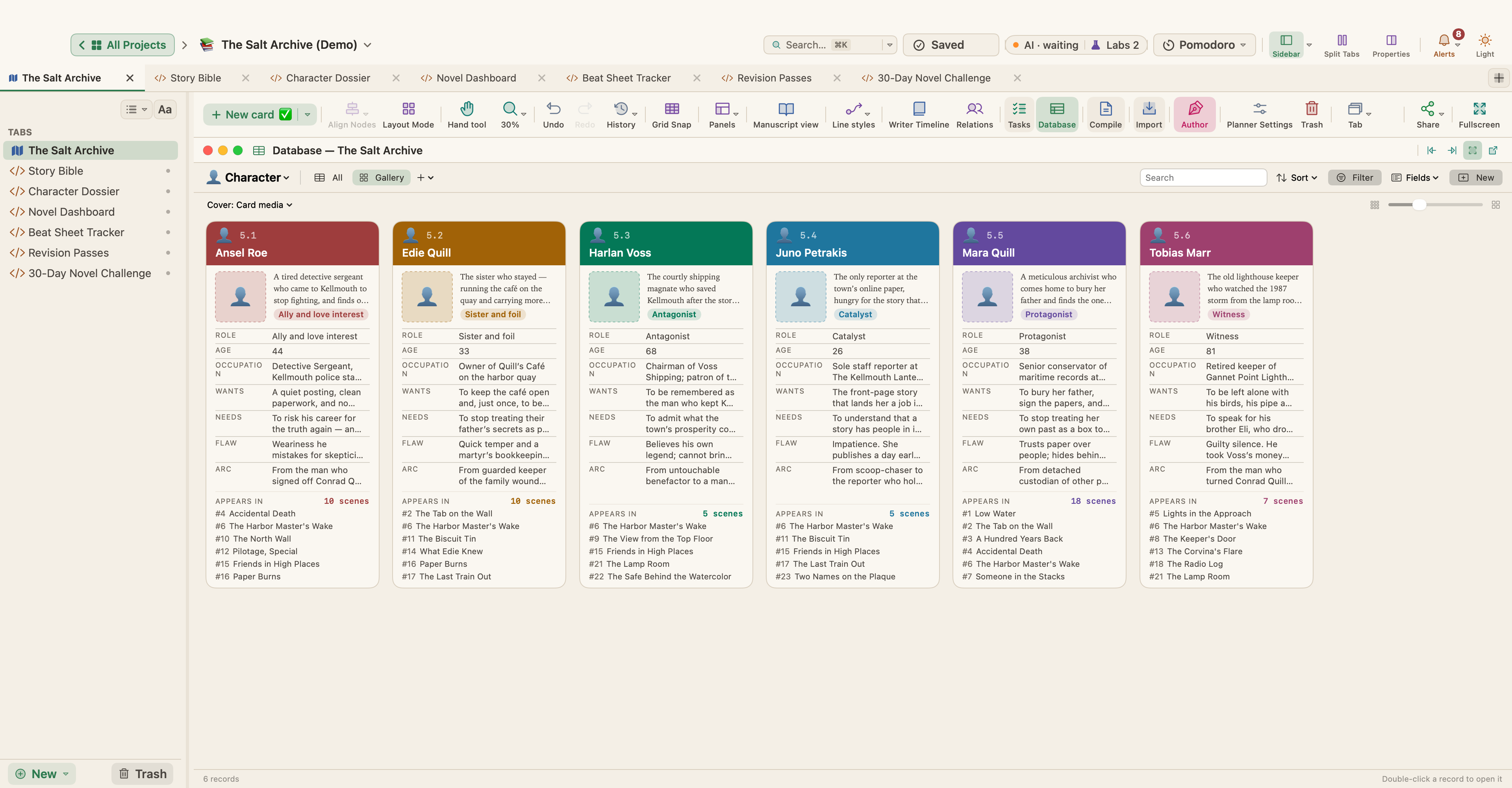
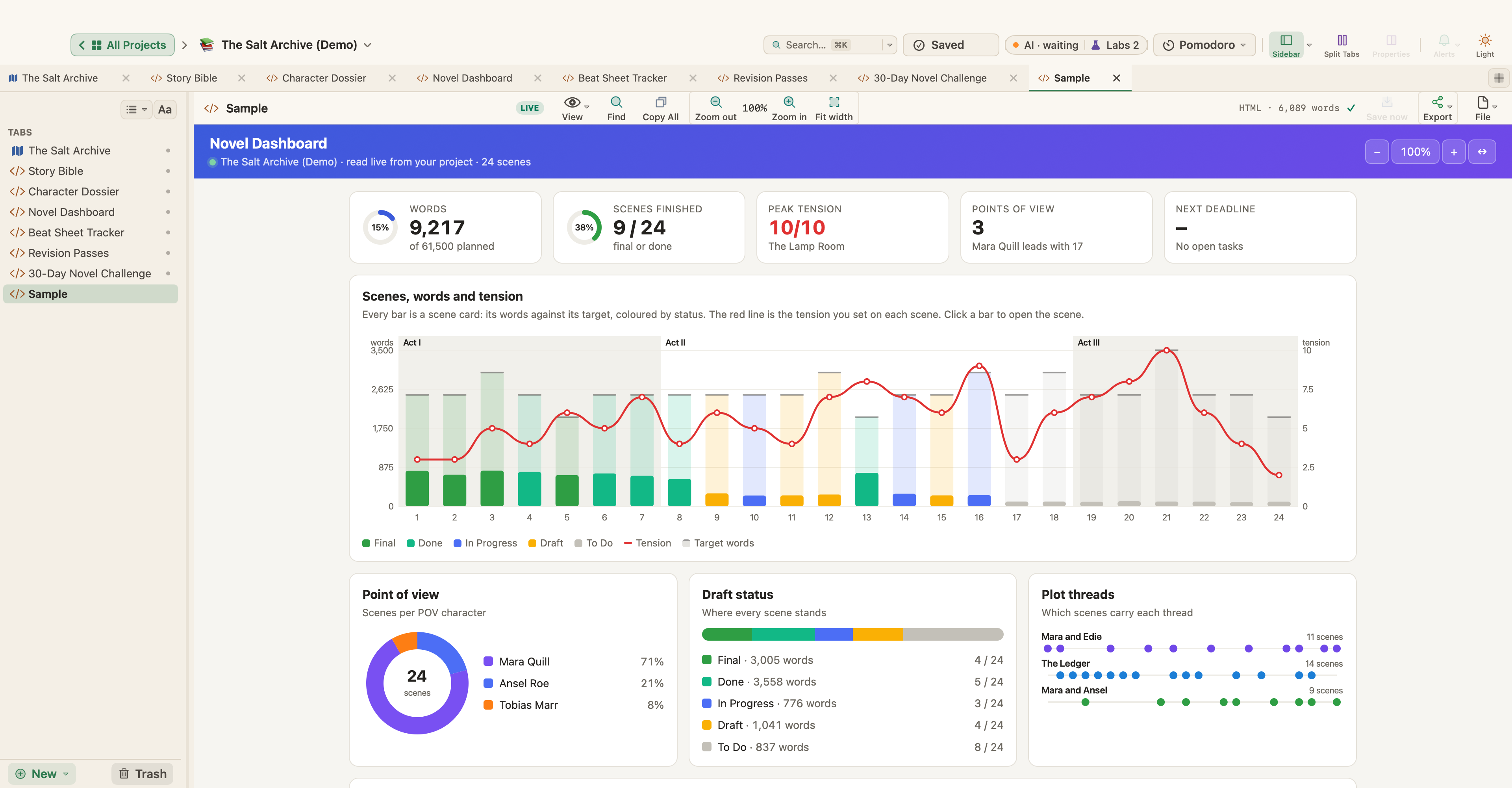
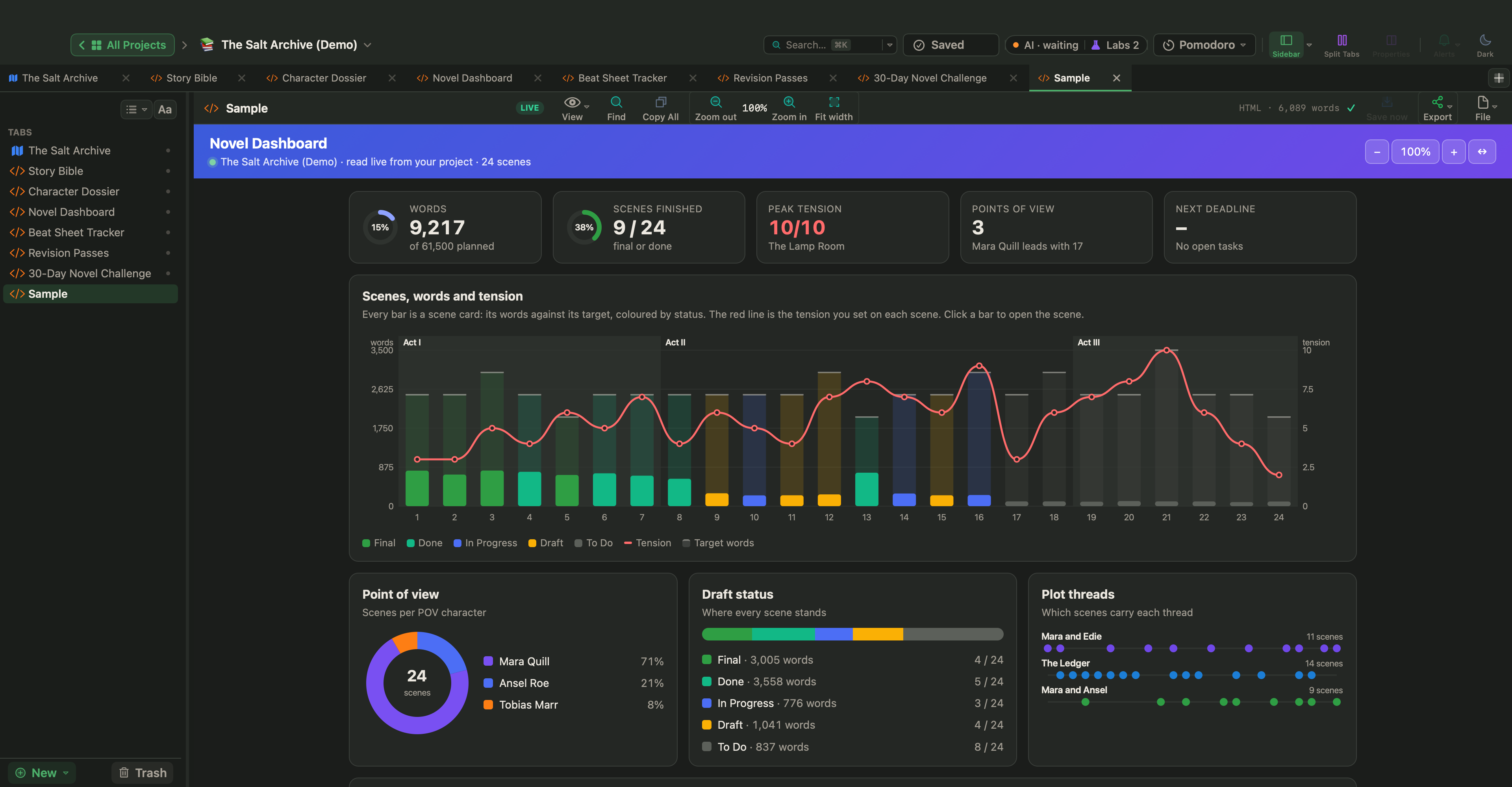
Give your protagonist a want, a need and a flaw, give the antagonist a goal of their own, and let conflict press on more than one level. Then set up the cast in WriterMorph.
· 6 min read
Point of view in fiction: how to choose a POV and keep it consistent
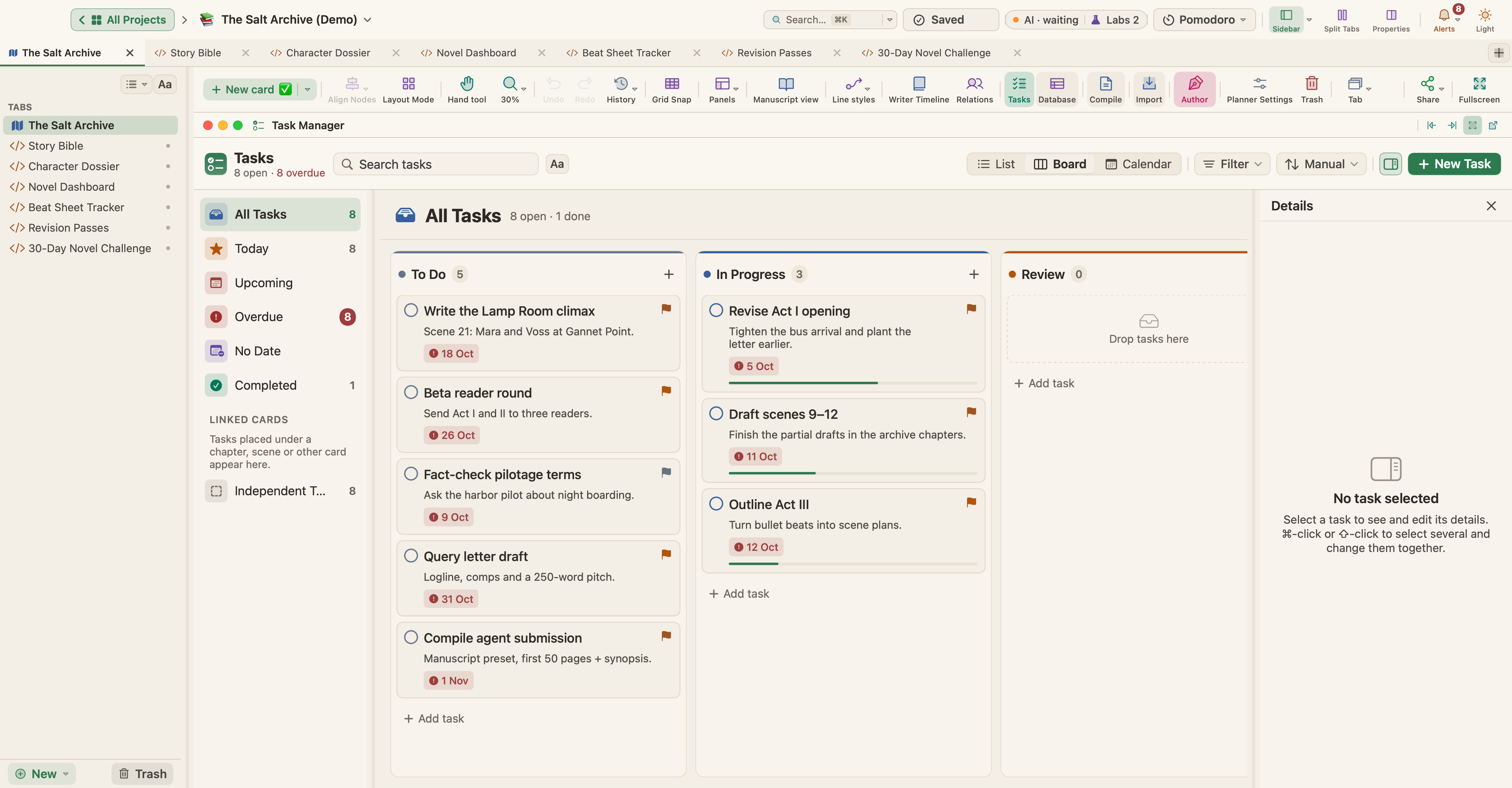
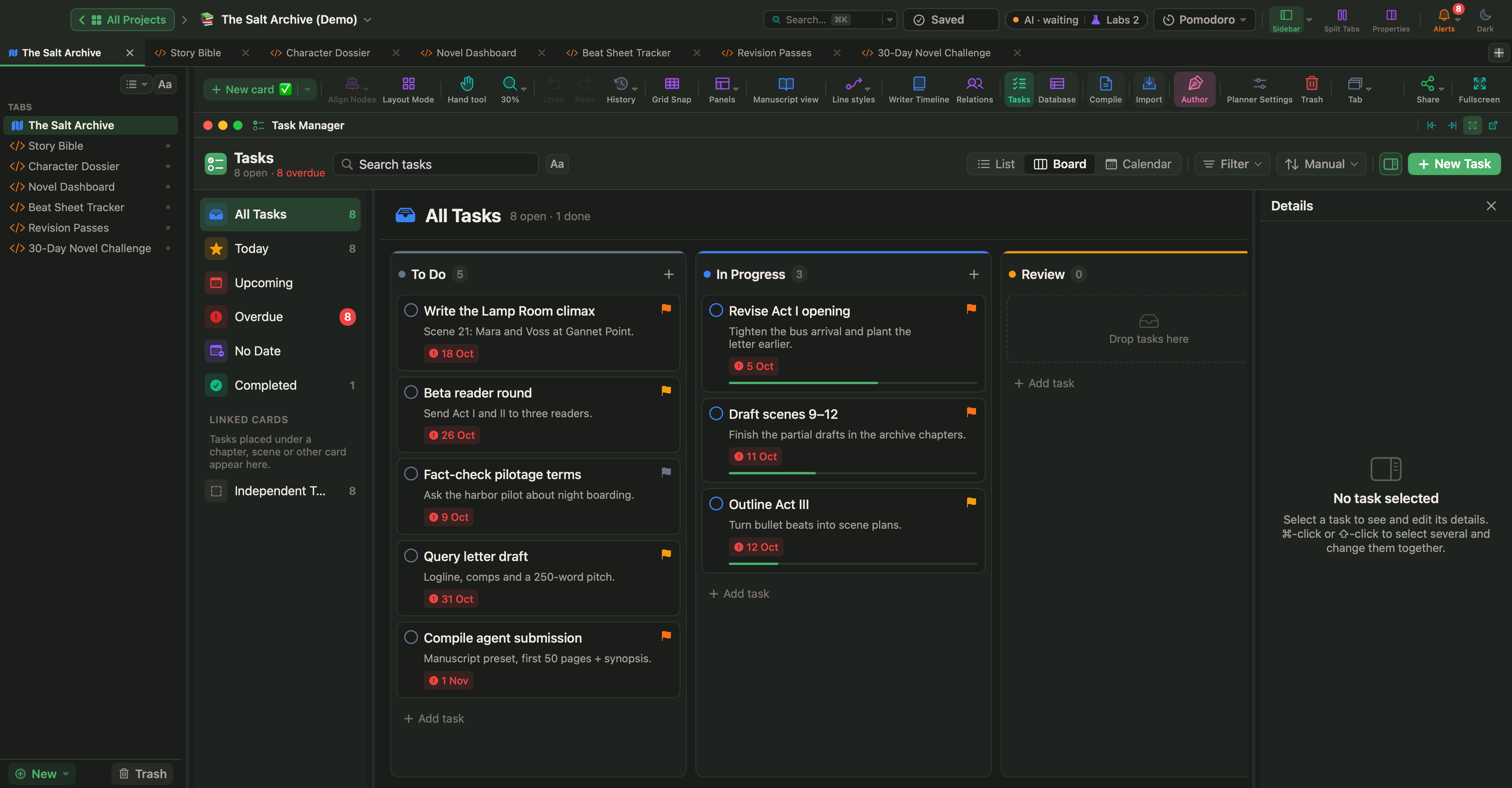
First person, close third, omniscient or second person. How to choose a point of view, avoid head-hopping, balance several viewpoint characters and let voice carry the story, with the steps in WriterMorph.
· 7 min read
How to edit a novel: revising in passes, from structure to proofreading
Revise a finished draft in passes, from the big questions down to typos. Read it aloud, use beta readers well and keep earlier versions safe so you can cut boldly. Then the same work in WriterMorph.
Other product names mentioned (e.g. Scrivener, Final Draft, Microsoft Word, Obsidian, Notion) are trademarks of their respective owners. They are used to describe compatibility or appear in customers' own words; WriterMorph is not affiliated with or endorsed by their owners.